
Lieferung heute & morgen

Qualitätsgarantie

Willkommens-Angebote freischalten: KOSTENLOSE Lieferung | Bis zu 80 % RABATT | Kostenlose 30-Tage-JoyPlus-Testphase
App herunterladen
A sandwich maker can prepare breakfast, packed lunches or a hot snack in next to no time. When choosing one, however, wattage and brand name are not the only deciding factors. Small plates, a delicate coating or a latch with no room for adjustment can make everyday use much more difficult. If you regularly want to prepare toasties with cheese, vegetables or other ingredients, you should therefore check a few technical details before buying.
A 750-watt sandwich maker can be perfectly adequate for two classic toasties. Models with 900 or 1,000 watts may heat up faster, but that does not necessarily mean they will take less time for every type of recipe. The size of the sandwich plates, heat distribution and temperature control are also important.
Wattage primarily describes the appliance’s electrical power consumption. It is not a direct indication of quality. For occasional snacks, a compact appliance with 600 to 750 watts is usually sufficient. If you often cook several batches one after another or use thicker fillings, you may benefit from more power.
A sandwich maker with a non-stick coating can make it easier to remove your toasties. However, the coating is not a licence to use metal utensils, scouring pads or aggressive cleaning products. These can cause scratches that affect the usability of the plates.
Removable sandwich plates are practical if the manufacturer states that they are dishwasher-safe. With permanently fitted plates, allow the appliance to cool completely, then clean it with a soft, damp cloth. The housing and electrical components must not be immersed in water.
An XXL sandwich maker or a toaster for XXL slices of bread is only suitable if both the plates and the latch are designed for larger slices. If there is too much filling, it may spill out at the sides. This makes cleaning more difficult and can put strain on the latch.
Pay attention to specific measurements such as 14.5 × 15 centimetres, a stated toast size or an adjustable locking system. Such details are more informative than general terms such as “extra large”.
Classic sandwich plates often divide two slices of toast into four triangles. A shell sandwich maker, on the other hand, creates larger, rounded halves and may accommodate more filling, depending on the model. Contact grill plates are more suitable for paninis, filled sandwiches and flatter snacks.
Check the following before buying:
A ready indicator with separate lights for power and heating shows whether the appliance is switched on and when the preheating phase is complete. This makes the appliance easier to use, but it does not replace supervision while cooking.
A heat-insulated handle, a secure latch and non-slip feet are important for everyday use. Overheating protection or automatic switch-off are additional safety features. The relevant details should be clearly stated in the product description or instruction manual.
A compact sandwich maker is easier to fit into smaller kitchens, but it does not always have the largest plates. Models with cord storage or upright storage can be put away neatly while taking up little space. If you use the appliance frequently, a model with removable plates may be more practical than an especially small one.
For German households, mains specifications of 220–240 volts and 50/60 hertz are also relevant. A CE marking indicates that the manufacturer has declared compliance with applicable EU requirements; it does not replace checking the instruction manual, mains plug and safety information.
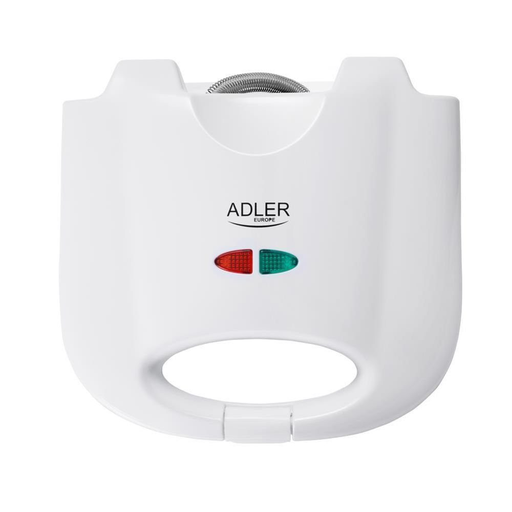
Why this product suits this profile: The appliance is designed for classic toasties and, according to the product details, prepares two sandwiches or four triangles at the same time.
The 750-watt output is supported by specific details on capacity, thermostat control and the ready indicator, rather than relying solely on a high wattage.
Non-stick-coated plates, heat-insulated housing and upright storage.
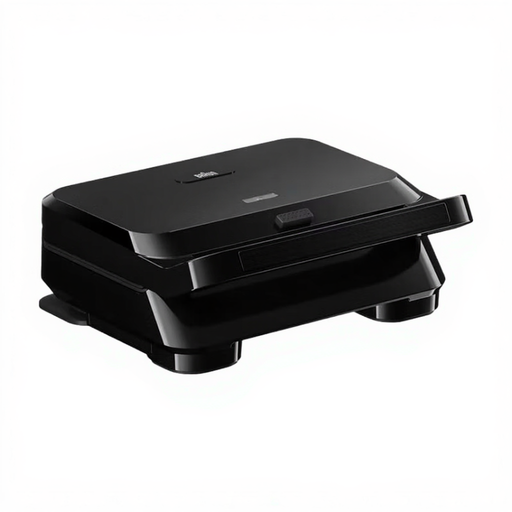
Why this product suits this profile: If you regularly prepare hot sandwiches, you can benefit from removable plates that are stated to be dishwasher-safe.
Cleaning does not rely solely on permanently fitted plates that are difficult to reach.
800 watts, removable sandwich plates, PTFE non-stick coating and cord storage.
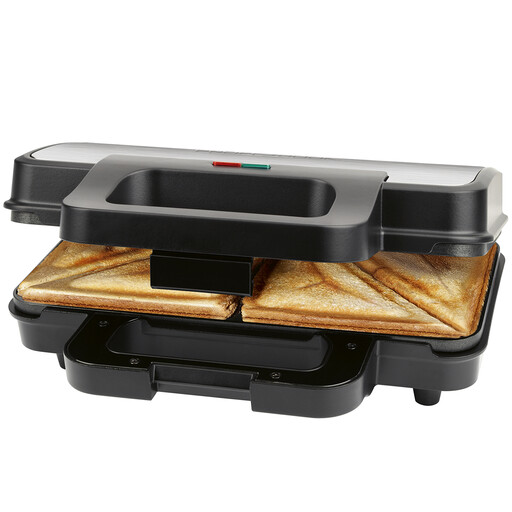
Why this product suits this profile: According to the product details, the extra-large plates are suitable for American XXL slices of toast measuring approximately 14.5 × 15 centimetres.
The plate size and two-stage locking system provide specific guidance for thicker fillings.
900 watts, adjustable locking system, non-stick coating, ready indicator and upright storage.
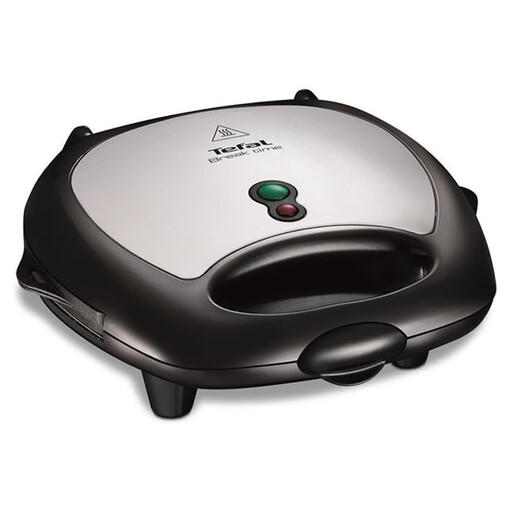
Why this product suits this profile: Three sets of plates allow you to prepare sandwiches, waffles, grilled snacks and paninis in one appliance.
The functions are defined by specific interchangeable plates; at the same time, the product description warns against overfilling the latch.
700 watts, three sets of plates, removable dishwasher-safe plates and vertical storage.
We have put together a complete, regularly updated list of products that fully meet these strict selection criteria and the safety regulations applicable in the EU.
For occasional classic toasties, appliances with around 600 to 750 watts are usually sufficient. For frequent use, several batches or larger slices of toast, models with 900 to 1,000 watts may be a sensible choice. Power consumption should always be considered alongside plate size and temperature control.
First unplug the sandwich toaster and allow it to cool completely. Remove crumbs with a soft cloth and wipe the plates with a damp cloth. Do not use metal objects, abrasive cleaners or scratchy sponges. Removable plates should only be put in the dishwasher if this is expressly stated in the product description or instruction manual.
Its lifespan depends on how often it is used, how it is cleaned and how the coating is treated. The appliance should not be overfilled, operated unattended or left connected to the mains after use. Wooden or silicone utensils, dry storage and a stable, heat-resistant surface can make regular use easier.