
Lieferung heute & morgen

Qualitätsgarantie

Willkommens-Angebote freischalten: KOSTENLOSE Lieferung | Bis zu 80 % RABATT | Kostenlose 30-Tage-JoyPlus-Testphase
App herunterladen
A sandwich maker should be able to whip up quick hot snacks in everyday life, take up little space, and be easy to clean after use. In practice, however, some typical purchasing decisions lead to unnecessary compromises. All too often, appliances are chosen based on marketing promises without a closer look at the plates, coating or dimensions.
The term "removable plates" sounds convenient at first. What really matters, though, is whether they are genuinely easy to clean and approved for the dishwasher. Fixed plates can be trickier to clean when cheese or fat has leaked out. With a sandwich maker with removable plates, the product details should state how the plates are removed and whether they are listed as dishwasher-safe sandwich maker plates.
An 800-watt sandwich maker can provide enough power for a household. However, the wattage only describes the electrical power consumption. For practical use, the design of the heating surfaces, heat distribution and the contact between the lid and the sandwich are also important. A high-powered electric sandwich toaster isn't automatically suitable for every type of bread or filling quantity.
A non-stick sandwich maker is usually easier to use because the filling doesn't stick to the plates. Even so, you should never use metal utensils. Plastic or wooden tools can help reduce wear on the coating. You should also let the appliance cool down completely before removing or cleaning the plates.
Cast aluminium plates can absorb heat quickly and transfer it to the contact surfaces. With the Braun SnackMaker 5 SM5000, the sandwich plates are made from cast aluminium according to the product specifications and feature a PTFE non-stick coating. The coating is designed for hassle-free preparation without additional oil. It should only be cleaned according to the manufacturer's instructions.
When comparing, look out for the following points:
For UK households, the power supply details are relevant. The Braun SnackMaker 5 SM5000 is rated at 800 watts and 230 volts. An operating indicator can make using the appliance easier, as it signals when the unit has heated up. Nevertheless, follow the specific instruction manual and never leave the appliance unattended while in use.
A compact sandwich maker should sit on a stable, heat-resistant surface. The SM5000 model has dimensions of 25 × 27.5 × 10.5 centimetres and weighs 3.11 kilograms. A locking system and cable tidy can make storage in a cupboard easier.
Also important are:
According to the instruction manual, sandwiches are ready in approximately 2 to 4 minutes. The actual time depends on bread thickness, filling quantity and how brown you want them.
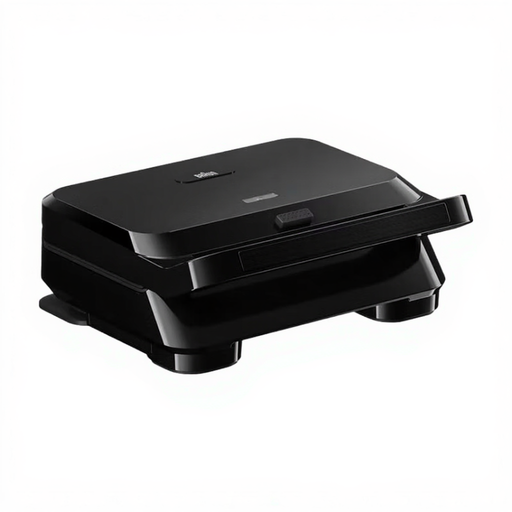
Why this product suits the profile: For households, students and professionals looking for an electric sandwich toaster with straightforward operation and space-saving storage.
The removable sandwich plates are dishwasher-safe according to the product specifications. This eliminates the need to clean fixed contact surfaces with a cloth or brush.
800 watts, cast aluminium plates with PTFE non-stick coating, plus a locking system and cable tidy for storage.
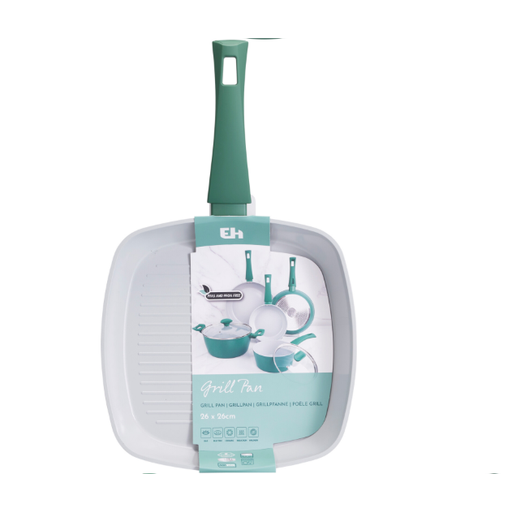
Why this product suits the profile: For buyers who don't just want to make sandwiches electrically and prefer a versatile grill pan for hob cooking.
The choice is based not just on marketing claims, but on material, dimensions and intended use: aluminium and 260 × 41 millimetres are clearly specified.
Ribbed grilling surface and 41-millimetre-high sides. This product is a hob pan, not an electric sandwich maker.
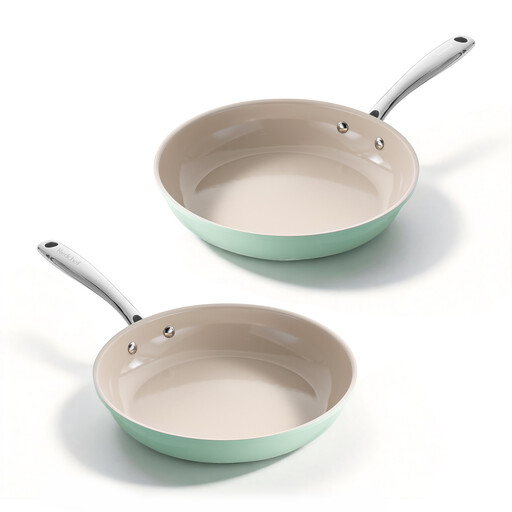
Why this product suits the profile: For heavy users who need two pan sizes for different hob dishes alongside warm snacks.
The technical specifications clearly state the material, sizes, coating and cleaning instructions. Hand washing is recommended to protect the coating.
Two pans measuring 20 and 24 centimetres, forged aluminium body, and suitability for induction, gas and electric hobs according to the product description.
We've put together a complete, regularly updated list of products that fully meet these strict selection criteria and the safety regulations in force in the EU.
The ongoing electricity costs of a sandwich maker depend on the power rating, usage time and your electricity tariff. With an 800-watt appliance, one hour of operation theoretically uses 0.8 kilowatt-hours. Since sandwiches usually only take a few minutes, the actual running time per use is much shorter. For an accurate estimate, you can calculate:
Power in kilowatts × usage time in hours × electricity price per kilowatt-hour
More important than a few minutes' difference is choosing the right filling quantity. Too much cheese or very moist ingredients can leak out and make cleaning more difficult. Bread slices should match the size of the plates. After use, unplug the appliance and let it cool down completely before removing the plates.
The lifespan depends on how often you use it, how you clean it and how you treat the non-stick coating. Don't use metal utensils, store the appliance in a dry place and observe the maximum filling quantity. With removable plates, don't force the release mechanism or damage the coating.
Generally yes, because the plates can be cleaned separately. Whether they are dishwasher-safe must be explicitly stated in the product specifications. The main unit itself must not be held under water or immersed in water.
For most domestic use, an appliance in the 700 to 900 watt range is practical. An 800-watt sandwich maker provides a concrete benchmark, but it doesn't replace checking the plate shape, heat distribution, safety features and cleaning. What matters most is that the features suit your portion sizes and usage habits.