Toast fans with small kitchens
If you usually make sandwiches with sliced bread and cooked chicken, and want to put the appliance away after eating, check the shape of the plates and whether it can be stored upright.


For sliced bread with cooked chicken, a classic sandwich maker with suitable plates and compact storage is a sensible place to start. If you also make paninis or use different types of bread, consider a model with panini plates or a contact grill. Compare how much space it takes up when open, as well as how easy it is to clean. Wattage alone tells you neither how your toast will turn out nor whether the chicken filling has been heated through safely.
If you usually make sandwiches with sliced bread and cooked chicken, and want to put the appliance away after eating, check the shape of the plates and whether it can be stored upright.
If you also use long or different thicknesses of bread, check that the plate shape and the set of plates supplied are suitable.
If you make filled sandwiches regularly, removable plates can make cleaning easier. Check each model to see which parts can actually be removed and are dishwasher-safe.
When worktop space is limited, it’s not just about how neatly an appliance can be stored. Consider how much room it needs while in use and when you open it, too. The shape of your bread, plate depth and ease of cleaning also affect your choice.
A good choice if: you mainly use slices of toast bread and want to store the appliance upright.
Things to consider: fixed moulded plates are less versatile for long paninis and can’t be removed for washing.
A good choice if: you switch between toast and paninis, and the right plates are included.
Things to consider: extra plates need storage space, and what’s included and how the appliance is cleaned vary by model.
A good choice if: you often make paninis with long bread or different fillings.
Things to consider: measure your worktop space with the grill open, too. A grill function doesn’t remove the need to check that the chicken filling has become hot enough.
| Consideration | What to check before buying | Who should consider it? |
|---|---|---|
| Space | Appliance dimensions and room needed to open it; also check whether it’s designed for upright storage. | When worktop space is limited, I need an appliance that fits in my kitchen both when toasting and when stored away. Around 36% of consumers are likely to prioritise space above all. |
| Bread and filling shape | Check the plate shape and depth against the bread and filling you use; for paninis, check which plates are included. | I want the bread and cooked chicken to fit between the plates. Around 29% of consumers are likely to focus mainly on finding plates to suit their bread and fillings. |
| Cleaning | Check whether the plates are removable and which parts the manufacturer says are dishwasher-safe. | If I make filled sandwiches often, I want to be able to remove any residue more easily. Around 21% of consumers are likely to prioritise ease of cleaning. |
| Simple toast-making | Compare the size of your bread with the plate shape; choose only the features you’ll actually use. | If I usually make toast with slices of the same size, I may be happy with a simple model. Around 14% of consumers are likely to be looking mainly for straightforward toast-making. |
How an appliance is stored doesn’t tell you how much worktop space it needs when open.
Measure the space needed to position and open it separately. If it has interchangeable plates, remember to allow room to store the extra parts, too.
The surface of the bread doesn’t give a reliable indication of the filling’s temperature. The German Federal Institute for Risk Assessment recommends heating food to at least 70 °C throughout for at least two minutes when reheating it.
Store cooked chicken safely in the fridge and, if needed, check the temperature of the filling rather than judging by the colour of the bread.
What’s included can vary by model: the Braun SM5005 is listed with sandwich and waffle plates, while the Tefal SW383D comes with sandwich and panini plates.
Before buying, check the exact model number against the plate set specifically listed.
The FDK461 is a classic sandwich maker with triangular plates. Krups says this model has deep plates and can be stored vertically.
The SnackMaker 5 SM5005 combines sandwich and waffle plates and, according to Braun, can be stored upright.
The SW383D has interchangeable plates for sandwiches and paninis; the GC272D is a separate contact grill model.
According to ProfiCook, the PC-ST 1092 is designed for slices of toast measuring approximately 9 to 14,5 cm.
The SA 2969 is a straightforward option for toast. Severin lists the product dimensions as 8,7 × 24 × 22 cm.
This selection includes contact grills for sandwiches and paninis, as well as sandwich makers. If worktop space is limited, compare the appliance’s dimensions and the room it needs when open with the space you have available.
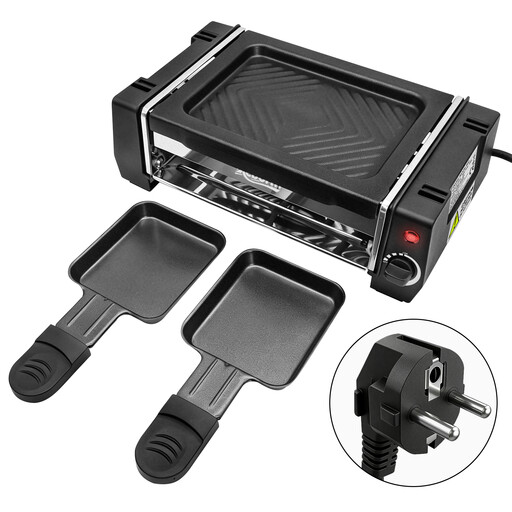 No image available
Could be suitable for sandwiches or paninis; the description says the hinge adjusts to the thickness of the food.
800 W; two metal plates measuring 25,5 × 14 cm. The description says the plates aren’t non-stick; a temperature control is also listed.
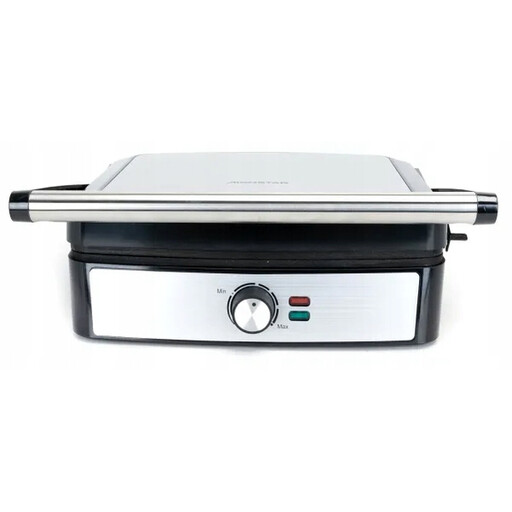 No image available
Worth considering if you make sandwiches and paninis and want an appliance with plates that open out.
2200 W; according to the description, it opens to 180° and has a temperature control, non-stick plates and a drip tray. Stated dimensions: 328 × 323 × 133 mm.
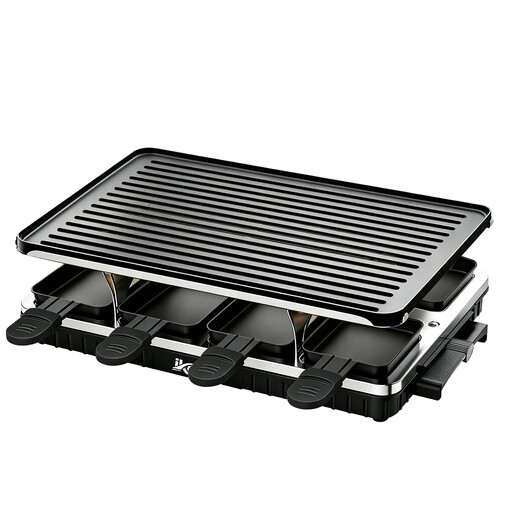 No image available
The description lists sandwiches and paninis as possible uses for this contact grill.
800 W; the description lists non-stick plates and heating from above and below.
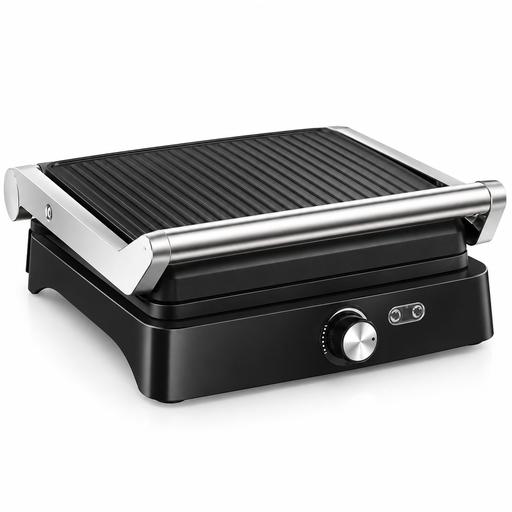 No image available
Could be a good fit if you make sandwiches and paninis and want an appliance that, according to the description, is compact to store.
1500 W; makes two sandwiches; non-stick plates. The description also lists an adjustable hinge, a removable crumb tray and stainless steel surfaces.
 No image available
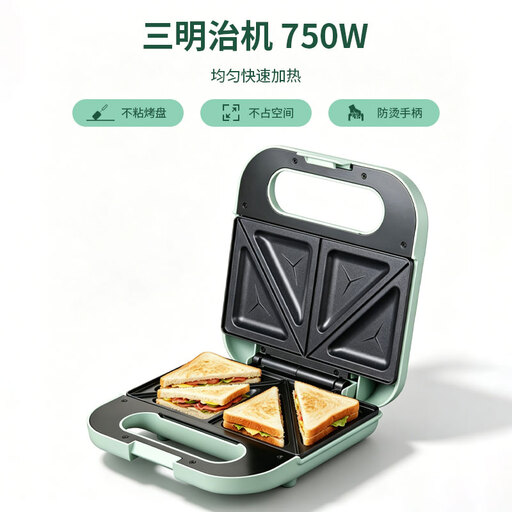
Could be suitable for making toasted sandwiches; compare the stated dimensions with the space you have available.
750 W; for two slices; dimensions 230 × 236 × 96 mm and weight 1,2 kg. According to the description, it has an adjustable thermostat and an indicator light.
Yes, but the colour of the bread doesn’t show whether the filling has been heated through sufficiently. When reheating food, the German Federal Institute for Risk Assessment recommends heating it to at least 70 °C throughout for two minutes. Make sure the chicken has been stored safely in the fridge beforehand, and check the temperature of the food if needed.
You don’t need interchangeable plates for toast alone. If you also make paninis, check what’s included with the specific model: the manufacturer lists sandwich and panini plates for the Tefal SW383D, and sandwich and waffle plates for the Braun SM5005.
Check whether the plates on your chosen model are removable and dishwasher-safe, and follow the instructions. Braun says the SM5005 plates are dishwasher-safe; the manufacturer says the plates on the Krups FDK461 are fixed in place.
Statutory consumer rights cover faults and apply against the seller; a guarantee is an optional extra with its own terms and conditions. The Verbraucherzentrale (German consumer advice centre) makes this distinction explicit. If a guarantee is offered, check which model and benefits it covers.
Yes. According to the European Commission, electrical and electronic equipment is among the product groups for which relevant EU rules require CE marking. The mark isn’t an independent endorsement of the appliance’s toasting performance.