
Lieferung heute & morgen

Qualitätsgarantie

Willkommens-Angebote freischalten: KOSTENLOSE Lieferung | Bis zu 80 % RABATT | Kostenlose 30-Tage-JoyPlus-Testphase
App herunterladen
The selection of sanitary pads on the shelf can be overwhelming. Different lengths, thicknesses, and absorbency levels promise protection, but not every product delivers what the packaging suggests. Making the wrong choice not only leads to discomfort but also to unnecessary expenses. Many women reach for the same product out of habit, even though it may no longer be the optimal fit for their current needs.
Two common pitfalls when choosing are focusing solely on the thinnest possible liner and trusting inconsistent absorbency symbols. While an ultra-thin pad offers discretion, it can quickly reach its limits during a heavier flow. Similarly, the droplet symbols shown on packaging are not standardised, making direct comparisons between brands difficult. A product with four droplets from one brand may have a different absorbency than a comparably marked product from another.
To make an informed decision based on security and comfort, you should consider three core aspects: absorbency in combination with length, the surface material, and the fit.
The required absorbency depends directly on the intensity of your flow, which changes throughout your cycle. Instead of relying solely on droplets, it's advisable to use the product descriptions as a guide.
The surface of the pad is in direct contact with your skin. The choice of material is therefore crucial for comfort and preventing irritation.
A shifting pad is one of the main causes of leaks. The fit is therefore just as important as the absorbency.
Based on these objective criteria, we have put together some products for specific requirement profiles.
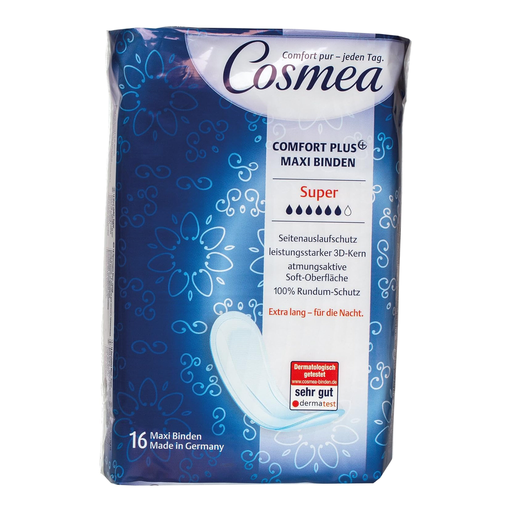
Why This Fits Their Persona: Ideal for women seeking reliable protection on heavier days or overnight that won't shift and feels comfortable even on sensitive skin.
This product relies on proven features rather than marketing trends. Instead of being 'ultra-thin,' it offers high absorbency combined with an extra-long design and wings, focusing on genuine security.
Extra-long design for enhanced protection. The soft, breathable surface is suitable for sensitive skin.
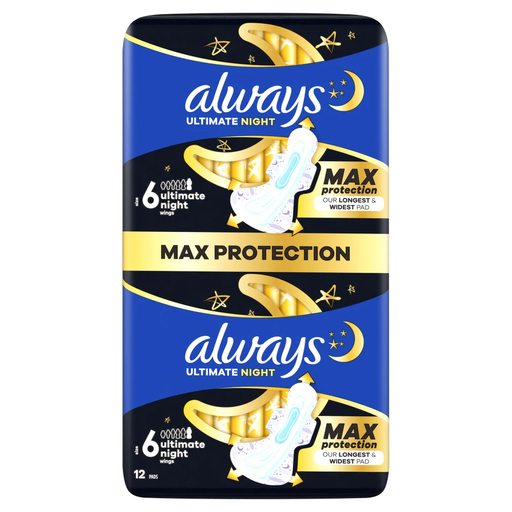
Why This Fits Their Persona: For women who need maximum protection during the night and don't want to worry about leaks, even with a heavy flow and a lot of movement while sleeping.
This pad goes beyond generic droplet symbols by being specifically designed for nighttime. Its shape, with extra protection at the back, directly addresses the needs of a lying-down position, something standard pads often overlook.
Additional wings at the back for stability and a ComfortFit system ensure a secure hold throughout the night. According to the manufacturer, it is three times more absorbent than the Always Ultra Day Normal.
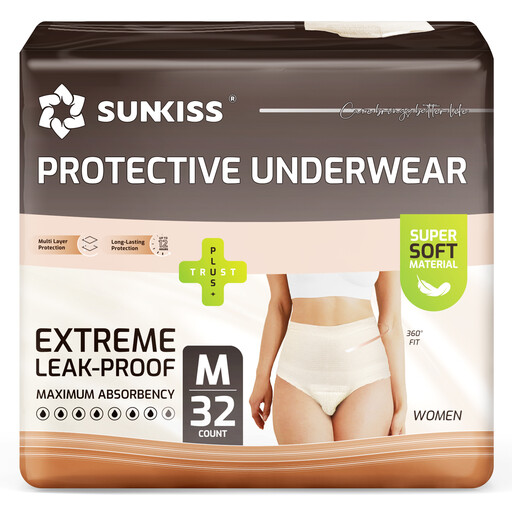
Why This Fits Their Persona: Suitable for women who need a discreet and highly absorbent solution for light to moderate bladder weakness or as postpartum pads after childbirth. The focus is on security and odour control in daily life.
This product is not a conventional pad but a specialised incontinence liner for women in the form of period underwear. It avoids the mistake of using a pad designed for menstrual blood for urine, which has a different consistency and odour profile.
The 360° design is worn like regular underwear and offers all-around protection. The absorbent core locks fluid into a gel, and the Odor-Lock technology neutralises odours.
We have compiled a complete, up-to-date list of products that fully meet these strict selection criteria and all relevant safety standards.
For hygiene reasons, it is recommended to change a sanitary pad every 3 to 4 hours. On days with a heavy flow, more frequent changes may be necessary. Regular changing prevents the growth of bacteria and the development of odours.
Although they look similar, they are designed for different purposes. Sanitary pads are designed to slowly absorb the thicker fluid of menstrual blood. In contrast, incontinence liners for women are developed for the rapid surge of thin fluid like urine. They often contain special super-absorbents that quickly turn urine into a gel and neutralise odours, which is not the case to the same extent with sanitary pads.
In rare cases, the adhesive on the wings or the friction from the wing edges against the inner thighs can lead to skin irritation. If you notice this, you can try products with wings made from an especially soft material or, alternatively, use pads without wings in combination with well-fitting underwear.