
Lieferung heute & morgen

Qualitätsgarantie

Willkommens-Angebote freischalten: KOSTENLOSE Lieferung | Bis zu 80 % RABATT | Kostenlose 30-Tage-JoyPlus-Testphase
App herunterladen
A good Santoku knife can transform meal prep from a chore into a genuine pleasure. But the market is flooded with options that promise more than they deliver. Many home cooks invest in a supposedly high-end Japanese chef's knife, only to find that after a few months, the edge dulls, the handle is uncomfortable, or food sticks to the blade. As your Joybuy Product Recommendation Officer, I'm here to help you distinguish marketing hype from genuine quality features.
Before you make a decision, you should be aware of the three most common traps that lead to a bad purchase:
To find a durable and functional all-purpose kitchen knife, you should focus on verifiable, technical parameters rather than flowery marketing promises.
The steel is the heart of any knife. A sharp kitchen knife owes its edge retention to the right balance of hardness and toughness.
As mentioned, the tang is crucial for durability and handling. A forged Santoku with a full tang, where the steel extends from the tip of the blade to the end of the handle, is the most stable construction. You can often identify it by the rivets that secure the handle scales through the steel. This design ensures optimal balance, allowing for fatigue-free work.
The shape of the blade determines what the knife is best suited for.
Here are some recommendations tailored to different needs and budgets, all of which meet the quality criteria mentioned above.
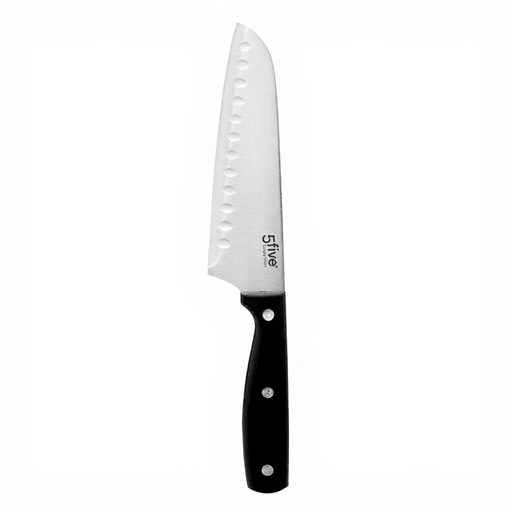
Why This Fits Their Persona: Ideal for anyone looking for a functional and affordable all-purpose knife for daily use. It focuses on the essentials without costly extras.
This knife deliberately avoids a fake Damascus look. It offers an honest, stainless steel blade and a simple ABS handle designed for function over flash.
Lightweight and agile: Weighing only 138g, it's very easy to handle. Great value for money: Offers solid basic functions for an entry-level price.
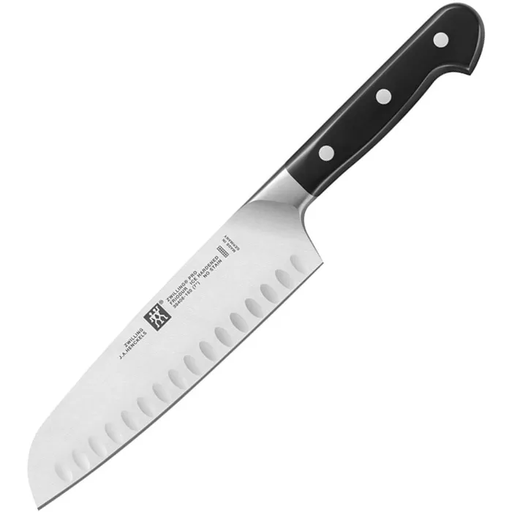
Why This Fits Their Persona: For ambitious cooks who want to invest in a durable, precise, and professional tool. This knife represents German engineering and longevity.
It bypasses the traps with verifiable quality: The SIGMAFORGE construction from a single piece of steel ensures a true full tang and perfect balance. The hollow-ground edge is functional, not just decorative.
FRIODUR ice-hardened blade: According to the manufacturer, this ensures exceptional edge retention and corrosion resistance. Seamless transition: The seamless join between the blade and handle is hygienic and stable.
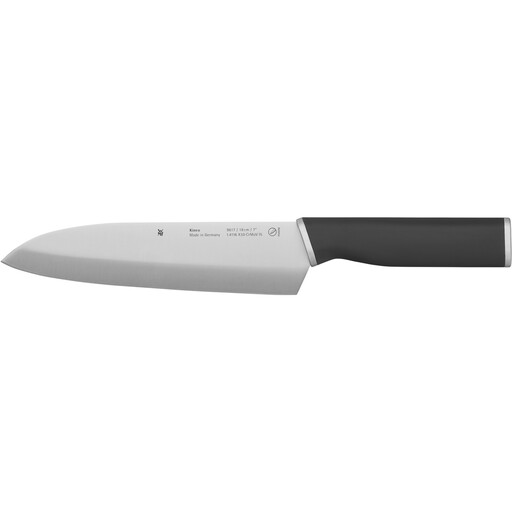
Why This Fits Their Persona: Perfect for cooks who value modern aesthetics and exceptionally comfortable handling. The kinetic design is not only visually appealing but also ergonomically engineered.
Instead of flash, WMF relies on verifiable technology. The Performance Cut technology is a specific manufacturing process that, according to WMF, ensures superior and long-lasting sharpness.
Ergonomic design: The kinetic handle design ensures comfortable and secure handling. Hardened special blade steel: Provides high hardness and corrosion resistance.
We've compiled a complete, up-to-date list of products that fully meet these strict selection criteria and rigorous safety standards.
The main difference lies in the blade shape and the associated cutting technique. The European chef's knife has a curved blade, which is ideal for a rocking motion. The Japanese chef's knife, or Santoku, has a straighter edge and a rounded tip. It is designed for quick, chopping up-and-down movements and is excellent for precise, thin cuts of vegetables and fish.
Proper care is crucial for its longevity. Always wash your knife by hand with warm water and mild detergent, and dry it immediately. The harsh chemicals and high temperatures in a dishwasher can damage both the blade and the handle. Store it in a knife block, on a magnetic strip, or in a blade guard to protect the edge. Regular honing with a honing steel will maintain the edge's sharpness.
A hollow-ground chef's knife is not strictly necessary, but it is very useful. The indentations create small air pockets between the blade and the food. This reduces friction and prevents thin, moist slices (e.g., of cucumbers, potatoes, or salmon) from sticking to the blade. On a well-made knife, this can significantly speed up your workflow. However, for general cutting tasks, the absence of a hollow-ground edge is not a deal-breaker.