
Lieferung heute & morgen

Qualitätsgarantie

Willkommens-Angebote freischalten: KOSTENLOSE Lieferung | Bis zu 80 % RABATT | Kostenlose 30-Tage-JoyPlus-Testphase
App herunterladen
A good Santoku knife is more than just a cutting tool; it's a versatile partner for daily kitchen tasks. However, the market is flooded with models whose marketing promises often create more confusion than clarity. Many home cooks invest in a knife that quickly loses its edge or proves to be impractical to handle. This guide will help you identify the crucial features and avoid common purchasing pitfalls.
Before we delve into the important characteristics, you should be aware of the most common mistakes that often lead to disappointment and unnecessary expense.
To make an informed decision, you should carefully examine three technical aspects. These are the primary determinants of the performance and longevity of your future all-purpose kitchen knife.
The steel is the heart of any knife. For a Japanese chef's knife like the Santoku, stainless steels are the most common choice. Pay attention to the manufacturer's specifications regarding the type of steel used. German manufacturers like Zwilling or WMF often use special steel alloys that offer a compromise between edge retention (how long the knife stays sharp) and ease of sharpening. A hardness rating between 55 and 58 HRC (Rockwell Hardness) is a good benchmark for everyday use. It provides solid edge retention without making the blade excessively brittle.
The typical Santoku blade is wide, with a straight or only slightly curved cutting edge and a sheepsfoot tip. This shape is excellent for pushing and pulling cuts, especially when chopping vegetables. A Santoku knife with a hollow edge (Granton edge) is a popular variation. The oval indentations on the side of the blade create small air pockets between the blade and the food. This reduces sticking from thin, moist slices like cucumbers or potatoes and allows for smoother work.
The handle should be seamlessly joined to the blade to prevent food residue from accumulating and to facilitate cleaning. Materials like high-quality plastic (e.g., polypropylene or TPE) or composite materials are hygienic, durable, and often provide a good grip. Look for a well-balanced knife: it should not be blade-heavy or handle-heavy, but should rest balanced in your hand. This is crucial for a fatigue-free chef's knife for vegetables and other ingredients.
Here are some models that are suitable for different needs and user profiles based on their objective features.
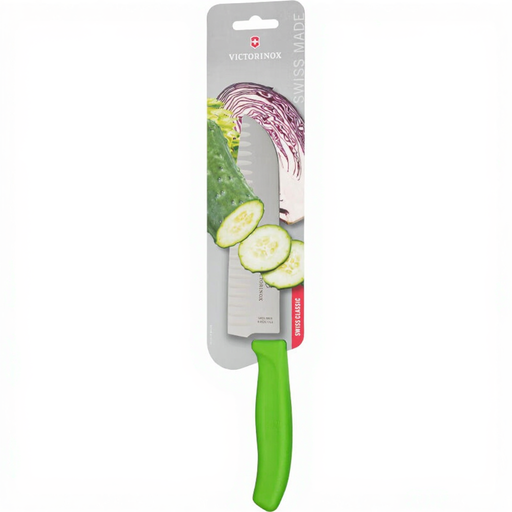
Why This Fits Their Persona: Ideal for home cooks looking for a reliable, brand-name knife without a large investment. It combines the versatility of a Santoku with low-maintenance features for daily use in a family kitchen.
This model forgoes ornamental frills and focuses on function. The ergonomic plastic handle and light weight prevent the trap of a clumsy, poorly balanced knife.
Features a hollow edge that reduces food from sticking. The thermoplastic elastomer (TPE) handle is robust and, according to the manufacturer, dishwasher-safe.
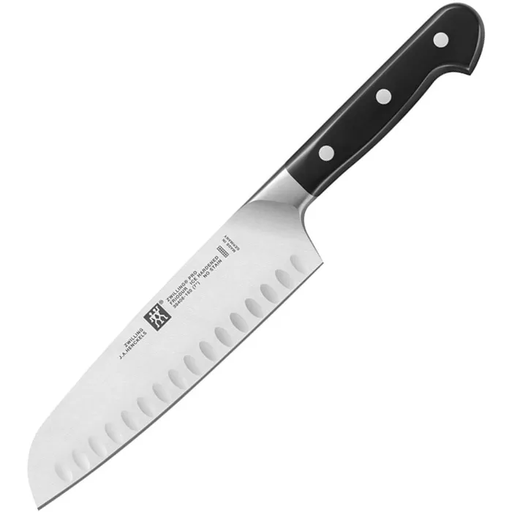
Why This Fits Their Persona: For cooks who value German engineering and durable materials. This knife is designed for intensive use and offers precision for demanding cutting tasks.
It sidesteps the "wrong steel" trap. According to Zwilling, a special steel formula is used, and the blade is refined with the FRIODUR ice-hardening process, ensuring high edge retention and corrosion resistance.
Forged from a single piece of steel (SIGMAFORGE process) for stability and balance. The hollow edge prevents food from sticking. Made in Germany.
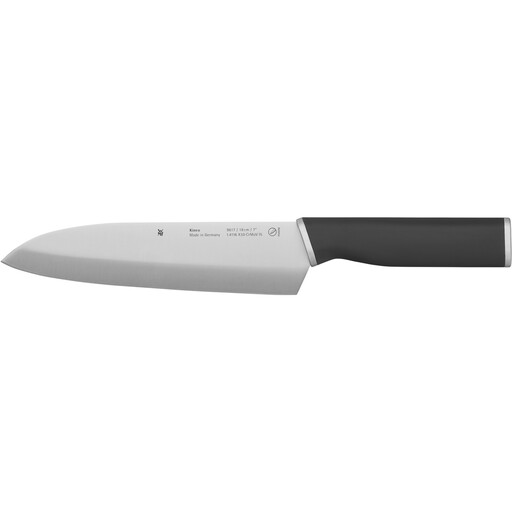
Why This Fits Their Persona: For users who appreciate a modern aesthetic combined with technical performance. The kinetic design and special blade technology appeal to users seeking a tool with thoughtful functionality.
This avoids the "poor handle" trap. The kinetic design of the handle is engineered for comfortable and balanced handling, which increases control and safety during cutting.
According to WMF, it uses "Performance Cut" technology for long-lasting sharpness. The blade is made of hardened special blade steel. Made in Germany.
We have compiled a complete, up-to-date list of products that fully meet these strict selection criteria and German safety regulations.
What is the difference between a Santoku knife and a European chef's knife? The main difference lies in the blade shape and cutting technique. The European chef's knife has a curved blade, which is well-suited for a rocking chop. The Santoku knife has a wider and straighter blade optimized for chopping and pulling cuts, making it particularly efficient as a chef's knife for vegetables.
How do you properly care for a Santoku knife to maintain its sharpness? Clean the knife by hand with warm water and a mild detergent immediately after use, especially after contact with acidic foods. Dry it immediately. Even if some models are declared dishwasher-safe, hand washing is gentler on the blade in the long run. Use cutting boards made of wood or plastic, as hard surfaces like stone or glass will damage the cutting edge.
Is a hollow edge really necessary? A Santoku knife with a hollow edge is not essential, but it offers a noticeable advantage. The air pockets created by the indentations reduce friction and food sticking. This is especially helpful when slicing potatoes, zucchini, or moist fish. For general use, it is a convenient additional feature.