
Lieferung heute & morgen

Qualitätsgarantie

Willkommens-Angebote freischalten: KOSTENLOSE Lieferung | Bis zu 80 % RABATT | Kostenlose 30-Tage-JoyPlus-Testphase
App herunterladen
A Santoku knife can complement your other kitchen knives for slicing, dicing and chopping vegetables, fish, meat and herbs. But choosing one involves more than just its design. Blade length, edge type, handle material and cleaning all affect how well it suits your needs.
A 17 cm Santoku knife offers a good balance of reach and control in many homes. An 18 cm Santoku knife gives you a little more blade surface for larger ingredients, but takes up more space on the chopping board. If you have smaller hands or limited worktop space, a shorter blade may feel more comfortable.
Marketing copy often describes a blade as especially sharp without explaining its edge angle, steel type or care requirements. What matters is whether the edge is suited to the tasks you have in mind and how it needs to be maintained. A very thin edge can cut precisely, but isn’t designed for bones, frozen food or hard skins.
A dishwasher-safe Santoku knife is convenient for everyday use. However, contact with other kitchen utensils, detergent and high temperatures can put more strain on the edge and handle than gentle hand-washing. Check the manufacturer’s instructions before buying and when cleaning your knife.
Blades measuring 17 to 18 cm are common for everyday food preparation. A 17 cm Santoku knife is suitable for vegetables, herbs, fish and smaller cuts of meat. An 18 cm model gives you a little more blade surface for larger ingredients.
Compact options such as the Tefal Fresh Kitchen Santoku knife with a 12 cm blade may suit smaller cutting tasks or limited worktop space. However, they won’t replace a traditional, longer Santoku knife in every kitchen.
Stainless steel resists corrosion and is easy to clean with proper care. Claims such as “rust-resistant” or “ice-hardened”, and specific hardness ratings, should be treated as technical product details rather than blanket guarantees of lasting sharpness.
A Santoku knife with a Granton edge has indentations along the blade. These can reduce contact between the blade and soft foods. This may make it easier to release slices when cutting potatoes, cucumbers or fish. A Granton edge doesn’t make the knife suitable for hard materials, though.
An ergonomically shaped plastic handle is usually easy to care for. A wooden handle can feel comfortable in your hand, but needs more attention and shouldn’t be left in water for long. Also consider the knife’s weight and balance: a heavier knife may feel more stable, while a lighter model is often easier to manoeuvre.
Only use suitable wooden or plastic chopping boards. Glass, stone and ceramic surfaces can damage the edge. Store your knife in a knife block, protective sheath or on a suitable magnetic strip rather than loose in a drawer.
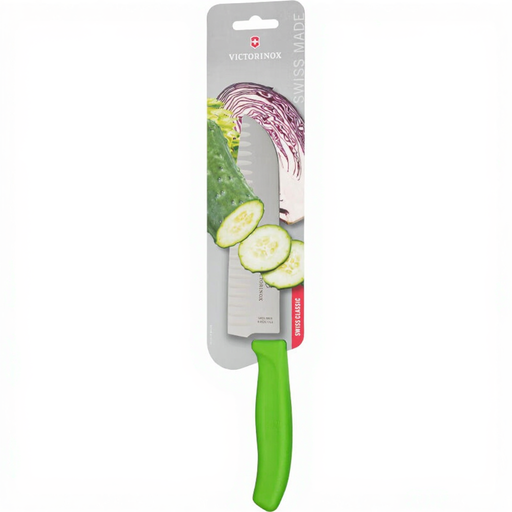
Why it suits this buyer: This 17 cm model is designed for everyday cutting tasks at home and, according to the product details, is dishwasher-safe. The plastic handle is easy to care for.
The stated blade length and details about materials and cleaning make it easier to compare, without vague claims about size.
17 cm blade, stainless steel and Granton edge; the product description says it’s suitable for fruit, vegetables, fish and meat.
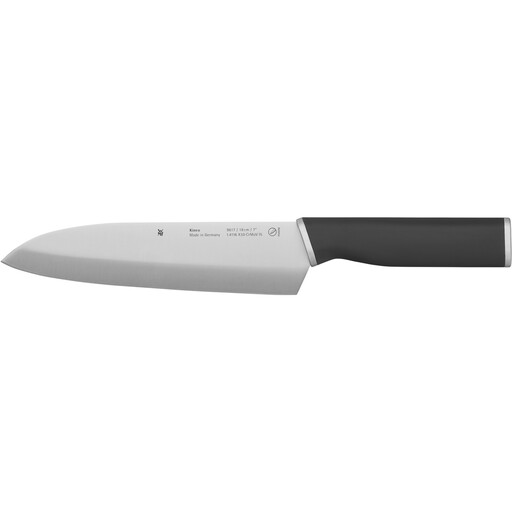
Why it suits this buyer: According to the product details, this model features specially hardened steel, a secondary bevel and a stated hardness of 55–58 HRC.
The technical details about the steel, hardness and blade length help you assess the advertised features. Hand-washing is recommended.
18 cm blade, corrosion-resistant steel and an ergonomic handle, according to the product description.
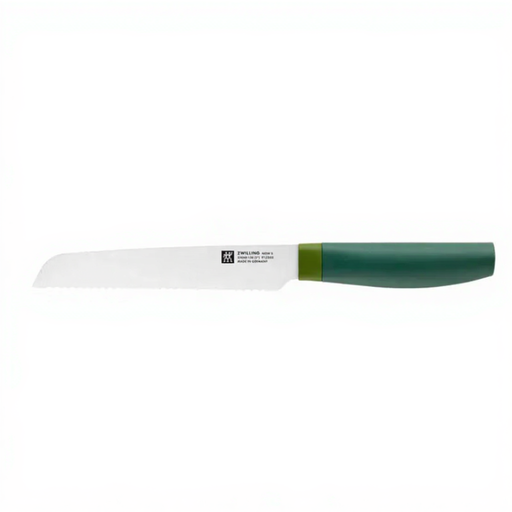
Why it suits this buyer: The Granton edge is designed for cutting vegetables, fish and meat. According to the product details, the knife is dishwasher-safe.
The Granton edge is clearly specified, rather than relying on a vague claim about cutting performance. Hand-washing is still recommended to protect the blade.
18 cm blade, ice-hardened stainless steel, Granton edge and plastic handle with finger guard.
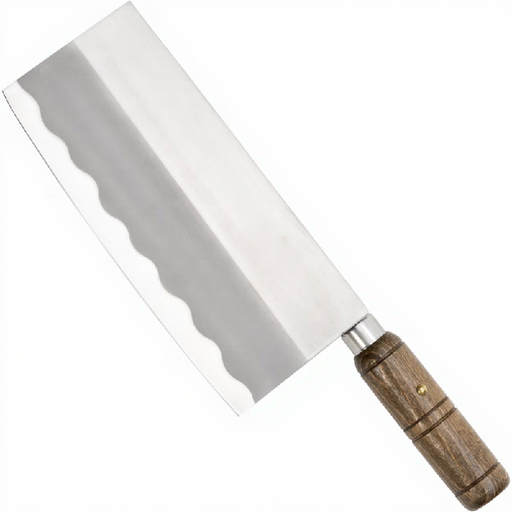
Why it suits this buyer: According to the product details, this Japanese kitchen knife has a 20.7 cm blade, a wooden handle and a single-bevel edge.
The blade length, weight, material and edge grind are all specified. The wooden handle also indicates that the knife needs more care.
Stainless steel blade, 315 g weight, wooden handle and made in Japan, according to the product description.
We’ve put together a complete, regularly updated list of products that meet these strict selection criteria and fully comply with the safety regulations in force in the EU.
A Santoku knife is a versatile Japanese kitchen knife for slicing, dicing and chopping. Depending on the model, it’s suitable for vegetables, herbs, fish and boneless meat. Don’t use it on bones or frozen food.
The indentations can reduce contact with the blade when cutting soft or moist foods, which may make slices easier to release. However, this type of edge is no substitute for a suitable chopping board or regular care.
How long the edge stays sharp depends on the steel, cutting angle, use, chopping surface and care. Wooden or plastic boards, safe storage and occasional sharpening all help keep the edge in good condition. There’s no reliable way to give a fixed lifespan that applies to every model.