
Lieferung heute & morgen

Qualitätsgarantie

Willkommens-Angebote freischalten: KOSTENLOSE Lieferung | Bis zu 80 % RABATT | Kostenlose 30-Tage-JoyPlus-Testphase
App herunterladen
A Santoku knife combines a broad blade with a relatively compact design. It’s suitable for slicing, dicing and chopping vegetables, fish and boneless meat. However, not every model is right for every kitchen. Some knives are marketed as having “Japanese design” but are made in Germany or elsewhere. Others have a coating or a granton edge, even though these features may not be relevant to the way you cut.
If you’re looking to buy a Santoku kitchen knife, don’t focus solely on the price or marketing claims. Look for verifiable details about blade length, material, handle, care and intended use.
“Japanese Santoku knife” may describe the shape or design. The country of manufacture is a separate matter. For example, a knife may be made in Germany while still featuring a Santoku blade inspired by Japanese designs. If you’re specifically looking for a Santoku knife made in Germany or a Santoku knife made in Japan, check the country of origin in the product details.
The indentations in the blade are known as a granton edge. They can reduce contact between food and the blade while you’re cutting. However, that doesn’t mean food will always stick less or every cutting task will become easier. For everyday use, blade shape, sharpness, balance and the right cutting technique are just as important.
A dishwasher-safe Santoku knife is convenient when you want to clean up quickly. However, hard objects, detergents and high temperatures in the dishwasher can put extra strain on the blade and handle. That’s why many manufacturers recommend hand washing, even for models that are dishwasher safe. This advice is particularly relevant if keeping the blade precise over time is a priority.
An 18 cm Santoku knife gives you plenty of blade for larger vegetables, fish fillets and boneless meat. It’s a versatile standard size for many households, but you’ll need enough space on your chopping board to use it comfortably.
Compact 12 cm models, such as the Tefal Fresh Kitchen K12201, are worth considering if you have smaller hands, limited worktop space or lighter prep tasks. A 17 to 18 cm blade offers greater reach and is better suited to regular, more extensive food preparation.
A stainless steel Santoku knife is corrosion-resistant and relatively easy to care for in everyday use. Terms such as “rust-free”, “ice-hardened” or “FRIODUR” describe the material or manufacturing features of a particular model, but they don’t replace proper care.
Look for:
A sharp kitchen knife shouldn’t need to be pushed through food with excessive force. Bones, frozen food, hard skins and glass, stone or ceramic surfaces can damage the edge.
An ergonomic handle should feel secure in your hand when dry. Plastic, ABS and wood differ in both care requirements and feel. As a rule, wooden handles shouldn’t be soaked or washed in the dishwasher. Whatever the type of knife, store it in a knife block, on a magnetic strip, in a drawer insert or with a blade guard.
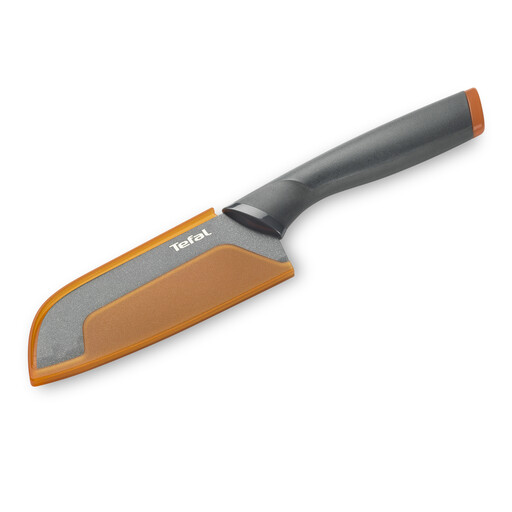
Why this product suits this profile: The 12 cm blade is well suited to smaller kitchens and everyday cutting tasks. The soft-touch handle and blade guard help you handle it with control.
The blade length is clearly stated, helping you avoid buying a knife that’s too large for a small worktop or light food preparation.
12 cm coated stainless steel blade, ergonomic soft-touch handle and blade guard.
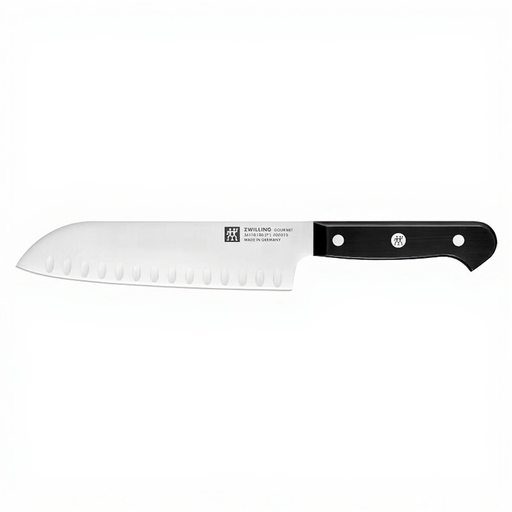
Why this product suits this profile: The 18 cm blade, made from FRIODUR ice-hardened special formula steel, is designed for households looking for a versatile size and clear information about the materials.
The product details state the country of origin, blade length, material and cleaning suitability. This makes it easier to check the facts before buying, rather than choosing on the basis of marketing claims alone.
18 cm blade, made in Germany, dishwasher safe according to the product details, with an ergonomic plastic handle.
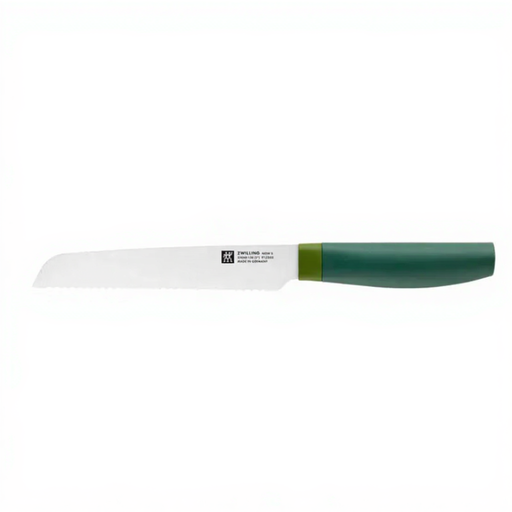
Why this product suits this profile: The granton edge may appeal if you often slice vegetables, fish and boneless meat and want to reduce contact with the blade.
The granton edge is listed as a specific blade feature, rather than the knife being marketed in general terms as having Japanese design. Hand washing is recommended to help protect the edge.
18 cm ice-hardened stainless steel blade, granton edge, full-tang construction and corrosion-resistant finish.
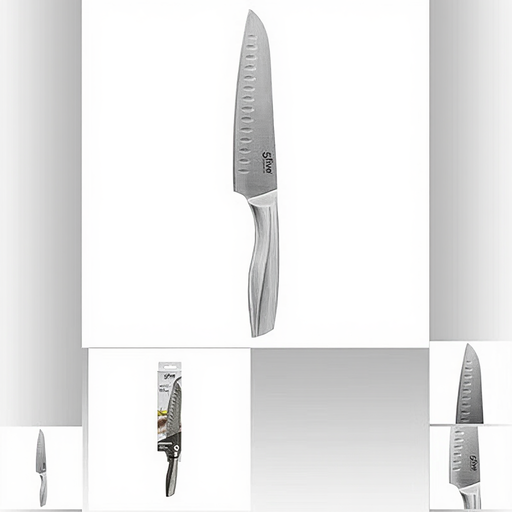
Why this product suits this profile: The forged construction, full tang and ergonomic handle make this a good option if you regularly slice, dice and chop.
The product description gives specific details about the construction, handle and intended uses. This makes it easier to assess stability and handling than relying on the word “professional” alone.
Forged stainless steel, full-tang construction, ergonomic handle and suitable for vegetables, fish and boneless meat.
We’ve put together a complete, regularly updated list of products that meet these strict selection criteria and fully comply with the safety regulations in force in the EU.
Yes. The broad blade is generally suitable for cutting vegetables, fish and boneless meat. Santoku knives aren’t designed for bones, frozen food or very hard ingredients.
For many households, 17 to 18 cm is a versatile range. A 12 cm blade may be more comfortable if you have limited worktop space, smaller hands or lighter tasks. The right choice depends on the size of your chopping board, the ingredients you prepare and what feels comfortable to use.
It depends on the model. Some products are listed as dishwasher safe by the manufacturer, while others should only be hand washed. Even if a knife is labelled dishwasher safe, hand washing can help keep the blade and handle in good condition for longer.