
Lieferung heute & morgen

Qualitätsgarantie

Willkommens-Angebote freischalten: KOSTENLOSE Lieferung | Bis zu 80 % RABATT | Kostenlose 30-Tage-JoyPlus-Testphase
App herunterladen
A Santoku knife combines the broad blade of a classic kitchen knife with a shape that is usually slightly curved and suitable for many cutting movements. It is ideal for slicing, dicing and chopping vegetables, herbs, fish and boneless meat. However, not every model is right for every household.
Many purchasing decisions are based on specifications that sound convincing at first glance but say little about everyday use. What matters is not just terms such as ‘Japanese’, ‘Damascus’ or ‘professional’, but clear details about blade length, steel, handle, edge and care.
The indentations in the blade are known as a Granton edge. They can reduce contact between the blade and food. When cutting potatoes, cucumbers or cheese, this may reduce the amount that sticks to the blade. However, the edge does not replace suitable cutting technique and will not prevent every type of food from sticking.
Stainless steel Santoku knives are more resistant to rust than many unprotected carbon steels. However, edge retention also depends on the steel composition, heat treatment, blade geometry and how the knife is used. A brand name or shiny surface is not, by itself, proof of a particular level of sharpness.
A dishwasher-safe Santoku knife can be cleaned in the dishwasher according to its product information. However, contact with other cutlery, harsh detergents and prolonged exposure to moisture can put additional strain on the edge and handle. For many models, hand washing with mild washing-up liquid and drying immediately is the gentler routine.
An 18 cm Santoku knife provides plenty of cutting surface for larger portions of vegetables, cabbage, fish fillets or boneless meat. However, it requires slightly more space and control. For smaller worktops and kitchen beginners, a 12 or 17 cm model may be easier to handle.
As a practical guide:
The overall length of the knife is not the same as the blade length. Blade height and weight also affect how it handles.
Look for specific information about the material, such as stainless steel, special-melt steel or a particular steel alloy. Some ZWILLING models mention a FRIODUR ice-hardened blade; this refers to the manufacturing process and product characteristics described by the manufacturer. It is not a general indication of quality for every knife.
A clean blade grind and an even cutting edge are also important for precise cuts. A sharp kitchen knife should not be forced through hard ingredients using pressure. Bones, frozen food, hard skins and glass, stone or ceramic chopping boards can damage the edge.
An ergonomic plastic handle is resistant to moisture and easy to clean. Wooden or bamboo handles, on the other hand, require hand washing and should not be left to soak. A full-tang construction, several rivets or a seamless transition can be objectively described construction features; whether the knife feels comfortable also depends on your hand size and personal cutting grip.
Do not store the knife loose in a drawer. A knife block, magnetic strip, drawer insert or blade guard reduces the risk of damage and injury.
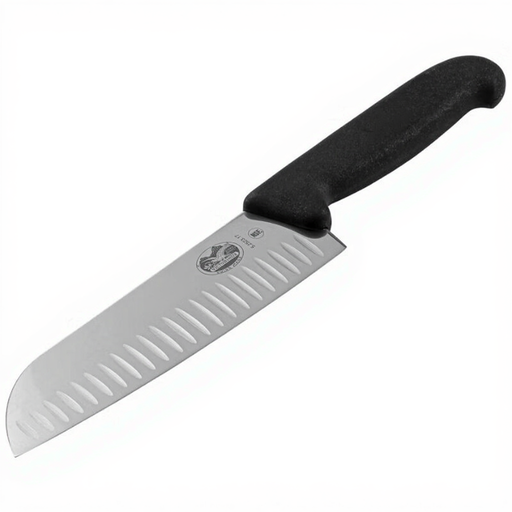
Why this product suits this profile: The 17 cm blade offers a practical middle ground for everyday cutting tasks. The plastic handle is easy to care for, and the product information states that it is dishwasher-safe.
The specifications clearly state the blade length, stainless steel and Granton edge instead of relying only on a general claim about sharpness.
17 cm blade, stainless steel, plastic handle and dishwasher-safe design according to the product data.
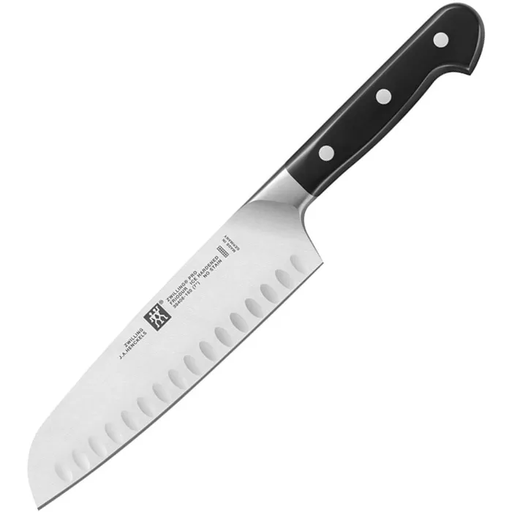
Why this product suits this profile: The 18 cm blade is aimed at users who regularly prepare larger quantities and value a construction that is described in detail.
The Granton edge and 18 cm length are clearly stated. At the same time, hand washing is expressly recommended.
SIGMAFORGE construction, FRIODUR ice hardening, plastic handle with three rivets and manufacture in Germany according to the product information.
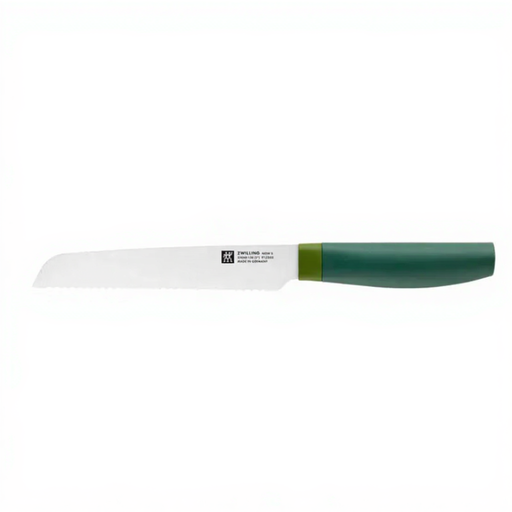
Why this product suits this profile: Anyone looking for a Japanese kitchen knife for vegetables, fish and meat, and who prefers cleaning it in the dishwasher, will find a suitably specified option here.
The product description states that it is dishwasher-safe, but still recommends hand washing to help preserve the blade.
18 cm stainless steel blade, Granton edge, rust-resistant design and plastic handle with hand guard according to the product information.
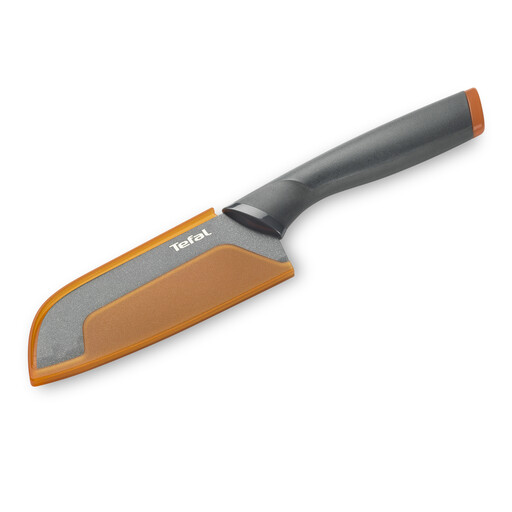
Why this product suits this profile: The compact blade is designed for smaller ingredients and limited worktops. A blade guard is included according to the product information.
The short blade length is clearly stated. This makes it easier to compare the size with the space available in your kitchen before buying.
12 cm coated stainless steel blade, soft-touch handle and blade guard according to the product description.
If you are looking for a Santoku knife from Solingen, you should also distinguish between the manufacturer’s location and the actual place of manufacture. Several ZWILLING models list the manufacturer’s address in Solingen; some product details also state that they are made in Germany. The relevant product description remains decisive.
We have put together a complete, regularly updated list of products that fully meet these strict selection criteria and the safety regulations applicable in the EU.
It is an all-purpose kitchen knife that is particularly suitable for slicing, dicing and chopping vegetables, herbs, fish and boneless meat. Bones, frozen food and very hard skins require different tools.
A Granton edge can reduce friction when cutting certain foods and help prevent them from sticking. It is not a substitute for a suitable blade shape, an appropriate chopping board and regular care.
Edge retention depends on the steel, grind, chopping board, cutting technique and frequency of use. Hand washing, drying immediately and storing the knife in a knife block or with a blade guard help protect the edge and, objectively, preserve it for longer.