
Lieferung heute & morgen

Qualitätsgarantie

Willkommens-Angebote freischalten: KOSTENLOSE Lieferung | Bis zu 80 % RABATT | Kostenlose 30-Tage-JoyPlus-Testphase
App herunterladen
A saucepan is more practical than a large pot for many kitchen tasks: heating milk, preparing sauces, bringing small portions of soup to the boil or cooking side dishes. At the same time, unclear size specifications, unsuitable coatings and missing information about hob compatibility often lead to disappointing purchases.
A small saucepan with a diameter of 10 to 14 cm is mainly suitable for individual portions, butter or small amounts of sauce. However, the volume may be insufficient for milk, portions of pasta or side dishes for several people. That is why it is important to look not only at the diameter, but also at the stated capacity in millilitres or litres.
A non-stick saucepan can reduce food sticking when preparing milk, sauces or starchy dishes. Even so, it should not be heated empty on a high setting. Metal turners and abrasive sponges can damage the surface. Information such as “dishwasher-safe” only describes general suitability; for a longer service life, hand-washing with a soft sponge may be the better option.
An induction saucepan requires a magnetic base. Gas, electric and ceramic hobs have different requirements. The product description should explicitly mention induction, gas, electric and ceramic hobs. One example from our selection shows why this check is important: according to the product details, the 5Five Forged Aluminium Pan with a diameter of 20 cm is suitable for gas and electric hobs, but not for induction.
Various size ranges have become established for everyday use:
The shape also matters. A taller, narrower milk pan saves space on the hob, while a wider sauté pan makes stirring and reducing easier.
Aluminium generally heats up quickly and is relatively lightweight. Cast iron retains heat for longer, but is heavier as a result. Stainless steel is robust and often suitable for high temperatures, but requires more care with delicate foods to prevent them sticking to the base.
When choosing an induction saucepan, make sure it has a suitable base. The material specification “aluminium” alone is not enough, as aluminium itself is not magnetic. With non-stick models, you should also check which cooking utensils are approved and what temperature is recommended.
A non-stick coating can make it easier to remove sauce or milk from the pan. The product information should make it clear whether the pan has a conventional non-stick coating, a ceramic coating or an enamelled surface. Terms such as “long-lasting” or “particularly robust” are of limited value without a specific basis for comparison.
A saucepan with a lid is useful when liquid needs to simmer gently or be kept warm. A glass lid lets you monitor the cooking process without removing it. If you are specifically looking for a dishwasher-safe saucepan, check the individual components: the pan body, handle and lid may not all be approved for dishwasher use.
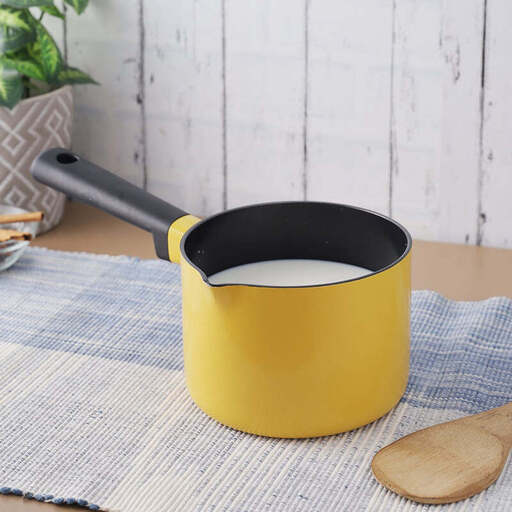
Why this product suits this profile: The 14 cm milk pan is suitable for everyday tasks such as heating milk, preparing sauces and cooking small portions. According to the product details, it is suitable for induction, gas, electric and ceramic hobs.
The specific information covering four hob types helps prevent you from accidentally buying a pan that is unsuitable for your hob. The ceramic coating should be used with medium to low heat and soft kitchen utensils.
Aluminium body, ceramic coating inside and out, plus a heat-resistant Bakelite handle; suitable for several hob types.
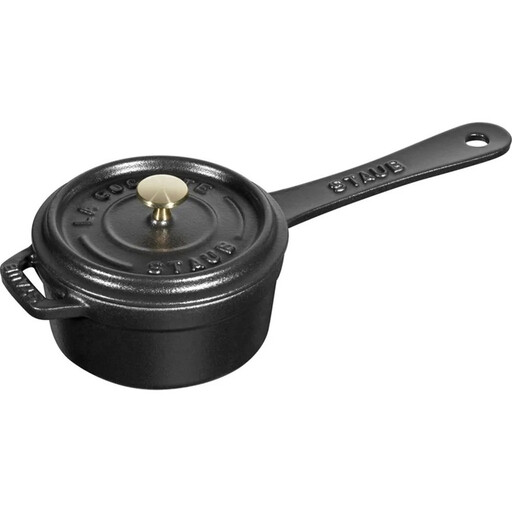
Why this product suits this profile: According to the product details, this compact cast-iron saucepan holds 250 ml and is designed for very small quantities, sauces or melted ingredients.
The clearly stated capacity prevents unrealistic expectations about the size. The handle is long; because cast iron retains heat, oven gloves and careful handling are required.
Cast iron, 250 ml capacity, suitable for induction and, according to the product details, all hob types; dishwasher-safe.
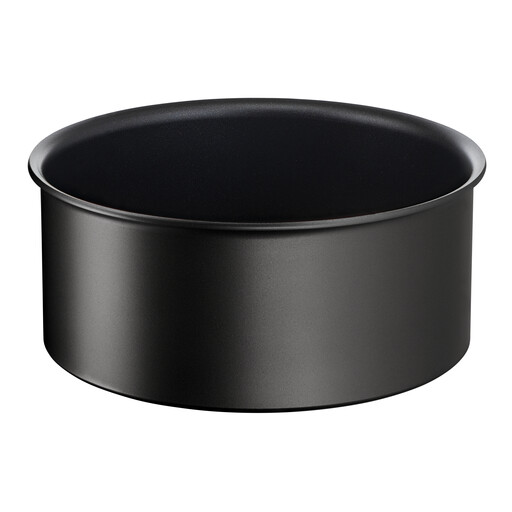
Why this product suits this profile: The 18 cm saucepan does not have a permanently attached handle. According to the product details, its handle is detachable, making the cookware easy to stack and move from the hob to the oven or fridge.
The detachable handle addresses the common lack-of-space problem in small kitchens. Before lifting the pan, make sure the locking mechanism is fully engaged; metal utensils can damage the coating.
Stackable design, Titanium-6x non-stick coating according to the product details, detachable handle, and suitable for gas, electric, ceramic and induction hobs.
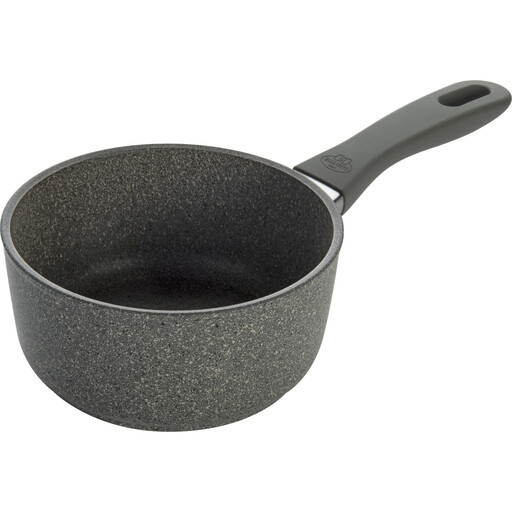
Why this product suits this profile: With a capacity of 1.5 litres, this small cooking pot offers more room than a classic milk pan while remaining easy to handle for sauces, soups and side dishes.
The product details clearly state the diameter, capacity, coating and compatible hob types. This makes it easier to judge whether the pan is large enough for individual portions or several servings.
Forged aluminium, 1.5-litre capacity, GRANITIUM Extreme coating according to the product details, plus suitability for induction and other hob types.
We have put together a complete, regularly updated list of products that fully meet these strict selection criteria and the safety regulations applicable in the EU.
For a single cup or a small quantity, a model with a diameter of 10 to 14 cm is often sufficient. If you also want to prepare sauces, soups or side dishes for several people, around 16 to 18 cm and a capacity of at least approximately one litre are more practical.
No. The product description must explicitly state that it is suitable for induction. Aluminium pans require a magnetic base. A pan approved only for gas and electric hobs will generally not work on induction.
There is no standard service life. It depends on factors including the type of coating, temperature, cleaning method and utensils used. Low to medium heat, careful stirring and following the manufacturer’s instructions can help protect the surface. Flaking, deep scratches or a permanently declining non-stick effect are reasons to replace the cookware.