Households with staggered mealtimes
If you serve the stew at different times, you’ll need to decide whether to keep it reliably hot or cool it quickly and reheat it later.


For a pot of stew and an extra cooking zone, a portable single-zone hob may be enough. If you want to prepare side dishes at the same time or replace an existing hob, consider a built-in model with several zones. A timer or keep-warm setting does not prove that the stew will remain safely hot throughout: the temperature of the food itself is what matters. If you need to store it for longer, cool it quickly and reheat it thoroughly later.
If you serve the stew at different times, you’ll need to decide whether to keep it reliably hot or cool it quickly and reheat it later.
For a large pot, you’ll need a suitably sized cooking zone and controls that let you turn the heat down to a simmer once the stew has come to the boil.
If you cook other dishes alongside the stew, consider whether an extra single-zone hob will do or whether you need several cooking zones.
Suitable if: you usually use one stew pot and need an extra cooking zone without planning to install a built-in hob.
Bear in mind: the only cooking zone will be occupied. A timer and the displayed settings do not automatically monitor the temperature of the food.
Suitable if: you regularly cook other dishes at the same time or are replacing an existing hob.
Bear in mind: the cut-out, zone layout and electrical connection must all be suitable for your kitchen and the appliance.
Suitable if: there’s a long gap between meals or you can’t reliably check the temperature throughout the pot while keeping the stew hot.
Bear in mind: you’ll need space to cool the stew quickly and must reheat the portions you serve later thoroughly.
| Priority | What to check before buying | Who it matters most to |
|---|---|---|
| Keeping food safely hot | Check what a keep-warm function actually controls and whether a timer simply gives an alert or switches off the cooking zone. The BfR recommends keeping heated food at least 60 °C throughout while it is being kept hot. | When meals are served at different times, consumers’ main concern is handling later portions reliably. Around 33% say keeping food safely hot is their top priority. |
| Controlled simmering | Compare the controls and adjustable power settings on the specific model. A cooking setting alone doesn’t tell you how the stew will behave in the pot you use. | If you want to turn the heat down after bringing the stew to the boil, pay particular attention to the controls during cooking. Around 27% of consumers put this first. |
| Pot and kitchen compatibility | Check the base of your pot against the permitted diameter. For built-in appliances, you’ll also need to make sure the cut-out dimensions and connection type are right for your kitchen. | If you plan to use an existing stew pot or have a particular worktop or installation space in mind, the dimensions need to match. Around 20% of consumers prioritise compatibility with their pot and kitchen. |
| Extra cooking zones | Consider whether you’ll really be cooking side dishes at the same time, then compare the number, size and layout of the usable zones. | If you cook other dishes alongside the stew, you need suitable spare cooking zones, not just another high power setting. Around 20% of consumers put cooking several dishes at once first. |
A hob setting doesn’t confirm that the stew has reached the temperature recommended by the Federal Institute for Risk Assessment (BfR) throughout.
Check the temperature of the food itself. If you plan to store the stew for longer, cool it quickly and reheat it thoroughly later.
For the Rommelsbacher CT 2020/IN, the manufacturer states that the appliance switches off when the timer runs out.
Check the instructions for the specific appliance to see whether its timer just gives an alert or switches off the cooking zone.
The appliance width, required cut-out and connection type are all different specifications. The Siemens EX975LXC1E is listed without a plug and with specific cut-out dimensions.
Before ordering, compare the installation diagram with your existing cut-out and check what type of connection is required.
For the CASO TC 2400, the manufacturer specifies a maximum load of 6 kg as well as the pot diameter.
If you’re cooking a large amount of stew, check both specifications. Don’t assume the same maximum load applies to other models.
Portable single-zone hobs, including the CT 2020/IN for using one pot on an extra cooking zone.
Portable single- and double-zone hobs; the TC 2400 comes with a thermometer.
Built-in hobs with several zones; the EX975LXC1E is a 90 cm model for cooking several dishes at once.
Built-in hobs in various designs; the PXX675DC1E is a 60 cm model with four zones.
Built-in hobs with joined zones; the ID7461XB has a Bridge function for cookware of a suitable size.
The products below include built-in hobs with several zones, as well as portable single- and double-zone hobs for your stew pot and other dishes. Power settings and timers alone don’t prove that the stew will reach at least 60 °C throughout.
 No image available
The four cooking zones give you room to prepare other dishes while the stew cooks on one zone.
The product description lists 17 power levels, Touch Select and a timer with automatic shut-off. According to the description, installation should be carried out by a professional. A cooking setting or timer doesn’t confirm that the stew is at a safe temperature throughout.
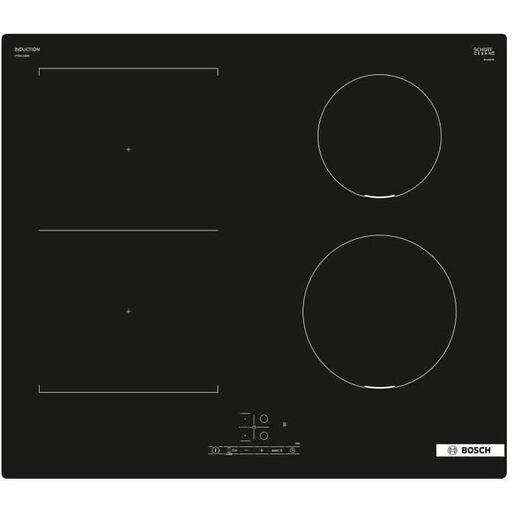 No image available
Four cooking zones let you prepare the stew and other dishes at the same time.
The product name specifies 60 cm, 6900 W and a timer. According to the description, installation should be carried out by a qualified electrician. Check the installation requirements and connection before buying.
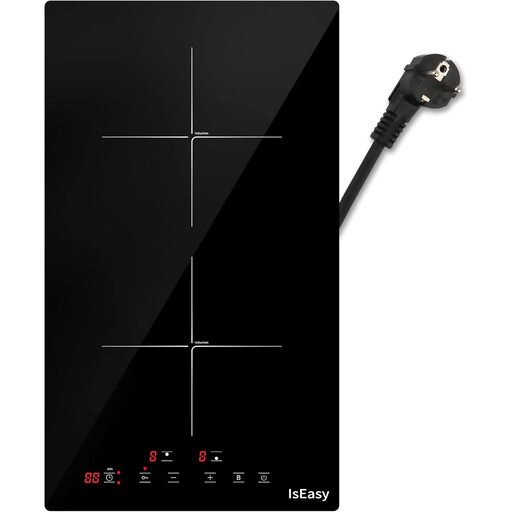 No image available
Two cooking zones can accommodate the stew and another dish, provided the dimensions suit your kitchen and cookware.
The product name specifies 3400 W and 29.5 cm. It also lists nine heat settings, a timer and a child lock. Check the required dimensions and connection type before installation.
 No image available
The single portable cooking zone works well as an extra spot for a stew pot.
The product name specifies 2100 W, 28 cm, nine heat settings and a timer of up to 8 hours. According to the description, it’s suitable for magnetic cookware measuring 12–26 cm in diameter. If you’re using a full pot, check the load limit for the specific appliance too.
 No image available
Two independently controlled zones give you room for the stew and another pot.
The product name lists five temperature settings, as well as simmer and keep-warm settings. These specifications don’t prove that the stew will reach at least 60 °C throughout. If you’re keeping it hot for a longer time, check the temperature of the food itself.
The name of the setting isn’t enough to tell you. The Federal Institute for Risk Assessment (BfR) recommends keeping heated food at least 60 °C throughout while it is being kept hot. Check the food itself. If you need to store it for longer, you can cool it quickly and reheat it thoroughly later.
Reheat the portions thoroughly. The Federal Institute for Risk Assessment’s food hygiene guidance says food should reach at least 70 °C throughout for two minutes. If you need to store hot food for longer, cool it quickly to below 7 °C.
Check that the pot has a ferromagnetic base and that its base diameter falls within the range specified for the model. For the Rommelsbacher CT 2020/IN, the manufacturer lists a cooking zone suitable for pots measuring 120–230 mm; for the CASO TC 2400, it lists suitable pots measuring 12–26 cm. If your pot is heavy when full, you’ll also need to check the model’s maximum load.
A portable single-zone hob may be enough if you usually use one pot and need an extra cooking zone. If you want to cook several dishes at once or replace an existing hob, consider a built-in model with suitable zones. Make sure the cut-out and connection are right for your kitchen.
Check the connection type for the model you choose and find out what connection work is required. Siemens and Bosch specify that the built-in appliances covered here are supplied without a plug and must be connected by a qualified electrician. If installation requires a change to the customer’s electrical system, the Federal Network Agency refers to Section 13(2), sentence 4 of the NAV and an installation company registered with the network operator for such changes.