
Lieferung heute & morgen

Qualitätsgarantie

Willkommens-Angebote freischalten: KOSTENLOSE Lieferung | Bis zu 80 % RABATT | Kostenlose 30-Tage-JoyPlus-Testphase
App herunterladen
A robot vacuum cleaner with a mopping function can automatically pick up dust, crumbs and hair as part of your daily routine, while giving hard floors an extra clean with a damp mop. However, models vary considerably in their navigation, maintenance requirements and suitability for carpets. A high suction-power figure alone is therefore not enough to base your buying decision on.
Manufacturers often quote a high suction power in pascals. This figure describes the vacuum pressure, but doesn’t tell you on its own how well a robot picks up dirt. The brush design, airflow, filter and automatic adjustment of suction on carpets also affect performance. So compare brush type, carpet detection and cleaning modes as well.
With basic models, the mop pad is simply dampened with water and then washed by hand. Models designed for convenience, on the other hand, come with a station that offers automatic mop cleaning, a dirty-water tank and drying. This means less manual work, but the station takes up space and needs to be regularly refilled or emptied.
Laser navigation and sensors help a robot find its way around, but they won’t necessarily detect every cable, toy or small pet accessory. Before the first clean, remove loose cables, sharp objects and delicate items. Even with a good app, setting no-go zones and room boundaries remains important.
Laser navigation usually creates a systematic map of your rooms and helps you set targeted cleaning plans. Check whether the model can save multiple maps, supports virtual walls and lets you select individual rooms in the app. Extra obstacle-detection sensors may be useful in homes with little light.
Also check the robot’s height. A model that’s around 10 cm tall won’t fit under every sofa or sideboard. The station needs room too: the JONR T5 Pro requires at least 8 cm of clearance on both sides and 1.2 m of clear space in front.
When choosing a robot vacuum cleaner for carpets and hard floors, consider several factors:
An anti-tangle design is useful for pet hair, but you’ll still need to check the main and side brushes regularly. Figures such as 8,000, 10,000 or 25,000 Pa are manufacturer specifications and shouldn’t be treated as a direct performance comparison between different designs.
A robot vacuum cleaner with an emptying station can automatically empty the dust container. All-in-one stations also add water tanks, mop cleaning and drying. Before buying, check:
The coverage depends on the cleaning mode, floor type and selected suction power. A stated running time of up to 180 minutes should therefore be understood as a manufacturer’s figure under specific conditions.
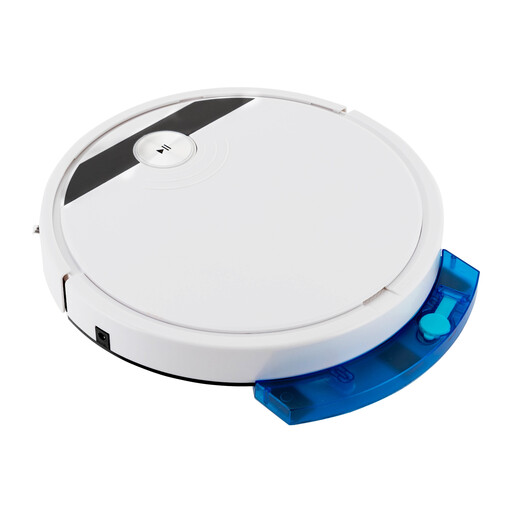
Why this product suits this household: This model combines vacuuming and mopping, offers app and remote control, and is designed for hard floors and low-pile carpets. Its stated running time is up to 90 minutes.
The product details specifically state that it’s suitable for hard floors and low-pile carpets. This makes it easier to match your choice to the type of flooring in your home.
Six cleaning modes, a slim 1.77-inch design, and control via the app or remote.

Why this product suits this household: According to the product description, the OMNI station empties the dust container, cleans the mop with 75 °C hot water and dries it with 45 °C warm air. It’s a good fit for households looking to minimise manual follow-up.
The product specifications list an automatic mop-lifting function for carpets as well as laser navigation. This lets you manage mopping and carpeted areas separately.
25,000 Pa stated by the manufacturer, up to 180 minutes’ running time, four suction levels and app control.
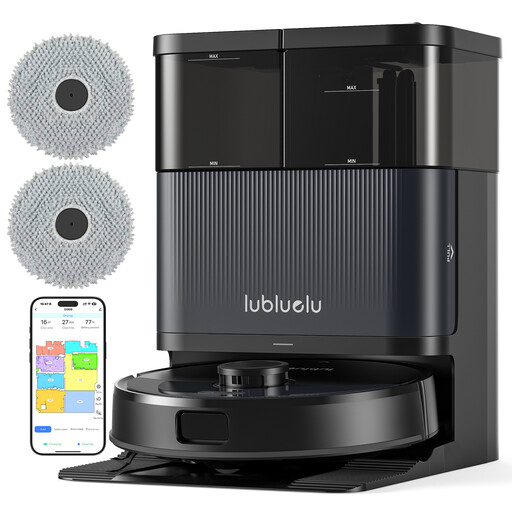
Why this product suits this household: The combination of LiDAR navigation, app control and stated suction power of 10,000 Pa is aimed at people with structured cleaning plans and different floor surfaces.
LiDAR navigation helps you plan how each room is cleaned. Even so, you should remove cables and delicate items before starting.
LiDAR system, app control, and, according to the product name, suitability for pet hair and carpets.
We’ve put together a complete, regularly updated list of products that meet these strict selection criteria and fully comply with the safety regulations in force in the EU.
Empty the dust and dirty-water containers as directed in the user manual. Filters and mop pads must be completely dry before you put them back in. Use only approved cleaning products, and don’t let liquid get into the casing or charging station.
With laser navigation, don’t look directly into the laser emitter. Keep children and pets away from the brushes, wheels and station. Hot ash, burning objects, sharp items and flammable liquids should never go in a robot vacuum cleaner.
Yes, as long as the manufacturer specifically states that carpets are suitable. Models with carpet detection and mop lifting are useful. The function may be limited on deep-pile carpets, rugs with fringing or very dark surfaces. Check the specifications for the maximum obstacle height and how the robot handles mopping.
That depends on how often you use it, the size of your home and how much pet hair there is. Check the brushes for hair regularly, clean the filters and wash the mop pads. If the station has water tanks, you’ll also need to top up the clean water and empty the dirty water.
Models with an anti-tangle brush, adjustable suction power and a suitably sized dust container can work well for pet hair. However, daily automatic cleaning doesn’t replace checking the brushes, filters and corners. If you have pets that shed heavily, shorten the maintenance intervals accordingly.