Cooking for a crowd with a large casserole dish
If you want to cook a casserole for several people in one dish, first check that it fits inside the usable cooking space, including its handles and height.


Start with your casserole dish and the space available. If you have a suitable housing unit, a built-in oven could be a good fit; without one, look for a freestanding fan oven with enough room inside. Compare the usable internal dimensions with the dish’s handles and height, and check the heating functions, connection and cleaning method for the exact model. A capacity in litres alone won’t tell you whether your dish will fit.
If you want to cook a casserole for several people in one dish, first check that it fits inside the usable cooking space, including its handles and height.
If you want to choose between fan-assisted and conventional heating, check the functions available on the specific model rather than relying on the word ‘oven’ alone.
If you don’t have a suitable housing unit, compare the footprint, usable cooking space and connection requirements of freestanding models.
| What matters | What to check before buying | Who it matters most to |
|---|---|---|
| Will the dish fit? | Compare the dish’s external dimensions, including its handles and height, with the usable internal dimensions at the intended shelf position. | If I’m cooking for several people in one dish, the handles and height need to fit too. Around 36% of consumers prioritise finding an oven that fits their dish. |
| Which heating function? | Check the exact model to see whether it has fan-assisted or convection heating and, where relevant, conventional top and bottom heat. | If I want to use a particular heating function for cooking and browning, I check the model specifications. Around 29% of consumers prioritise heating functions. |
| Where will the oven go? | Compare the appliance dimensions and, where relevant, the housing unit measurements, connection type and installation instructions for the specific model. | If I don’t have a suitable housing unit or have limited floor space, the appliance needs to fit the space available. Around 21% of consumers prioritise where the oven will stand or be installed. |
| Running costs and cleaning | For ovens with the relevant energy label, compare the kWh per standard cycle and check the cleaning method and removable accessories. | If I use the oven often, I want to consider its energy figures and how much effort it takes to clean. Around 14% of consumers prioritise maintenance and running costs. |
Even if an appliance is advertised as an oven, a particular dish may be too wide or too tall. Severin, for example, says that a 27 × 27 cm casserole dish is too large for one of its models.
Measure the dish, handles and height, then compare them with the usable internal dimensions and shelf position of the exact model.
If there isn’t enough room, you may need a different dish or an additional cooking session.
Heating functions vary by model: Severin says the TO 2067 doesn’t have a convection function, while the TO 2073 does.
Check the heating functions against the full model number and consult the appliance manual to make sure they suit your dish, recipe and filling depth.
The German Environment Agency explains that the energy use on an energy label is for a standard cycle, not for every individual casserole. NDR points out that pyrolysis also uses electricity.
For ovens with the relevant energy label, compare the kWh figures per cycle and choose a cleaning function that suits how you use the oven.
Energy use includes cooking and, where applicable, an additional cleaning cycle.
Bosch’s built-in ovens include the HBA272BB3, which features 3D hot air and pyrolytic and hydrolytic cleaning.
Severin makes freestanding mini ovens and toaster ovens. The manufacturer lists the TO 2073 as having a 60 l capacity, fan-assisted cooking and conventional top and bottom heat.
The freestanding BGE 1580/E mini oven is listed with a 30 l capacity, switchable fan function and space for dishes up to 29 cm in diameter.
The built-in B6ACJ7AG3 oven is listed with a 71 l capacity, CircoTherm hot air and a retractable door.
The freestanding TO 26 SilverStyle is listed with a 26 l capacity, fan function and internal dimensions of 350 × 200 × 300 mm.
This selection includes built-in ovens and freestanding models for different space and dish requirements. Before buying, check that the exact model has the heating function you want and that your casserole dish will fit inside.
 No image available
A built-in option for kitchens with a suitable housing unit. Check your dish’s dimensions against the usable cooking space of the specific model.
Features listed in the product name: 3 kW, grill, pizza function, AquaClean Steam Cleaning, timer, ECO Mode and energy class A.
 No image available
A compact option for baking and grilling. If you want a fan function, check that it’s available on the exact model before buying.
Features listed in the product name: 1600 W, timer, crumb tray and a temperature range of 100 to 250 °C.
 No image available
A freestanding oven with a fan function in the product name. Check that the usable dimensions are large enough for your dish.
Features listed in the product name: thermometer and four-level baking rack. The description also mentions an LED display.
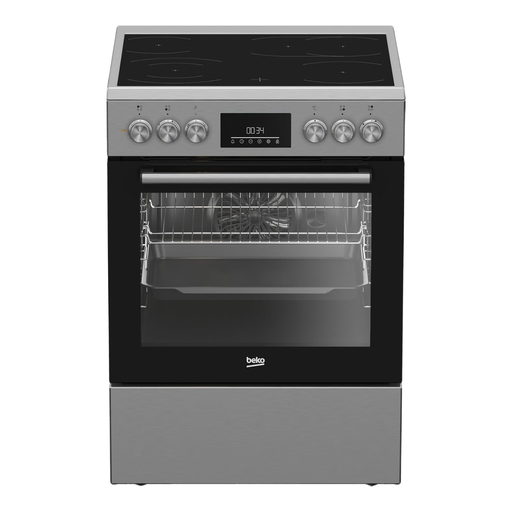 No image available
A freestanding cooker. Before buying, check that the space, connection and installation requirements suit your kitchen.
Features listed in the product name: SteamShine cleaning, eight heating functions and energy class A. According to the product information, installation and the initial electrical connection must be carried out by a qualified professional.
No. Compare the dish’s external dimensions, including its handles and height, with the usable space and shelf clearance. Severin specifically says that a 27 × 27 cm dish is too large for the TO 2071.
No, heating functions vary by model. Severin says the TO 2067 doesn’t have a convection function, while the TO 2073 does. Always check the details for the full model number.
Follow the connection and installation instructions for the exact model and check that they’re suitable for your kitchen. Siemens lists an earthed Schuko/Gardy plug for the HR776G1B1; you can’t assume that a regional model with a different name has the same connection.
The German Federal Institute for Risk Assessment recommends heating food to at least 70 °C throughout for at least two minutes. When keeping food hot, it should reach at least 60 °C throughout. For raw ingredients, it’s the temperature inside the food that matters, not just the oven setting or cooking time.
No. For ovens with the relevant energy label, it shows details including the cooking compartment volume and kWh per standard cycle for the different heating functions. This isn’t a measurement of how much energy your particular casserole will use.