If you’re short on worktop space
Allow space for the appliance and the clearance specified in its instructions, not just the casing. A small oven could be a good option if its usable tray area is large enough for your portion.


If you want to spread crackers out on a baking tray and bake several batches regularly, start by looking at a small countertop oven. For very small quantities, a basket-style air fryer may also work. What matters is the usable flat baking area and the clearance needed around the appliance when it’s in place – the capacity in litres alone tells you very little.
Allow space for the appliance and the clearance specified in its instructions, not just the casing. A small oven could be a good option if its usable tray area is large enough for your portion.
For pieces of dough laid out flat, the tray area and shelf dimensions are more useful than the capacity in litres alone. Compare them with the size of your crackers.
A basket-style air fryer could be suitable if you bake small quantities and want to use the appliance for other foods too. Check how much flat space the basket actually offers.
A good fit if: you’re short on worktop space and only bake a few crackers at a time on a small tray.
The trade-off: A small baking area may mean extra batches when you have more dough to bake.
A good fit if: you want to spread crackers out on a tray and use conventional or fan-assisted heat, depending on the recipe.
The trade-off: Check the tray dimensions and the space needed for the appliance. A larger oven capacity doesn’t automatically mean a larger usable tray area.
A good fit if: you usually make small portions and want to use the air fryer for other dishes too.
The trade-off: The basket capacity doesn’t tell you how much flat space there is for crackers laid out in a single layer.
Dr Oetker’s cheese cracker recipe places pieces of dough measuring around 4 × 3 cm on a baking tray. So compare the usable flat area with the portion you plan to make, rather than relying on the oven capacity alone.
| Buying priority | What to check | Who should consider this? |
|---|---|---|
| Space and clearance | Allow for both the casing dimensions and the model-specific ventilation clearances. For the Steba KB M9, the instructions specify at least 10 cm of clearance all round. | If you need to fit the appliance on a crowded worktop between a wall and other items, the required clearance matters too. Around 36% of consumers put a safe place to position the appliance first. |
| Usable baking area | Compare the tray or flat basket area and shelf dimensions with the size of your crackers; don’t treat the oven capacity in litres as a measure of surface area. | If you want to spread several crackers out in a single layer in one batch, the flat area is what counts. Around 29% of consumers prioritise the usable tray or basket area. |
| Heating mode and control | Check that the specific appliance offers the heating mode you need, and keep an eye on new recipe and appliance combinations while baking. | If you want to follow recipe instructions for conventional or fan-assisted heat, the right mode needs to be available. Around 21% of consumers put this first. |
| Cleaning and operation | Check for a crumb tray or crumb flap and read the care instructions. Compare energy consumption only for similar baking tasks. | If you want to spend less time dealing with crumbs after baking and keep energy use easy to understand, everyday maintenance matters too. Around 14% of consumers prioritise care and operation. |
Dr Oetker’s recipe spreads individual pieces of dough out on a baking tray. Oven or basket capacity doesn’t tell you how many will fit side by side in a single layer.
Measure the area you need based on your crackers, then compare it with the usable tray or basket base and the shelf dimensions.
The instructions for the Steba KB M9 require at least 10 cm of clearance all round, with the ventilation slots left unobstructed. This clearance is specific to this model and isn’t a general requirement for other appliances.
Check the instructions for the specific model and allow for the stated clearances before choosing where to put it.
To use an appliance with a typical German household mains supply, the specifications for that exact version must match 230 V and 50 Hz. A version rated only for 120 V doesn’t meet this requirement. The VDE lists 230 V and 50 Hz as standard.
Check the rating plate and manufacturer’s documentation for the exact version against the requirements of your power supply.
The rated power alone doesn’t show how much energy a particular cracker recipe will use. The Verbraucherzentrale recommends looking at actual consumption; measurements apply only under the stated conditions.
Compare kWh figures for as similar a baking task as possible, including the quantity, temperature and cooking time.
The KB M9 is an example of a very small countertop oven for small portions and limited worktop space.
The BG 1055/E is an example of a countertop oven with a baking tray and several heating modes.
The TO 2068 is a larger mini oven that may also be suitable for other uses.
The NA221/00 is an example of a basket-style air fryer for small portions and other air-fryer dishes.
This selection includes compact countertop ovens and basket-style air fryers with a listed baking function. For basket-style appliances, remember to check the flat area available for crackers separately.
 No image available
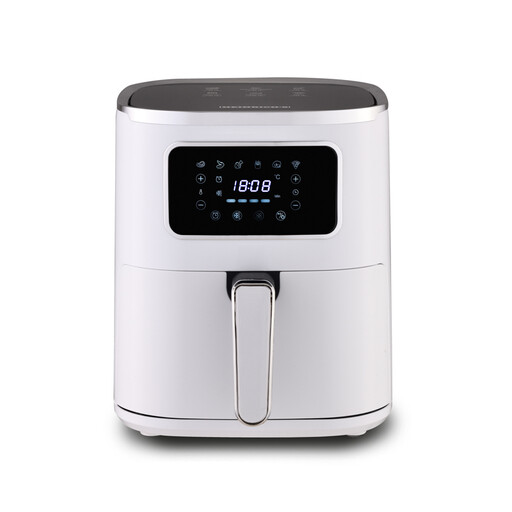
Could work for small batches of crackers if the flat basket area is large enough.
The product details list baking, a 5 l basket, 80–200 °C, a timer and a viewing window with an interior light. However, they don’t specify a flat baking area for crackers.
 No image available
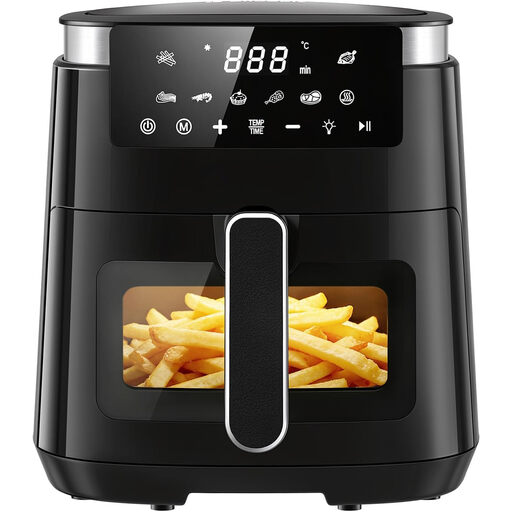
Could work for small batches of crackers if the flat basket area is large enough for the quantity you want to make.
The product details list baking, a 5.5 l basket, 80–200 °C, a timer and a viewing window with an interior light. However, they don’t specify a flat baking area for crackers.
 No image available
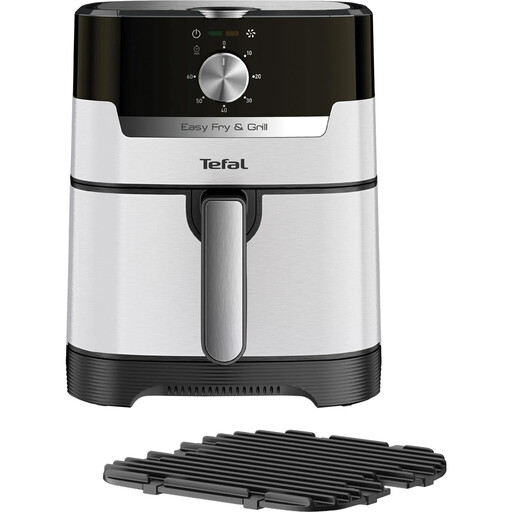
Could work for small batches of crackers if the flat basket area suits the quantity you want to make.
The product details list baking, a 4.2 l capacity, 80–200 °C and a 60-minute timer. The stated dimensions are 324 × 270 × 361 mm. However, they don’t specify a flat baking area for crackers.
 No image available
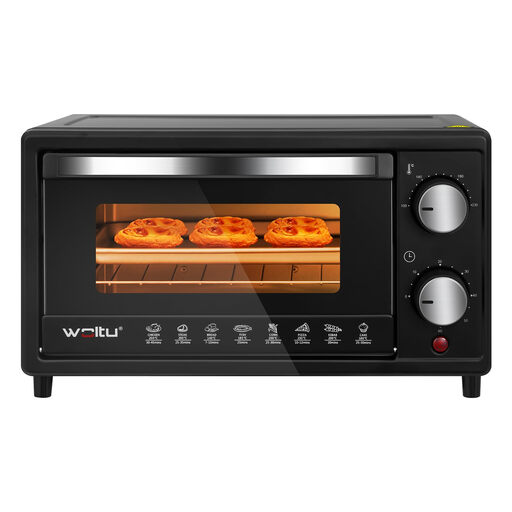
A small countertop oven could be a good fit if you’d rather spread crackers out on a tray than cook them in a basket.
The product details list a 10 l capacity, a baking tray, top and bottom heat, 100–230 °C and external dimensions of 37 × 26.5 × 21 cm. The listed mains voltage is 220–240 V. Check the specifications for the exact version on offer and its installation instructions before use.
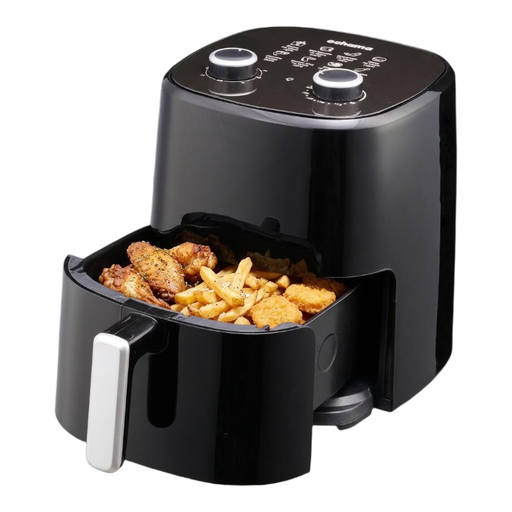 No image available
Could work for small batches of crackers if the flat basket area is large enough.
The product details list a 3.2 l capacity, baking, hot-air cooking and temperature and time controls. No tray area for crackers is specified.
No. Dr Oetker’s cheese cracker recipe spreads cut pieces of dough out on a baking tray. Compare the usable tray or flat basket area and the shelf dimensions of the specific appliance with the portion you plan to make.
Only if the instructions for that model allow it. For the Steba KB M9, Steba specifies at least 10 cm of clearance all round and says not to cover the ventilation slots. This clearance doesn’t automatically apply to other models.
Check the instructions for the exact appliance version first. Philips advises against using baking paper in the air fryer models specifically listed on its support page, as loose paper could reach the heating element. This advice isn’t a blanket approval or ban for other models.
No. Compare energy consumption for the same baking task on a like-for-like basis. The Verbraucherzentrale recommends looking at actual consumption; Steba’s figure of 0.240 kWh applies to 30 minutes at maximum temperature under the stated measurement conditions, not automatically to a cracker recipe.
Check the electrical specifications for the exact version: to use it with a typical German household mains supply, it must be suitable for 230 V and 50 Hz. For appliances subject to harmonised EU rules that require CE marking, this marking is relevant. The Bundesnetzagentur also lists manufacturer identification and German-language instructions with warnings as points to check; the CE mark doesn’t confirm baking performance.