
Lieferung heute & morgen

Qualitätsgarantie

Willkommens-Angebote freischalten: KOSTENLOSE Lieferung | Bis zu 80 % RABATT | Kostenlose 30-Tage-JoyPlus-Testphase
App herunterladen
Buying a new saw seems simple—until you're standing in the aisle, overwhelmed by the selection. But not every shiny saw blade delivers on its promise. Many DIY enthusiasts and gardeners invest in tools that quickly prove to be useless or even unsafe. To avoid a bad investment, you should watch out for three common pitfalls often hidden behind slick marketing.
An informed decision is based on understanding core features, not on marketing promises.
To find the right saw for wood, your garden, or the workshop, three technical aspects are crucial. These determine the performance, durability, and the final result of your work.
The heart of any saw is the blade. Its material and toothing must match the intended application.
Material:
Tooth Pitch (TPI): The "Teeth Per Inch" specification indicates how many teeth are on a 2.54 cm (1-inch) length.
The choice between a manual and a motorized saw depends on the type and scope of your projects.
Good user comfort is not a luxury but a safety feature. An ergonomic handle, often made of a non-slip material like TPR (Thermoplastic Rubber), ensures a secure grip and reduces strain on the hand and wrist. For a folding garden saw, a solid locking mechanism is essential to securely lock the blade in the open position. A supplied protective cap or sheath not only protects the saw blade but also the user from accidental injuries during storage.
Based on these objective criteria, we have identified some products that represent a suitable solution for specific user groups.
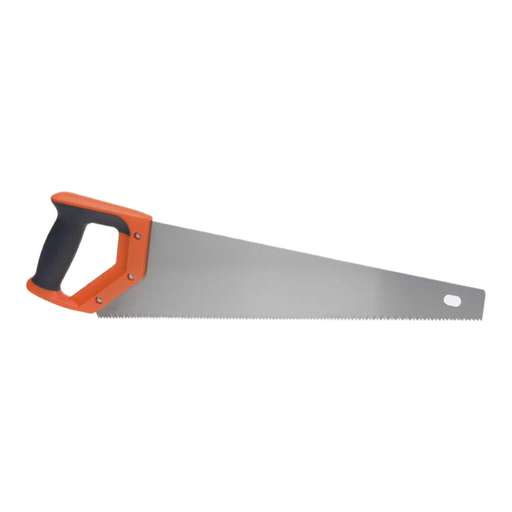
Why This Fits Their Persona: This is a classic handsaw, ideal for simple sawing tasks like cutting boards or squared timber for small DIY projects. A straightforward and reliable tool for any household.
The steel blade with 7 TPI is designed for general woodworking and is more durable than no-name products. The ergonomic TPR handle prevents fatigue and blisters.
Delivers clean and precise cuts in wood. A supplied protective cap ensures safe storage and protects the teeth.
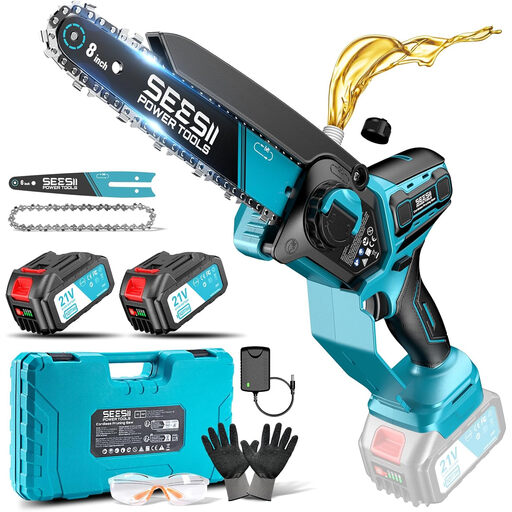
Why This Fits Their Persona: Perfect for garden owners who regularly need to cut branches, trim shrubs, or prepare firewood. The cordless freedom and high power make the work significantly easier.
This mini chainsaw avoids the trap of unrealistic battery claims with an efficient 1000W brushless motor and two included 4000mAh batteries, ensuring a practical runtime.
High chain speed (up to 10 m/s) for fast cuts. The tool-free chain tensioning and automatic oiling significantly simplify maintenance.
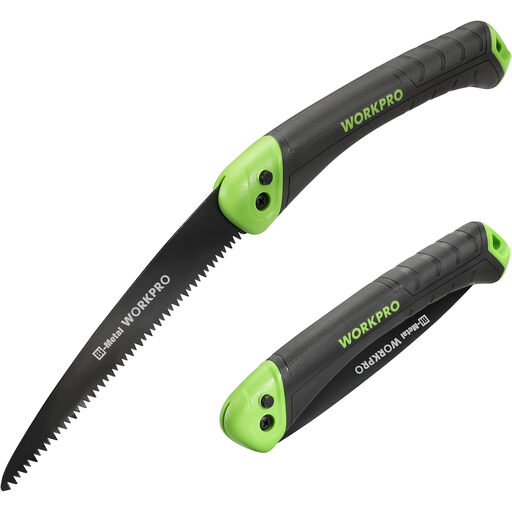
Why This Fits Their Persona: With its compact, foldable design, this folding saw is the ideal companion for outdoor activities like camping and hiking, or for gardeners who need an easy-to-transport tool.
It escapes the safety trap with a robust locking mechanism featuring a release button that securely holds the blade in position and prevents accidental folding.
The durable bi-metal saw blade offers high cutting performance. A special feature is the adjustable cutting angle, which makes working in hard-to-reach places easier.
We have compiled a complete, up-to-date list of products that fully meet these strict selection criteria and German safety regulations.
To maximize the life and sharpness of your saw blade, you should clean it of resin and wood residue after each use. A dry brush is often sufficient for this. Store the saw in a dry place to prevent rust. Occasionally wiping the blade with a light machine oil provides additional protection.
TPI (Teeth Per Inch) indicates the density of the saw teeth. A low number (e.g., 7 TPI) means fewer, but larger teeth for fast, rough cuts, ideal for a pruning saw. A high number (e.g., 24 TPI) stands for many small teeth that produce a slow but very fine and clean cut, which is important for precise woodworking or cutting metal.
This is strongly discouraged. Saw blades for wood are typically made of softer HCS steel and have a tooth geometry optimized for fibrous materials. Attempting to cut metal with it would instantly ruin the teeth. For metal, you need a saw blade made of HSS or bi-metal with a finer toothing. Using the wrong blade can damage the workpiece and the saw, and poses a safety risk.