
Lieferung heute & morgen

Qualitätsgarantie
App herunterladen
Kategorien
S&B Golden Curry is a staple of everyday Japanese cuisine and the foundation for the dish Kare Raisu. It is a Curry Roux, a solid paste in block form, made from wheat flour, vegetable oils, spices, and flavourings. This composition allows for the simple preparation of a thick, consistently flavourful curry sauce. This analysis of the product variants focuses on the technical differences in their ingredients and the resulting flavour profiles to enable an informed selection.
The decision for a specific S&B Golden Curry variant should be based on objective parameters. The three key differentiating factors are the heat level, the ingredient base, and the resulting consistency.
The primary differentiation in the product line is the heat level, which is directly dependent on the composition and proportion of the spices used.
The basic recipe for all S&B Golden Curry variants is plant-based.
The S&B curry preparation is identical for all variants and designed for efficiency. The solid Japanese curry cubes dissolve in hot water to create a thick, smooth sauce. The viscosity is a characteristic feature of Japanese curry, distinguishing it from more liquid South Asian varieties. The 220g package is typically designed for preparing about 10-12 servings, making it practical for pantry stocking and family cooking.
The following selection analyses the three primary heat levels of the S&B Golden Curry Sauce Mix series.
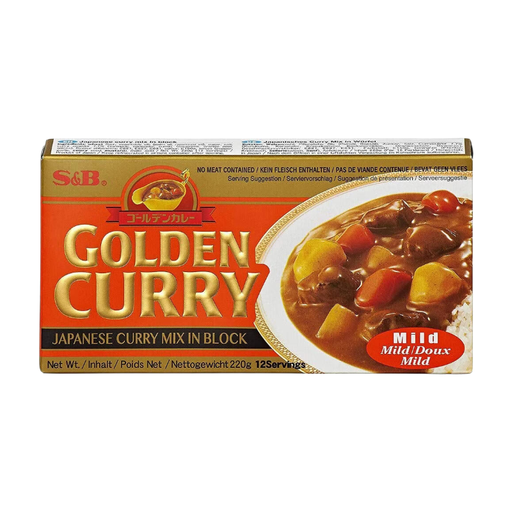
Why We Recommend This Product This variant offers the classic, rich flavour of Japanese curry without any heat. The recipe is designed for broad appeal, emphasizing the sweet and savoury notes of the spice blend.
Benefits:
Who It's For:
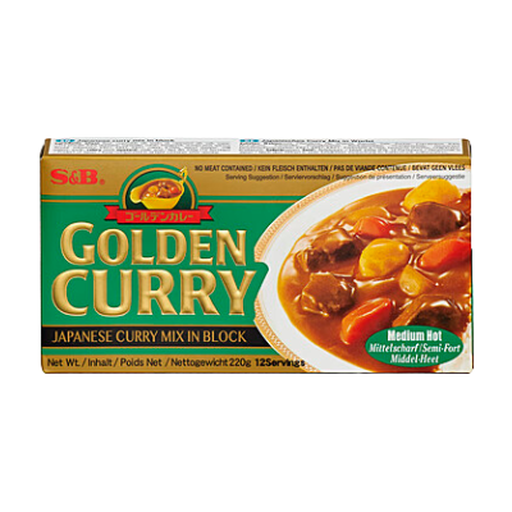
Why We Recommend This Product The "Medium Hot" version is considered the standard for authentic Japanese curry. It delivers a noticeable yet well-integrated heat that highlights the complexity of the 35 spices and herbs, as stated by the manufacturer.
Benefits:
Who It's For:
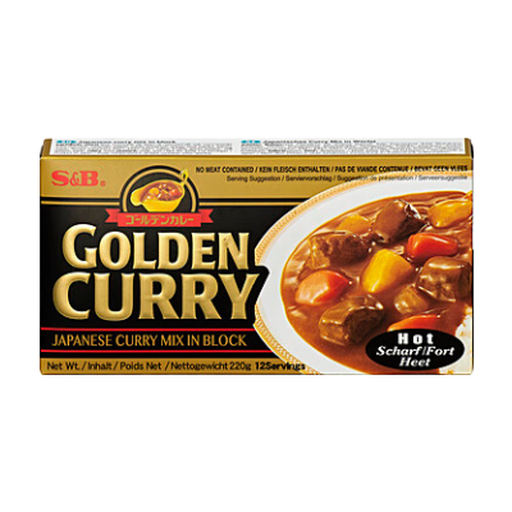
Why We Recommend This Product This S&B curry paste is designed for users who expect a distinct and robust heat. The increased proportion of black pepper and red chilli pepper provides an intense, piquant finish while still maintaining the signature thick texture.
Benefits:
Who It's For:
Preparing Japanese curry does not require special equipment, but using suitable cookware can streamline the process and lead to more consistent results. A pot with good heat distribution can be particularly advantageous, especially when preparing larger quantities. You can find a selection of suitable cookware in our Curry Cookers category.
1. Is S&B Golden Curry vegetarian or vegan? The S&B Golden Curry roux cubes themselves do not contain ingredients of animal origin and are therefore suitable for a vegetarian diet. For a vegan diet, a careful review of the ingredients list is necessary, as traces of dairy products cannot always be excluded depending on the production batch and specific product variant, even if they are not listed as a main ingredient. The final meal is vegetarian or vegan depending on what other ingredients (e.g., vegetable broth, plant-based proteins) are added.
2. How should I store an opened package of S&B Golden Curry? After opening the vacuum-sealed packaging, any unused curry cubes should be stored in an airtight container. Refrigeration is recommended to preserve the flavours and extend shelf life.
3. What is the main difference between Japanese and Indian curry? The fundamental difference lies in the base and consistency. Japanese curry is based on a Curry Roux (a flour-and-fat base with spices), which results in a thick, smooth, and mildly sweet sauce. Indian curries, on the other hand, are typically based on a paste of fresh or dried spices, onions, ginger, and garlic, which is fried in oil. They are often more liquid, more complex in flavour, and feature a wider range of heat levels and regional variations.