
Lieferung heute & morgen

Qualitätsgarantie

Willkommens-Angebote freischalten: KOSTENLOSE Lieferung | Bis zu 80 % RABATT | Kostenlose 30-Tage-JoyPlus-Testphase
App herunterladen
A sofa bed combines seating, a sleeping surface and, in some cases, extra storage. To make sure it works well in everyday life, though, you’ll need to look beyond colour and price. People moving into a new home, families, couples and hosts often face the same problems: the sofa doesn’t fit in the room when unfolded, the sleeping area is smaller than expected, or converting it proves awkward.
People often choose a sofa bed based on its width, depth and height in sofa mode. You’ll also need to consider:
A model that’s 140 cm wide may take up considerably more room when converted into a bed. If you’re looking at a corner sofa bed, also check whether the chaise can be fitted on the left, right or either side.
A sofa bed may convert into a sleeping area using a fold-out mechanism, a pull-out section, adjustable backrests or separate modules. These options vary in how easy they are to use, the size of the sleeping area and the space they require.
For occasional overnight guests, a compact pull-out sofa is often enough. If you’ll be sleeping on it regularly, pay closer attention to how flat the surface is, the upholstery construction and how easy it is to convert.
USB ports, LED lighting, cup holders and side pockets can be useful additions. But they can’t make up for the wrong size, a flimsy construction or unclear weight-limit information. A sofa bed with storage is only worthwhile if the compartment is easy to open and big enough for the bedding you need to store.
Before you buy, note down these three measurements:
Compact models with adjustable backrests or a fold-out design are well suited to smaller homes. For example, a sofa with a 197 × 85 cm sleeping area is designed for one person, while larger corner sofas may offer sleeping areas of around 200 × 130 cm or more.
The product description should give as much detail as possible about the construction. Materials commonly listed include:
A higher foam density may indicate upholstery that holds its shape better, but it doesn’t tell you on its own how comfortable the sofa will feel to you. Wipe-clean or removable covers are handy for families and households with pets. Check the care instructions before you buy.
Check the stated maximum weight capacity and whether it applies per seat or to the entire piece of furniture. These figures aren’t automatically comparable. Assembly is another important consideration:
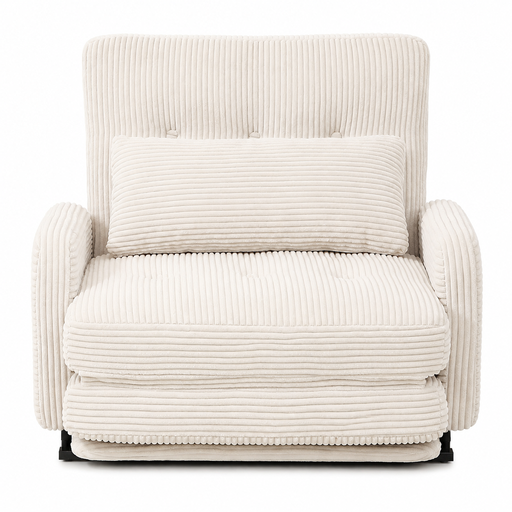
Why it’s a good fit: Its compact design suits individuals, smaller homes or occasional use as a guest bed. The backrest adjusts to five positions.
The product description gives both the folded dimensions of 85 × 82 × 69 cm and the unfolded sleeping area of 197 × 85 cm.
Four ways to use it, side pockets and a metal frame with a stated weight capacity of up to 150 kg.
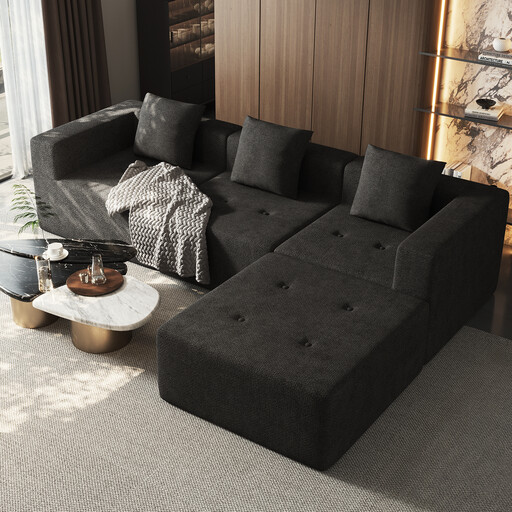
Why it’s a good fit: At 258.5 cm wide, this corner sofa is designed for homes with a larger living room and regular seating or overnight guest needs.
The sleeping area measures 183.5 × 258.5 cm, making it easier to plan how much room you’ll need before you buy.
Pocket-sprung seat cushions, a chenille cover, three decorative cushions and no assembly required, according to the product information.
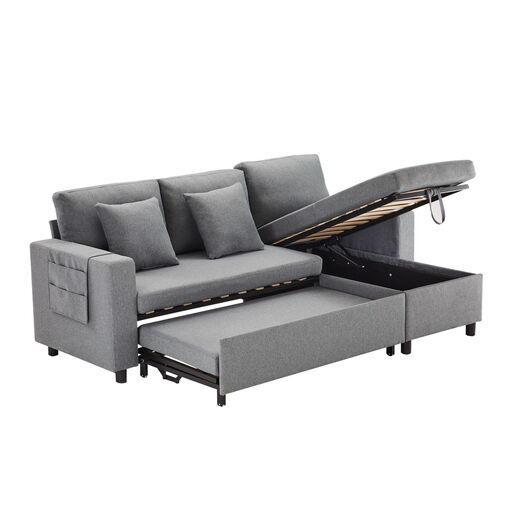
Why it’s a good fit: Families and hosts get a flexible L-shaped seating solution with a bed function and a compartment for blankets or cushions.
The chaise can be fitted on the left or right. The seat height, bed function, storage dimensions and weight capacity per seat are also specified.
Storage measuring 129 × 56 × 17 cm, side pockets and a sleeping area created by the integrated bed function.
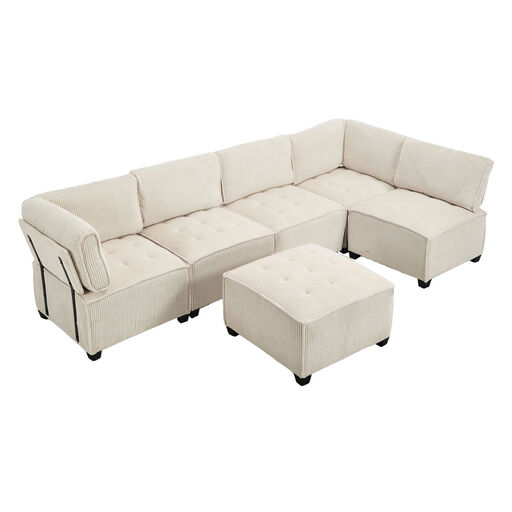
Why it’s a good fit: Six connecting modules can be arranged in U, L or straight configurations, making this sofa well suited to large living spaces with changing needs.
The six individual modules can be arranged to suit your room. The overall dimensions of the illustrated U-shaped configuration are 308 × 154 × 82 cm.
Connectable modules, side pockets and a wooden and metal frame with a stated total weight capacity of 300 kg.
We’ve put together a complete, regularly updated list of products that meet these strict selection criteria and fully comply with the safety regulations in force in the EU.
You’ll need extra room to move around, as well as space for the sleeping area itself. With a pull-out sofa, keep the area in front of it clear. Measure the maximum depth in bed mode and, depending on your room layout, allow space for a walkway.
Its lifespan depends on the frame, upholstery, mechanism, how heavily it’s used and how well it’s cared for. You can’t determine its precise lifespan from the cover material alone. Regular vacuuming, using it as intended and staying within the weight limit can help it stand up to everyday use.
That depends on its construction and sleeping area. Many models are designed as guest beds or for occasional overnight stays. If you plan to sleep on it regularly, check that the sleeping area is as flat and spacious as possible, and look for suitable information on the upholstery and intended use.