Anyone comparing fat content
If you’re looking for a lower-fat option for the school break, check the figures per 100 g. A lower figure for a nut and fruit mix doesn’t, on its own, prove that it contains less fat than comparable nuts.


A nut mix that looks ‘light’ isn’t necessarily lower in fat, so compare the nutrition information per 100 g and check what any fat-reduction claim is based on. Whether nuts are suitable for school also depends on individual allergy needs and the rules set by the school or class. Once you’ve established that nuts are allowed, consider the ingredients, salt content and whether the portion is easy to pack.
If you’re looking for a lower-fat option for the school break, check the figures per 100 g. A lower figure for a nut and fruit mix doesn’t, on its own, prove that it contains less fat than comparable nuts.
If your child has an allergy or there are special rules for their class, first check whether nuts are allowed at all. As Lebensmittelverband Deutschland explains, peanuts and tree nuts are separate allergens that must be declared.
If you’re looking for an unsalted snack portion, compare the salt content, types of nuts and other ingredients. ‘Unsalted’ tells you nothing by itself about fat content or added oil.
Before comparing individual packs, check whether nuts are suitable given any allergies and the school’s rules. Then compare fat and salt per 100 g, and prepare a separate portion for break time if the pack isn’t divided into individual servings.
| Criteria | What to check | Who should pay particular attention |
|---|---|---|
| Fat content | Compare fat per 100 g in similar products; if a product is labelled ‘reduced fat’, check which product it’s compared with. According to Verbraucherzentrale, ‘low fat’ means no more than 3 g of fat per 100 g. | If I’m specifically looking for a lower fat content, I want to be able to make sense of the figure on the pack rather than rely on the impression that a product is light. Around 34% of consumers put this first. |
| Allergens and school rules | Read the ingredients and allergen information on every pack, and check the rules that apply at your school or in your class. | If there’s a relevant allergy or a classroom rule, you need to establish whether nuts are suitable before choosing a product; around 33% of consumers prioritise this question. |
| Salt and ingredients | Compare salt per 100 g and the ingredients list; don’t assume ‘unsalted’ means ‘low fat’. | I want to pack an unsalted mix with clear ingredients and be able to spot any added oil. Around 20% of consumers consider this the most important selection criterion. |
| Portion and packing | Check the pack size and whether you can transfer the contents to a resealable container. | For the daily school break, I want to be able to pack a suitable amount without taking an opened bag along; around 13% of consumers focus on this. |
Salt and fat are listed separately in the nutritional information. EDEKA24 lists an unsalted nut kernel mix as containing 59 g of fat and 0.008 g of salt per 100 g; unsalted peanut kernels on the same platform are listed as containing 51 g of fat and 0.01 g of salt per 100 g. The difference between these products doesn’t, by itself, prove that a permitted fat-reduction claim can be made.
Compare fat values on the same basis, and if a product claims to contain less fat, check what it’s being compared with.
Peanuts and tree nuts must be considered as allergens. A voluntary ‘may contain’ statement refers to possible accidental traces; it doesn’t mean that the named allergen is definitely present. Lebensmittelverband Deutschland highlights this distinction.
Check the labelling whenever you switch packs, and confirm the school’s rules. If you have a known allergy, follow the relevant individual medical advice.
The product ranges below feature different types of nuts and recipes for you to compare. A brand’s inclusion in this overview doesn’t mean that a particular product is lower in fat.
REWE sells unsalted nut mixes, including a roasted 5-nut mix from REWE Beste Wahl.
EDEKA24 sells both an unroasted, unsalted nut kernel mix and roasted, unsalted peanut kernels.
Lidl describes Alesto as a brand of nuts, dried fruit and snack products.
ALDI Nord lists several varieties of roasted, unsalted nuts under TRADER JOE'S, including mixes, cashews and almonds.
Seeberger describes a roasted nut mix featuring almonds, cashews, peanuts and pecans in a 150-g pack.
Lidl describes Solevita as a drinks brand.
This selection includes nut and fruit mixes, roasted nut products and raw peanut kernels. For a school break, the main differences are whether they contain additional ingredients and whether they need preparing before you pack them. This doesn’t prove that they contain less fat than comparable products.
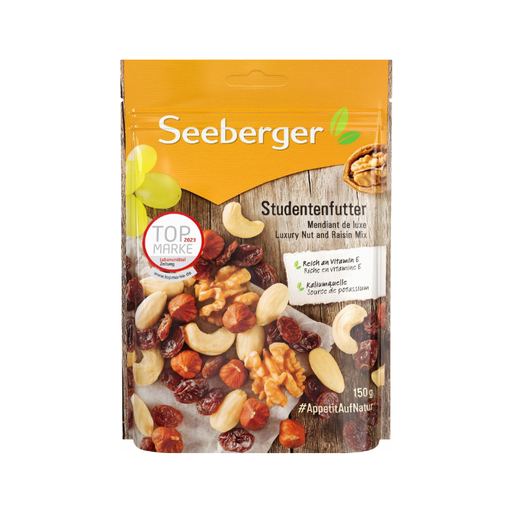 No image available
This nut and fruit mix is an option if you’re looking for something other than a pure nut snack for break time.
The fat content of the whole mix can’t be used to prove that it contains less fat than comparable nuts. If you have an allergy, check the ingredients, any ‘may contain’ information and the school’s rules.
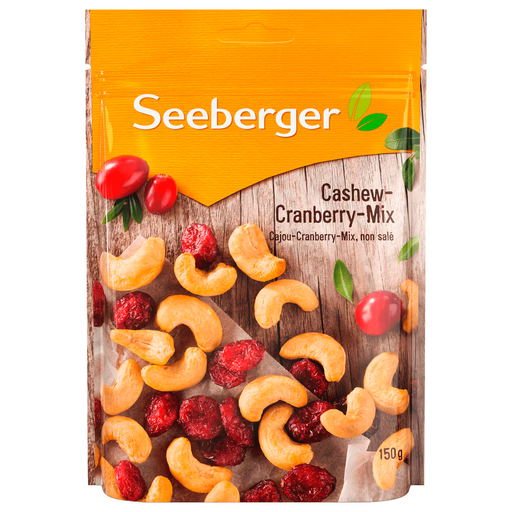 No image available
This cashew and cranberry mix is an option if you’d like a combination of nuts and fruit.
If you want to compare sugar and fat, check the nutritional information for the whole mix rather than treating it as equivalent to pure nuts. Check for cashews and any other allergen information before packing it.
 No image available
These cashews are a good option if you’re looking for an unsalted nut snack without any fruit.
‘Unsalted’ doesn’t mean reduced fat. Before packing them for school, check the allergen information and the rules set by the school or class.
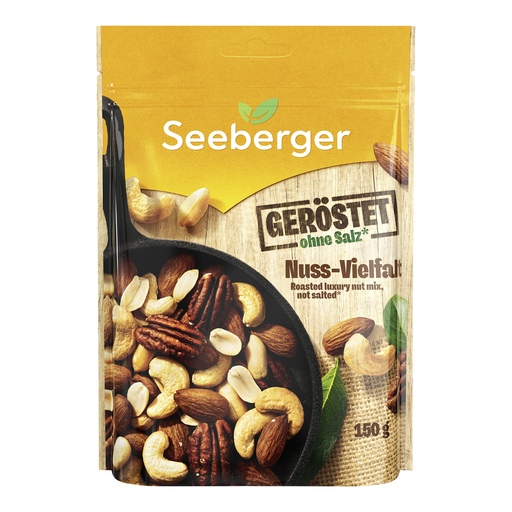 No image available
This roasted nut mix is an option if you’d prefer several types of nuts rather than just one.
Seeberger lists sunflower oil as an ingredient. The mix contains peanuts and tree nuts, so check the product labelling and school rules before packing it.
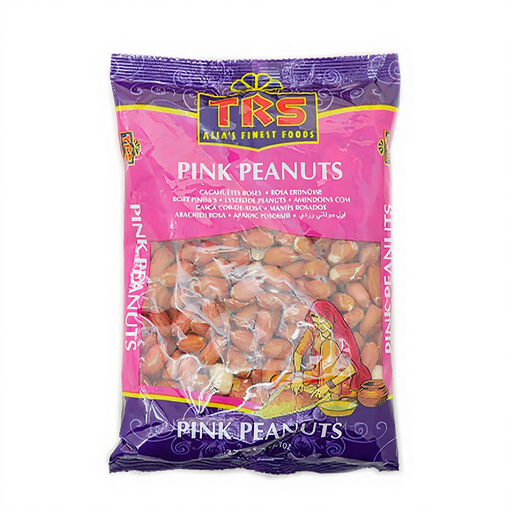 No image available
These peanut kernels are an alternative to a nut mix if you’re looking for just one type of product.
They’re described as raw, and the product description recommends roasting them. You’ll need to prepare them before serving as a break-time snack. They aren’t suitable if you have a peanut allergy; check the school’s rules too.
No. ‘Unsalted’ doesn’t describe the fat content. According to Verbraucherzentrale, a product can only be labelled ‘low fat’ if it contains no more than 3 g of fat per 100 g. The unsalted nut kernel mixes and peanuts listed by EDEKA24 contain 59 g and 51 g of fat per 100 g respectively, well above that amount.
Check with the school or class before packing nuts for a particular school break. If your child has a known peanut or tree nut allergy, also follow their individual medical advice and check the labelling on each pack.
Check the product description, then compare salt per 100 g and read the ingredients list. ‘Unsalted’ doesn’t automatically rule out other ingredients such as oil or prove that the product contains less fat.
A ‘may contain’ statement warns that accidental traces may be present; it doesn’t confirm that tree nuts are in the pack. However, the warning may still be important for anyone with a relevant allergy, so follow the individual medical advice they’ve been given.