Which type of light is right for you?

Crafters dealing with shadows

If you’re photographing individual school cones by a window, try using a white reflector to brighten the darker side before investing in extra equipment. Canon Europe recommends reflectors and available light as practical approaches to product photography.

Sellers who care about colour

If you photograph your own handmade school cones regularly, look for controllable colour temperature and take care with your white balance. Canon Europe notes that the colour temperature of natural light changes depending on conditions.

Photographers who move their set-up

If you often change your shooting location, weigh up light coverage, power options and what’s included in terms of modifiers and mounts. With compact lights, it’s also worth checking whether they can illuminate the whole subject or just small details.

What should you look for when buying?

Window light with a reflector

A good fit if: the window already lights the school cone well enough and you mainly want to brighten the shadowed side.

The trade-off: daylight changes with the weather and time of day. A reflector won’t replace an extra light source if there isn’t enough light overall. Canon Europe explains how clouds and fog can diffuse natural light.

Diffused LED panel

A good fit if: you want an adjustable fill light in a fixed location and can check beforehand that it will cover the whole school cone.

The trade-off: NEEWER lists a removable diffuser for the RGB660 PRO II; the power adapter, stand and batteries aren’t all included in the same configuration. A panel diffuser isn’t automatically equivalent to a large softbox.

Bi-colour COB light with a modifier

A good fit if: you want to shape the light by adjusting its form, distance and direction, and have room to use a larger modifier.

The trade-off: According to their manufacturers, the Godox SL60IIBi and amaran COB 60x S have a Bowens mount. Make sure the softbox you choose is compatible with the mount and what’s included with the specific version.

Compact battery-powered continuous light

A good fit if: you often shoot away from a mains socket or want to light small details as well.

The trade-off: SmallRig lists softboxes for the RC 60B Lite as optional. The compact Ulanzi VL119 is a light-stick alternative for accent lighting; its manufacturer’s illuminance figure doesn’t prove it will light the entire school cone evenly.

What you need What to check before buying Who it matters most to
Soft shadows Try a white reflector first. If you’re buying a light, check the size, mounting and included accessories for the diffuser or modifier. Soft shadows are especially important if you want folds and decorations to remain visible without harsh spots of light on the shadowed side. Around 36% of shoppers rank this as their top priority.
Consistent paper colours Check the colour temperature range and colour-rendering information for the exact model; assess test shots using a deliberately chosen white balance. If you want to compare the colours of your handmade paper designs more reliably across repeated shots, controllable lighting is especially useful. Around 29% of shoppers say faithful paper colours matter most to them.
Lighting the whole school cone Check the shooting distance, subject size and modifier in your planned set-up; compare lux figures only when you know the measurement conditions. If you want to light the entire subject rather than just one detail, coverage matters. Around 21% of shoppers rank full-subject lighting as their top priority.
Changing shooting locations For the exact model, check whether a power adapter and battery are included, battery life at the stated load, and whether a stand and softbox are supplied. If you shoot in different locations, weigh quick set-up and power options against light coverage and accessories. Around 14% of shoppers put a portable set-up first.

Which buying mistakes can you avoid?

  • Choosing by wattage or lux figure alone

    A lux figure applies to the stated distance and measurement set-up. On its own, it doesn’t tell you whether the whole school cone will be lit softly.

    Compare the shooting distance and reflector or diffuser used, and check the framing with your planned set-up.

    You may also need a suitable modifier or mount, so make sure you have enough space for the set-up.

  • Assuming bi-colour means your photos will have accurate colours automatically

    The colour temperature of window light changes. So an adjustable colour temperature on your light won’t, by itself, ensure consistent colours from different light sources.

    Use the adjustment to match your extra light to the available light, and assess test shots with a deliberately chosen white balance.

  • Expecting a complete kit with a panel or battery-powered model

    Power options, batteries, stands and modifiers vary by model and version. For the NEEWER RGB660 PRO II, the manufacturer lists a power adapter as included, but not NP-F batteries or a stand. SmallRig lists softboxes for the RC 60B Lite as optional.

    Before buying, check the full model name, mount, power options and box contents for the specific offer.

    Depending on the version, you may need a separate softbox, stand, compatible battery or suitable PD power supply.

  • Assuming similarly named models are identical

    A similar product name doesn’t mean it’s the same model or version.

    Check the full model name and product details before choosing a version.

Which brands are worth considering?

Godox

The SL60IIBi is a mains-powered bi-colour COB light with a Bowens mount, suited to a fixed set-up.

  • Godox states a colour temperature range of 2800–6500 K and dimming from 0–100%.
  • Check separately that a suitable modifier is compatible and included; manufacturer claims aren’t an independent test of how it performs on your subject.

amaran

The COB 60x S is a compact bi-colour COB light with a Bowens mount.

  • Product information lists a range of 2700–6500 K and compatible softboxes.
  • Softboxes are listed as separate accessories. The stated output varies between the manufacturer’s pages, so it shouldn’t be treated as a confirmed comparison figure.

NEEWER

The RGB660 PRO II is a panel with a diffuser for adjustable fill lighting.

  • NEEWER says you can adjust the colour temperature, brightness and panel angle; a power adapter is included.
  • NP-F batteries and a stand aren’t included. RGB effects don’t replace checking how well the panel illuminates in white light.

SmallRig

The RC 60B Lite is a compact COB light with a built-in battery, designed for shooting in different locations.

  • SmallRig states a range of 2700–6500 K and a runtime of 45 minutes at maximum output.
  • Softboxes are optional. According to SmallRig, the standard and Lite versions differ in their included accessories.

Ulanzi

The VL119 is a compact light stick for portable accent lighting or close-up shots.

  • Ulanzi states a range of 2500–9000 K, 105 lux at 1 m and a runtime of 70 minutes at full power.
  • These figures don’t prove it can light an entire school cone evenly. The VL119 and VL49 are different models.

Joybuy products for extra lighting

These Joybuy products include ring lights and video lights for extra lighting when taking photos and videos. In particular, check whether the light’s surface area and a suitable modifier are large enough to cover the whole school cone.
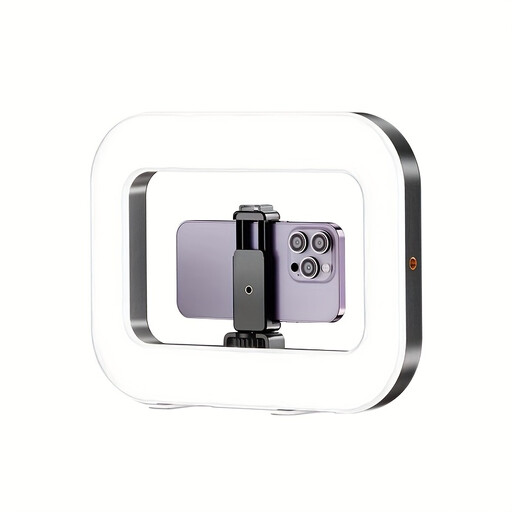
Yoever smartphone ring light with built-in battery

Yoever smartphone ring light with battery

A ring light for short video shoots; check from your planned shooting distance whether it lights the whole school cone well enough.

The product name states that it has a built-in battery.

View at Joybuy
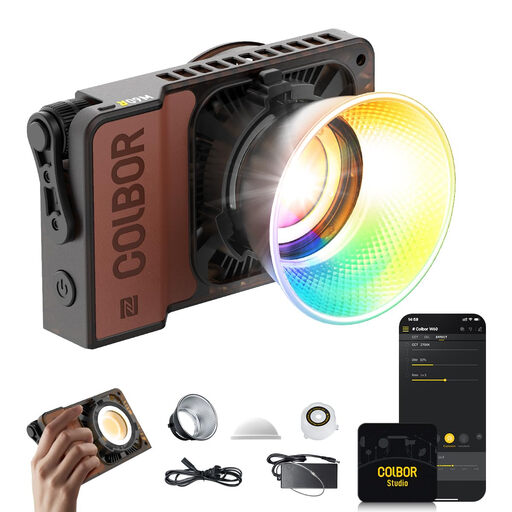
COLBOR W60R RGB video light

COLBOR W60R RGB video light

A portable COB light for photography and video; check that it lights the whole school cone from your planned distance and with your chosen modifier.

The product name states 60 W and a weight of 345 g.

View at Joybuy
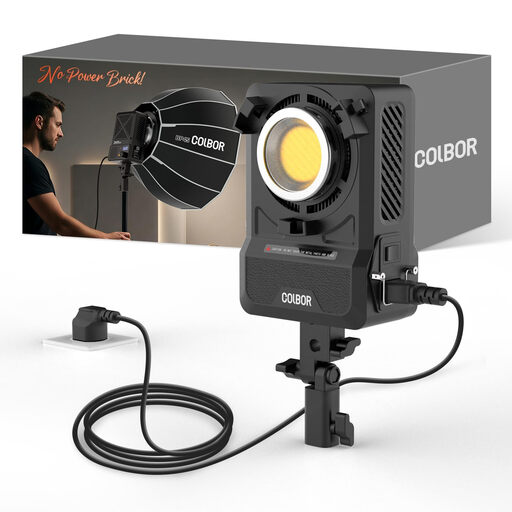
COLBOR 200W bi-colour COB video light with Bowens mount

COLBOR 200W bi-colour COB video light with Bowens mount

A COB light with a Bowens mount for use with a compatible modifier; check that its size and direction cover the whole school cone.

The product name states 200 W, bi-colour from 2700 K to 7000 K, a Bowens mount and a built-in power adapter.

Do not look directly at the LEDs at maximum brightness, and keep the light away from water and high humidity.

View at Joybuy
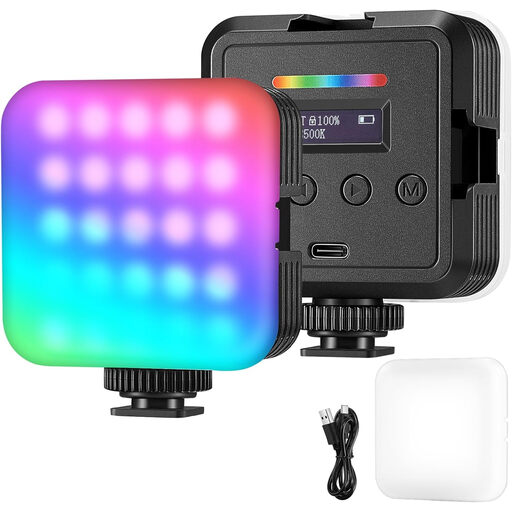
Portable RGB LED camera light

Portable RGB LED camera light

A portable RGB light for photography and video; assess paper colours in a test shot using a deliberately chosen white balance.

The product name describes it as a camera light for photography, video and streaming.

View at Joybuy
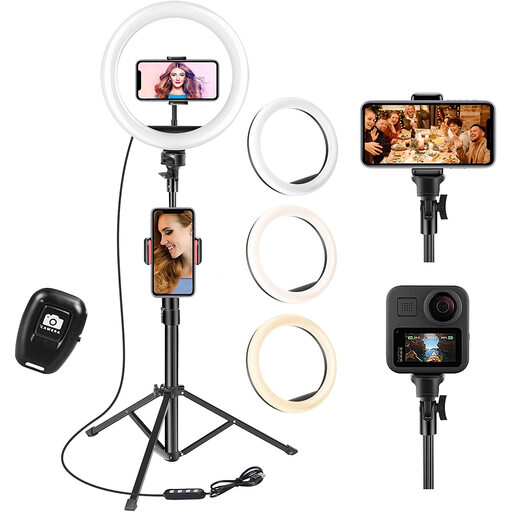
10-inch ring light with stand

10-inch ring light with stand

A ring light with a stand for a fixed shooting location; check that the light’s surface area is suitable for the size of your school cone.

The product name mentions a remote control, three colour settings and ten brightness levels.

View at Joybuy

Frequently asked questions

Do I really need a video light by the window?

Not necessarily. If one side is too dark, try bouncing the window light back with white card first. If there isn’t enough light overall, or it changes significantly during a series of shots, controllable extra lighting may be useful.

How do I match extra lighting to my white balance?

Start with the window as your main light, then point a reflector or dimmed continuous light at the shadowed side and take a test shot of the whole school cone. As the colour temperature of natural light changes, it’s best to assess paper colours using a deliberately chosen white balance; a Kelvin setting alone won’t guarantee consistent colours.

Does a video light come with a stand, softbox and battery?

It depends on the exact model and offer. For the RGB660 PRO II, NEEWER lists a power adapter as included, but not a stand or NP-F batteries; SmallRig lists softboxes for the RC 60B Lite as optional. Check the specific version and what’s included before ordering.

What are the rules in Germany on CE marking and claims for faulty products?

The European Commission explains that CE marking is required only for products covered by relevant harmonised EU rules that require it; it isn’t an independent quality mark. If a product is faulty, statutory consumer rights should be distinguished from a voluntary guarantee, as explained by Verbraucherzentrale Deutschland (as at 28 September 2026). This does not confirm the compliance of any specific offer mentioned here.