What should you look for when buying?
First decide whether your photos will focus mainly on close-up details, the whole school cone or a space-saving setup. Then check the lighting, colour settings and accessories for that specific use.
| What you need |
What to look for |
Who is this important to? |
| Show fine textures |
A tilting, securely mounted light with a dimmer; move the light to the side when taking test shots. Check focus separately for close-ups, as Canon Germany recommends. |
If I want to bring out embossing or fabric textures, I need to be able to adjust the light angle and shadows. Around 36% of consumers put clear visibility of fine details first. |
| Keep colours consistent |
Check the colour temperature and colour rendering of the specific model. Photograph your craft materials under the planned lighting and set the white balance accordingly. Canon Germany explains how light colour affects the way colours look. |
If I photograph the same materials repeatedly, I don’t want to mistake changing light for differences in colour in the image. Around 29% of consumers prioritise the most consistent colour appearance possible. |
| Show the whole school cone |
Check the size and position of the light for the cone’s elongated shape, and allow space for a tripod and backdrop. A larger panel with a diffuser can provide a broader, softer area of light. |
If I care more about a balanced image from tip to opening than emphasising close-up details, I need a light that can illuminate the whole shape. Around 21% of consumers prioritise the overall view. |
| Plan for space and accessories |
Check what’s included with the specific version, the power supply, whether you may need a battery or adapter, and that the mounting is stable. |
If I only take photos at my craft table occasionally, I want to be able to put the kit away and set it up again without a lot of effort. Around 14% of consumers prioritise a compact setup with a manageable number of accessories. |
Suitable products on Joybuy
This selection includes compact tabletop photo boxes and a bi-colour COB light for a studio setup with a light modifier.
 No image available
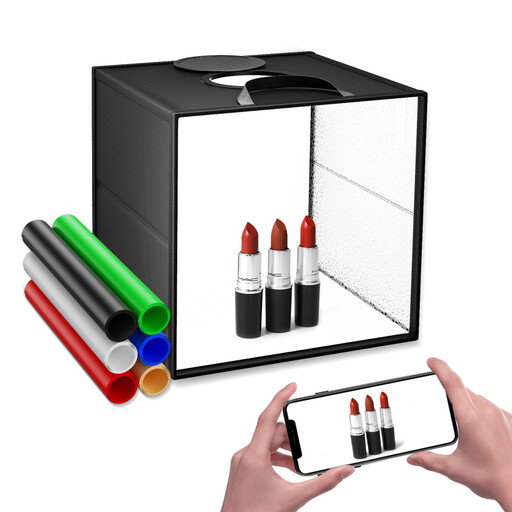
30 cm foldable LED photo box with 120 LEDs
For small still-life shots and product details at a tabletop setup that you can put away between uses.
It’s listed with 120 LEDs, three colour temperatures and nine brightness levels. The set includes six coloured backdrops.
View on Joybuy
 No image available
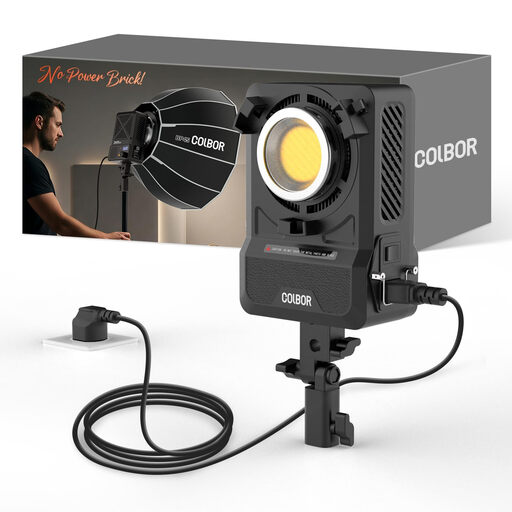
COLBOR 200W bi-colour COB LED video light
For a studio setup where you want to adjust the colour temperature and brightness and use light modifiers.
It’s listed with bi-colour 2700–7000 K, brightness control and a Bowens mount. According to the description, the built-in power supply is intended for studio use.
View on Joybuy
 No image available
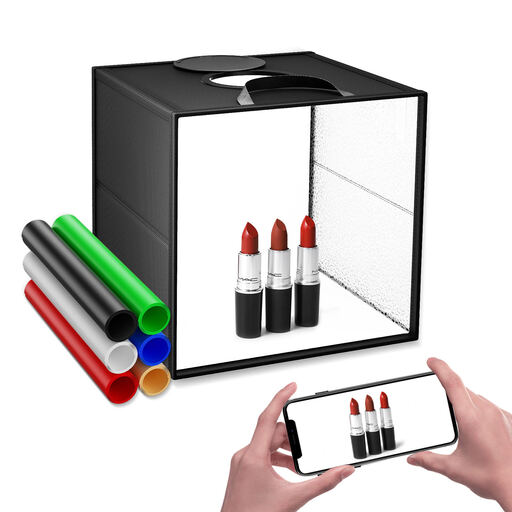
40 cm photo box with dimmable 120 LEDs
For a foldable tabletop setup with front and top openings, when you want to use diffusion fabric for softer light.
The product name specifies 5,600 K; it’s also listed with three colour temperature modes, six coloured backdrops and dimmable LEDs. Softer light can make fine reliefs look less pronounced.
View on Joybuy
Frequently asked questions
Do I have to use a video light for school cone photos?
No, an additional light isn’t essential. Canon Europe lists window light as a possible light source for product photography. If you can control the lighting, colours and shots you want well enough with it, you may not need a video light.
What’s the best way to take detail shots?
Photograph the same detail with the light at different angles, then assess the shadows and reflections in the image. Check the focus too: Canon Germany points out that the shallow depth of field in close-up photography calls for precise focusing.
Will any softbox fit any COB light?
No, the mount needs to match the specific light. According to the manufacturer, the Nanlite FS-60B has an FM mount; you’ll need an adapter for Bowens accessories. Check the mounts and package contents of both items before buying.
What should I look for in electrical and disposal markings?
The Bundesnetzagentur lists CE marking, manufacturer details and German-language instructions with the required warnings among the points checked in market surveillance. The EU portal explains the crossed-out wheeled bin symbol and separate collection for electrical and electronic waste. A CE mark on its own doesn’t prove a model’s photographic performance.
What if a light I buy online isn’t right for my setup?
According to the Verbraucherzentrale, online contracts generally come with a 14-day right of withdrawal; you must notify the retailer that you wish to withdraw. Before ordering, also check what’s included with the specific version and the retailer’s terms and conditions.


