Families planning portions
If you’re looking for a crunchy snack for a lunchbox, you can match the energy information to the amount that will actually be packed. Pack size and salt content also play a part in your choice.


If you’re planning a calorie-conscious school lunchbox, it’s worth looking at the actual amount you’ll pack first, rather than relying on terms such as ‘protein’ or ‘wholegrain’ to guide your choice. Compare the nutritional information per 100 g, check the salt, ingredients and allergens, and treat a snack mix as part of the food for break time, not automatically as a whole meal.
If you’re looking for a crunchy snack for a lunchbox, you can match the energy information to the amount that will actually be packed. Pack size and salt content also play a part in your choice.
When a mix contains several ingredients, it’s especially important to check the label on the specific pack. Depending on the product, peanuts, gluten-containing cereals, milk or sesame may be relevant.
A small portion of something crunchy should complement the food for break time, not replace a meal. The German Nutrition Society recommends including vegetables, fruit and wholegrain options in a lunchbox, with water to drink.
First decide how much you’ll put in the lunchbox. Then check whether the ingredients, packaging and rest of the food are right for the school day.
| Criterion | What to check | Who is it important for? |
|---|---|---|
| Energy and portion size | Compare kcal per 100 g and apply the figure to the amount you’ll pack. The manufacturer’s serving suggestion may be helpful. | If the pack contains several portions, I want to decide on a suitable amount before packing it. Portion planning is a priority for around 31% of consumers. |
| Allergens | Read the ingredients list on the specific pack and check highlighted allergens and any ‘may contain’ warnings. | If certain ingredients need to be avoided, I mainly need to know exactly what’s in the mix. Around 25% of consumers would put checking allergens first. |
| Its place in the lunchbox | Look at the salt as well as the kcal, and consider what else is in the lunchbox. The German Nutrition Society suggests vegetables, fruit and wholegrain options for break-time food. | I want a crunchy snack to complement the rest of the food, rather than take its place. This would be the main concern for around 25% of consumers. |
| Convenience | Check the pack size, how easy it is to carry and any storage instructions. For nut products, check whether the school or class has any rules. | If break time is short, I need an amount that’s easy to pack and eat. Convenience would come first for around 19% of consumers. |
A claim about fat content doesn’t tell you how much energy is in the portion you’ll pack. For example, funny-frisch lists 133 kcal per 30 g portion for its Protein Chips Barbecue Style. They’re not a snack mix, either.
Compare the kcal per 100 g and work out the figure for your planned amount, rather than focusing only on the product description.
If you haven’t decided on an amount in advance, it’s hard to know how much of the mix will actually end up in the lunchbox. A crunchy snack also isn’t automatically a complete school meal.
Measure out the amount you want into a container beforehand and plan the rest of the food for break time separately.
Neither ‘mix’ nor ‘wholegrain’ or ‘protein’ tells you everything that’s in the product. The mixes and crunchy alternatives mentioned here vary in their ingredients, including peanuts, gluten-containing cereals, milk and sesame.
For every specific pack, check the ingredients list, highlighted allergens and ‘may contain’ warnings.
The name can also be used for a frozen meal. ALDI SÜD sells a product called Snack-Mix Paprinos that needs to be stored and prepared.
Check the product type, storage instructions and preparation method before comparing it with a ready-to-eat snack for a lunchbox.
Lorenz offers Saltletts PausenCracker as an alternative to a crunchy snack mix, including in a 40-g To-Go pack.
Protein Chips Barbecue Style are a crunchy alternative for comparison, but they aren’t a snack mix.
GUT&GÜNSTIG Snack-Mix is an example of a savoury crunchy snack mix.
Its range includes Mitsuba Streetfood Snack Mix Coconut & Peanut Satay, an example of a mix made with coated peanuts and rice crackers.
Speisezeit Snack-Mix Paprinos shows that ‘snack mix’ can also refer to a frozen meal.
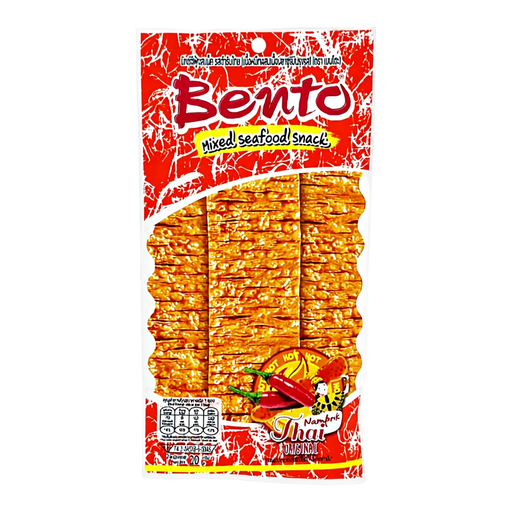
This selection includes two crunchy alternatives to classic snack mixes: a 20-g seafood snack and rye crispbread. For a lunchbox, the main difference is whether you’d prefer a small pack or to decide on the amount yourself.
 No image available
The 20-g pack is a good option if you want the pack size to determine the amount of snack. This seafood snack isn’t a classic snack mix, so check the latest ingredients and allergen information before packing it.
 No image available
This rye crispbread is an alternative if you want to choose the amount of snack yourself. The 260 g is the pack size, not a school portion; to calculate the figures per portion, you’ll need to weigh the amount you pack.
First compare the kcal per 100 g, then apply the figures to the amount you’ll actually pack. Lebensmittelklarheit explains that almost all packaged foods must display a nutrition table; an additional serving suggestion can make planning easier.
A salty snack mix shouldn’t be treated as a complete meal just because of its name. The German Nutrition Society recommends a varied selection of food for break time. For example, a lunchbox could include vegetables with hummus, fruit and wholegrain options, as well as water.
Always follow the ingredients and information on the specific pack. Depending on the mix, it may contain peanuts, gluten-containing cereals, milk, sesame or soya. Lebensmittelklarheit explains how intentionally added allergens must be labelled on packaged foods.