Parents checking allergens and school rules
If the snack is for school or childcare, check the ingredients, allergen information and any arrangements in place before choosing a flavour.


For a school bag, the packaging comes first: a 150 or 200 g bag isn’t automatically an individual portion. Then choose between a nut-only mix, a nut and fruit mix, or roasted or salted nuts, based on the ingredients and flavour. Before buying, check the allergen information and any rules at your child’s school or childcare setting.
If the snack is for school or childcare, check the ingredients, allergen information and any arrangements in place before choosing a flavour.
If you’re packing snacks for the day, distinguish between a single larger bag and individually wrapped portions. You can divide a larger bag into portions at home if needed.
For a study break, the key question may be whether they’d prefer plain nuts, a mix with dried fruit, or roasted and salted nuts.
First, check whether the snack is suitable for your child’s school and how you’ll pack it. Then compare the ingredients and nutritional information of the mix you’re considering.
| Criteria | What to check | Who it matters most to |
|---|---|---|
| Allergens and school rules | Read the ingredients, highlighted allergens and precautionary allergen statements; check the school or childcare setting’s rules. | If allergies or rules about snacks brought from home are a factor in the class, I want to know whether the mix is suitable before choosing a flavour. This check comes first for around 31% of consumers. |
| Portioning | Check the pack weight and the number and weight of any individual bags specifically listed. | For a snack in a school bag, I don’t want to have to divide up a large bag while out and about. The right pack format is the top priority for around 25% of consumers. |
| Ingredients | Compare the types of nuts, how they’re roasted and the salt per 100 g. | If I’m looking for plain nuts or specifically a savoury mix, the exact ingredients make all the difference. Around 25% of consumers put this preference first. |
| Nuts and dried fruit | Check the proportion of dried fruit and the sugar per 100 g; consider the pack size when comparing products. | With a nut and fruit mix, I want to know which dried fruits it contains and whether I’ll enjoy the combination. This consideration comes first for around 19% of consumers. |
A serving size in the nutrition table doesn’t mean the pack contains individual bags. For example, REWE lists ja! nut kernel mix in a 200 g pack, with a reference serving of 30 g.
Look for a stated number of individual bags. If there aren’t any, you can portion out the amount you need before the school day.
Seeberger trail mix, listed by EDEKA24 in a 150 g pack, contains 57% nut kernels and 43% dried vine fruit. If you don’t want raisins, the name ‘trail mix’ alone isn’t enough to help you choose.
Compare the ingredients and the proportion of dried fruit with a nut-only mix.
For its plain ja! mix, REWE lists 0 g salt per 100 g; for its roasted and salted ja! nut mix, it lists 1 g salt per 100 g. The types of nuts in each mix also differ.
Check the ingredients list and salt per 100 g for the specific variety.
Nut and fruit mixes may contain different tree nuts or peanuts. The Verbraucherzentrale explains how ingredients and allergens are labelled on food, as well as allergen labelling for food served in schools and nurseries.
Check the current packaging, including any precautionary allergen statements, and ask about the class or childcare setting’s rules if needed.
An option for trail mix with nuts and dried fruit, available in different bag sizes.
REWE sells both a plain nut kernel mix and a roasted and salted nut mix under the ja! brand.
EDEKA24 sells a premium trail mix under this brand, among other products.
Lidl describes Alesto as a range of plain nuts, dried fruit and seasoned snacks.
The own-label brands differ between ALDI SÜD and ALDI Nord.
This selection includes trail mix, other nut and fruit mixes, and roasted nuts for a snack break. If you’re looking for individually wrapped portions for a school bag, check each pack carefully for individual bags.
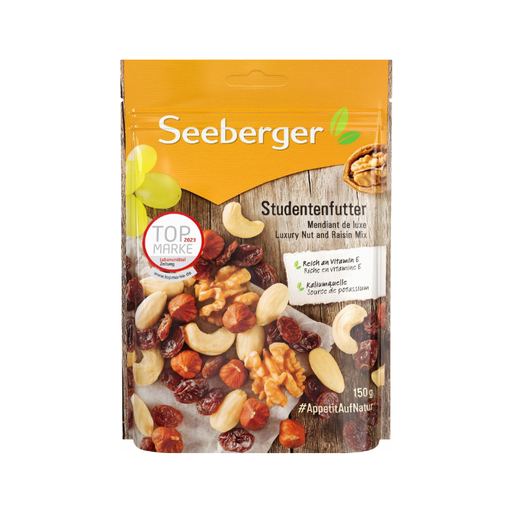 Image unavailable
For anyone who enjoys a mix of nuts and raisins. The 150 g variety listed by EDEKA24 contains 57% nut kernels and 43% dried vine fruit. For a school bag, check whether it contains individual bags or whether you’ll need to portion it yourself; see the allergen information on the pack.
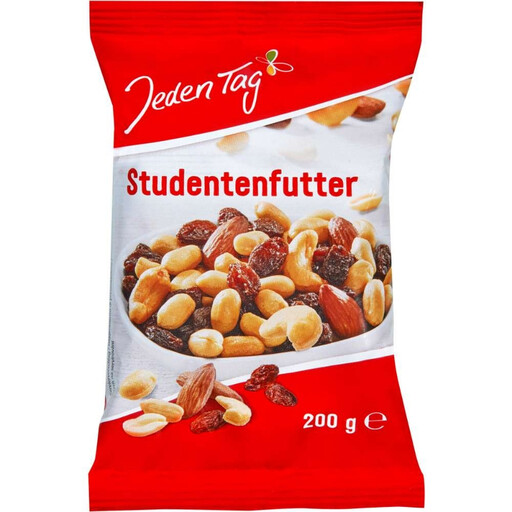 Image unavailable
A nut and raisin mix for anyone who prefers this flavour combination for a study break. The bag contains 200 g; before packing it, check whether it’s divided into portions and read the ingredients and allergen information for this specific variety.
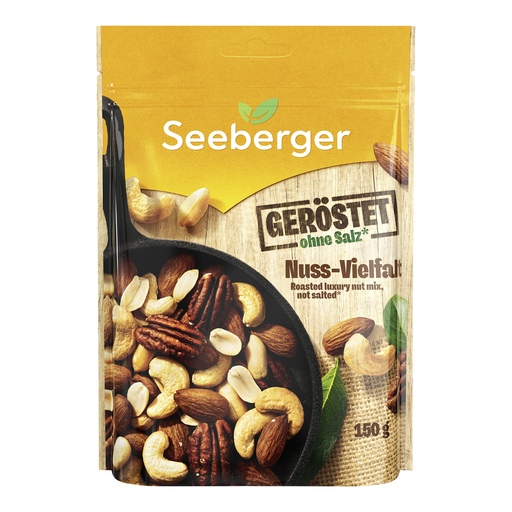 Image unavailable
For a break with roasted nuts instead of a nut and fruit mix. The bag contains 150 g; before choosing it, check the types of nuts, salt content, any allergen information and how the pack is divided.
 Image unavailable
For anyone looking for cashews rather than a mix of different nuts and dried fruit. The pack contains 150 g; check the portion size if needed and read the allergen information before buying.
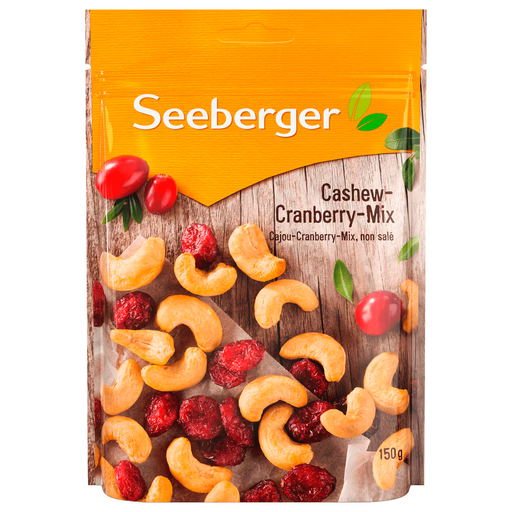 Image unavailable
For anyone who prefers cashews with cranberries to classic trail mix with raisins. The pack contains 150 g; compare the ingredients and nutritional information before buying, and check that the pack format suits your needs.
Check the rules at your child’s school, class or childcare setting before packing nuts. The Verbraucherzentrale explains allergen labelling for food served in schools and nurseries; this doesn’t automatically establish a rule for snacks brought from home.
Look for the stated number and size of the individual bags. A serving size in the nutrition table doesn’t tell you how the pack is divided: the ja! nut kernel mix sold by REWE contains 200 g, while its nutrition information gives a serving size of 30 g.
No, the ingredients vary between products. The 150 g Seeberger trail mix sold by EDEKA24 contains 43% dried vine fruit; the plain ja! nut kernel mix described by REWE contains four types of nuts. If you don’t want dried fruit, compare the ingredients lists.
Whole nuts aren’t suitable for toddlers because of the risk of choking. The Bundesinstitut für Öffentliche Gesundheit specifically warns against them for this age group; this advice is separate from choosing a break-time snack for school-age children.
If the pack doesn’t contain suitable individual bags, you can portion out the amount you need before packing it. Follow the storage instructions and check the best-before date on the specific pack.