Families with little time to dry clothes
If a school uniform needs to be dry before it’s worn again, extra warmth may be worth considering. However, a manufacturer’s power rating doesn’t guarantee a particular drying time.


If a standard clothes airer doesn’t dry your school uniform in time, a heated model could be worth considering. However, you can’t work out a set drying time from the rated power alone. First, check the care labels, drying space and dimensions. If there’s enough time for air-drying, an unheated airer avoids extra electricity use; whichever type you choose, moisture still needs to be ventilated out of the room.
If a school uniform needs to be dry before it’s worn again, extra warmth may be worth considering. However, a manufacturer’s power rating doesn’t guarantee a particular drying time.
Compare how much room the airer takes up when open with how much storage space it needs when folded. For tower models, also check that shirts and trousers will fit comfortably on each level.
When drying clothes indoors, consider how you’ll ventilate the space as well as any additional electricity use. A heating function won’t remove moisture from your home.
A good fit if: You can hang several items side by side and have room for the airer when it’s open.
The trade-off: Its wide footprint and extra electricity use come with the possibility of saving time, but that isn’t guaranteed.
A good fit if: You have limited floor space and there’s enough height and hanging room for your clothes.
The trade-off: For long shirts or trousers, check the clear space between tiers; a higher wattage doesn’t guarantee a set drying time.
A good fit if: Your school uniform has plenty of time to dry and you want to avoid using extra electricity for heat.
The trade-off: There’s no additional heating function; ventilation is still important when air-drying clothes indoors.
A good fit if: You’re looking for air movement rather than heated rails and the design suits the space where you’ll use it.
The trade-off: If a model has conflicting power ratings, check the specifications for the exact version before comparing running costs.
| Priority | What to check when buying | Who it matters to |
|---|---|---|
| Clothes dry in time | Count the items you regularly need to dry at the same time, then check the rail length, layout and spacing. | If I need school uniform ready to wear the next day, I look at usable hanging space rather than just the number of heated rails. Around 28 % of consumers put having clothes ready in time first. |
| Floor space and hanging room | Measure the space needed when the airer is open and the storage space needed when it’s folded; check that your clothes will fit on the tiers. | When floor space is limited, the airer still needs to fit my shirts and trousers. Around 22 % of consumers prioritise the dimensions when set up and folded away. |
| Moisture in the home | Check whether you can ventilate the space where you plan to dry your clothes. The German Environment Agency recommends paying particular attention to regular ventilation when drying damp clothes in living spaces. | When I dry clothes indoors, I look for a spot that’s easy to ventilate; a heating function won’t dehumidify the room. Around 22 % of consumers are particularly concerned about moisture when drying clothes at home. |
| Ongoing electricity costs | Compare the rated power of the specific model, then factor in how long you’ll actually use it and your electricity tariff. | If there’s enough time for air-drying, I want to avoid using extra electricity. Around 17 % of consumers put electricity costs first. |
| Caring for uniform fabrics | Compare the care labels on your clothes with the appliance instructions, and check whether you can switch off the heating function. | When I have different fabrics to care for, I follow the instructions for each item rather than assuming one method suits them all. Around 11 % of consumers prioritise fabric care. |
Even a heated airer won’t remove moisture from wet clothes and carry it out of the room. The German Environment Agency advises taking particular care to ventilate regularly when drying damp clothes in living spaces.
First choose a place where you can ventilate, then check which type of airer will fit there.
Manufacturers’ figures for power and heated rails aren’t drying times for your school uniform measured under consistent conditions.
Check whether you can hang all the items you need with enough space between them. If time is tight, don’t rely on an unverified estimate in hours.
An airer that folds away neatly may take up much more floor space when open. With a tower model, you also need to check that there’s enough space between the tiers for your clothes.
Measure the space where you plan to use the airer, both when it’s open and when it’s loaded. For tower models, check the height and tiers too.
The EASYmaxx Elektro-Wäscheständer 900 is described as using a cool airflow; however, the same product page gives two different power ratings: 24 W and 17 W.
Before comparing running costs, check the technology and power rating for the specific version against consistent product documentation.
The AD 7821 and AD 7831 are heated winged and tower-style airers designed for different spaces.
The 850-048 is described as a two-tier electric clothes airer.
Unheated winged airers are an alternative if your clothes have enough time to air-dry.
The unheated Mixer 3 tower airer could be an option if you have limited floor space.
The Elektro-Wäscheständer 900 is described as an alternative that uses a cool airflow rather than heated rails.
This selection includes a heated winged airer and folding clothes airers for air-drying. If a model is described as an electric drying machine, check that its design suits your needs before buying if you’re looking for a clothes airer.
 No image available
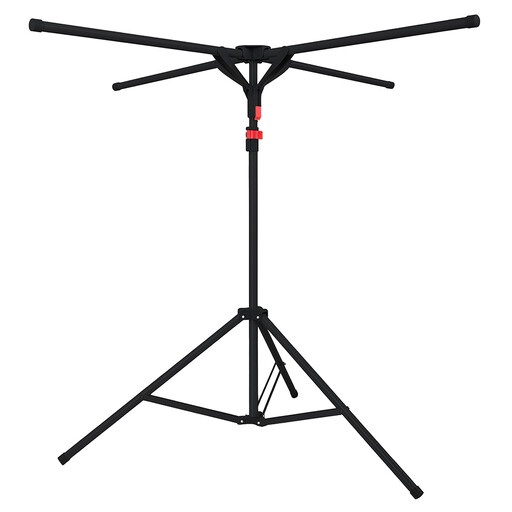
The central drying area and fold-out side wings suit you if you need to hang clothes side by side; check that you have enough space when it’s open.
Dimensions listed in the product name: 144L x 53W x 96H cm.
 No image available
If there’s enough time for air-drying and you don’t need extra heat, this folding design could be a suitable unheated option.
The product name lists 10 non-slip hooks and sock clips.
No heating function; ventilation is still important when using it indoors.
 No image available
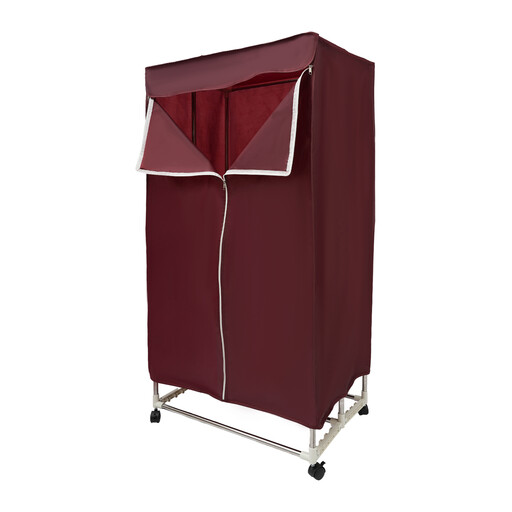
The product description identifies this as an electric drying machine. Before buying, check that its design suits your needs if you’re looking for an open clothes airer.
The product name lists 1200 W and a load capacity of 66.14 lbs.
The product description identifies this as an electric drying machine; check that the way you use it is suitable for the care instructions on your clothes.
Not as a general rule. Read the care label on each item and the instructions for the specific appliance. Care guidance can differ on whether an item should be dried hanging, flat or in the shade. A general claim about gentle fabric care is no substitute for checking.
Yes. If you’re drying clothes indoors, it’s still important to remove the moisture from the air. The German Environment Agency recommends paying particular attention to regular ventilation when drying damp clothes in living spaces; a heating function doesn’t dehumidify the room.
Multiply the rated power in kilowatts by the actual hours of use and your electricity price per kilowatt-hour. For the AD 7821, four hours at its full rated power would work out to 0,88 kWh; this is neither a measured energy use nor a drying time for a load of laundry.
Your statutory rights against the seller are separate from any voluntary guarantee. The additional repair rights described as applying from 31 July 2026 have specific requirements for each type of appliance; you can’t assume that they give you a manufacturer’s right to have a heated clothes airer repaired.
Electrical products covered by the relevant EU harmonisation legislation must meet the requirements for CE marking before they can be placed on the market. The manufacturer is responsible for the marking; it isn’t a general independent test seal. Check the information for the specific model—a product description alone doesn’t demonstrate full compliance.