A heat pump tumble dryer can be a useful addition if you regularly need tumble-dryer-safe school clothes in a hurry; items marked as unsuitable for tumble drying will still need to dry naturally. Check the fabric and load requirements for the specific quick programme. If you use the dryer often, compare kWh per 100 Eco cycles, Eco programme duration and condensation efficiency. The Verbraucherzentrale explains the label values, while the Umweltbundesamt recommends airing rooms regularly when drying damp laundry indoors.
Who might benefit from a tumble dryer?
Parents who need school clothes in a hurry
If you need individual tumble-dryer-safe items ready for the next school day, make sure the fabric type and load size are suitable for the quick programme. Bosch Hausgeräte lists a 40-minute programme for small loads of lightweight synthetics for the WTH83VV4; AEG Deutschland states that the TR7T50689 can dry up to 4 kg in 75 minutes.
Families who use a tumble dryer regularly
If you dry other loads as well as school clothes, you can compare capacity, Eco programme duration and kWh per 100 Eco cycles on the same labelling basis. The Verbraucherzentrale explains these energy consumption figures for tumble dryers.
Households with an indoor clothes airer
Not every item can go in the tumble dryer, so you’ll also need to consider the space available and moisture levels in your home for laundry on the airer. GINETEX GERMANY explains care symbols, while the Umweltbundesamt recommends airing rooms regularly when drying damp laundry indoors.
What should you look for when buying?
Start by checking care labels and the requirements for a suitable quick programme. If you’ll use the dryer regularly, compare the Eco figures too, and bear in mind that items unsuitable for tumble drying will still need to go on the clothes airer.
| What matters |
What to check before buying |
Who is it most relevant to? |
| Drying school clothes in time |
Check the programme, suitable fabrics and maximum load in the manual for the specific model. |
If I need individual tumble-dryer-safe items ready for the next school day, the right programme load matters more to me than a short advertised time. This is a priority for roughly 31% of consumers. |
| Electricity costs with regular use |
Compare the current label’s kWh per 100 Eco cycles and Eco programme duration. |
If the dryer also runs frequently outside rainy school days, I want to understand its Eco consumption rather than extrapolate from a specialist programme. Running costs are the main concern for roughly 25% of consumers. |
| Caring for different fabrics |
Match care symbols to the fabric types and load limits for each programme. |
With a mixed load of school clothes, I want to avoid using a programme on an item with different care requirements. Fabric care is the main concern for roughly 25% of consumers. |
| Space and moisture in the home |
Check the appliance dimensions and condensation efficiency; remember to air the room when drying clothes on an indoor airer. |
If my clothes airer is indoors, I need to consider the space it takes up and the extra moisture. This is the main concern for roughly 19% of consumers. |
Common buying misconceptions
-
The shortest advertised time applies to every school load
Short programme times apply only to specific fabrics and load sizes. If a care label says not to tumble dry an item, that still applies when using a heat pump programme.
Before buying, check that the quick programme’s requirements suit the clothes you actually expect to dry regularly.
-
Older energy labels can be compared directly with current ratings
Since 1 July 2025, the European Commission has required household tumble dryers to carry the current A to G label in shops and online. Older A+++ to D ratings are based on a different scale.
For the specific model, check the current label and the figure in kWh per 100 Eco cycles.
-
A tumble dryer makes the clothes airer redundant
Items whose care labels rule out machine drying will need to dry another way. Damp laundry on an indoor clothes airer also increases moisture in the room.
Check care labels, and make sure you have a suitable place to dry any remaining laundry indoors and can air the room regularly.
-
Care and extra services don’t matter after you’ve bought it
Filters and the condensate container need attention, while optional services can vary depending on the model and what’s on offer.
Before ordering, check the manual, what’s included and any services sold separately. When using the appliance, follow the care instructions for that specific model.
Brands and models to consider
Bosch
The Serie 4 WTH83VV4 may suit buyers looking for a quick programme for specific small loads.
- Bosch Hausgeräte lists Auto Dry and a 40-minute programme for small loads of lightweight synthetics.
- According to the manufacturer, the WTH83VV4’s condenser is not self-cleaning; the programme time is not a blanket promise for school clothes.
AEG
The TR7T50689 has manufacturer-listed programmes for SpeedDry and mixed loads.
- AEG Deutschland states that SpeedDry can dry up to 4 kg in 75 minutes, and lists MixDry and ProSense.
- The stated time does not automatically apply to other fabrics or programmes.
Siemens
The iQ500 WQ35G2D90 can be assessed by looking at its half-load option and condenser care.
- Siemens lists a half-load option, a 40-minute programme and a self-cleaning condenser.
- The 40-minute figure does not indicate how long a full family load or any fabric type will take.
Beko
The 8 kg B3T42249S offers useful comparison points for sensor-based drying and regular laundry.
- Beko lists OptiSense, energy class C and 63 dB(A) for this model.
- Manufacturer claims about fabric care are not an independent comparison test and do not prove a particular drying time for school clothes.
Miele
The T1 TWC640WP is an 8 kg option for comparing specific manufacturer features and available services.
- Miele lists DirectSensor and DryProtect for this model.
- Check separately whether any additional services suit your household; this model’s features do not automatically apply to all Miele tumble dryers.
Heat pump tumble dryers at Joybuy
The selection includes heat pump tumble dryers for regular family laundry, as well as models with listed programmes for loads you need dried in a hurry.
 No image available
Haier I-Pro 1 HD80-E929E-DE, 8 kg heat pump tumble dryer
For regular laundry if you want to compare a range of programmes and sensor-controlled drying.
Listed features include an 8 kg capacity, several drying programmes and sensor drying that ends the cycle when the laundry is dry.
View at Joybuy
 No image available
LG RT80X7B, 8 kg heat pump tumble dryer
For different types of laundry if you want to compare programme choice and sensor-based features.
The product description lists 12 programmes, as well as AI Dry, TurboDry and SensorDry. For school clothes, check the requirements for the programme you plan to use.
View at Joybuy
 No image available
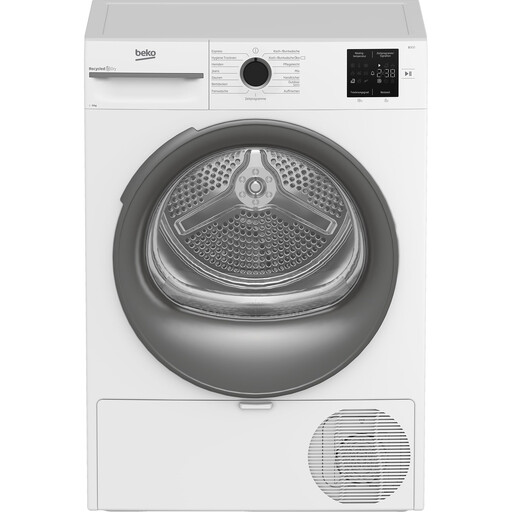
Beko BM3T39210W1, 9 kg heat pump tumble dryer
For larger loads if a stated capacity of 9 kg and a choice of programmes suit your needs.
The description lists 15 programmes, including Express, Easy Care and Delicates. Check the permitted load and duration for each programme.
View at Joybuy
 No image available
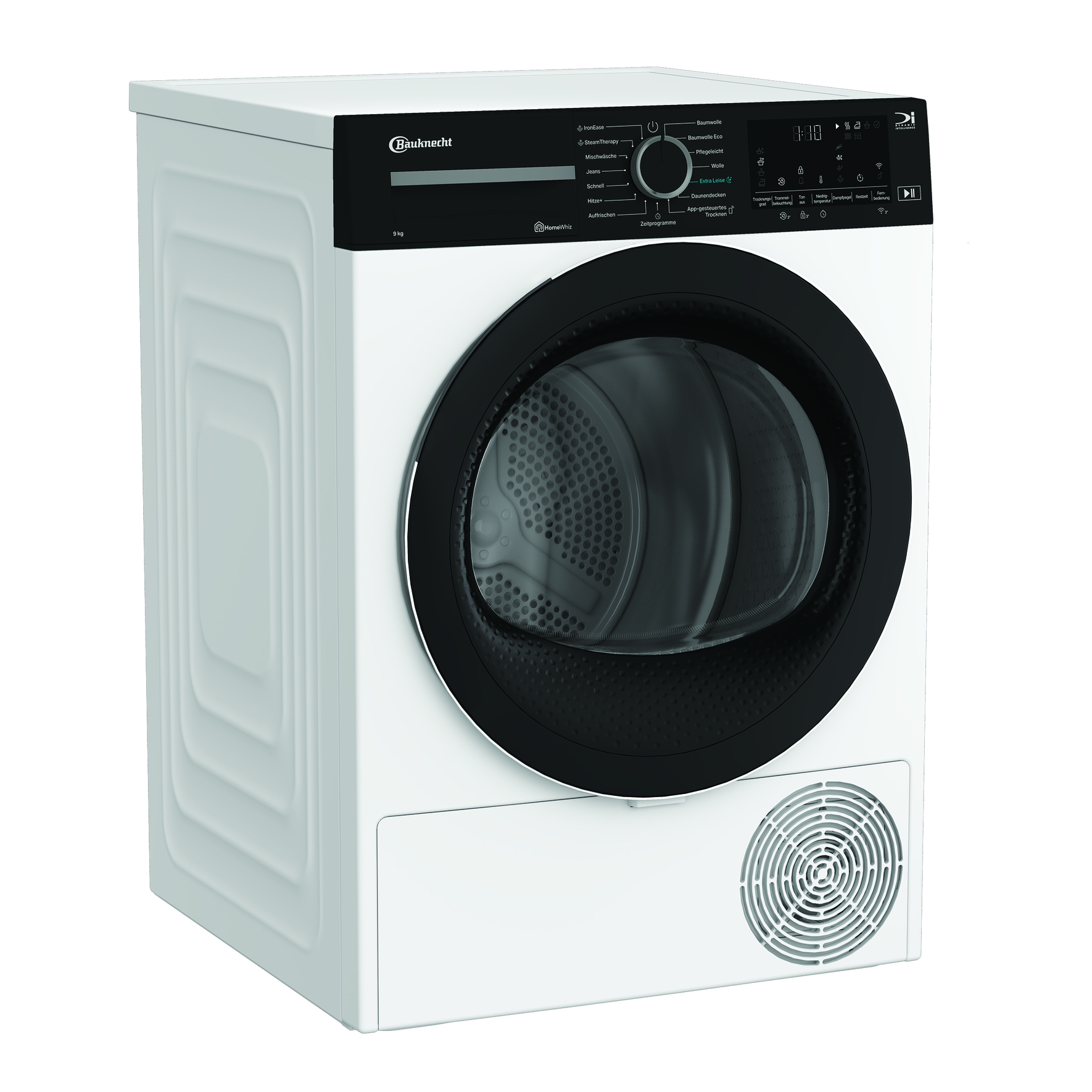
Bauknecht BD 9C WBS, 9 kg heat pump tumble dryer
For regular larger loads if capacity and Eco programme duration are important for planning your laundry.
Listed figures include a 9 kg capacity, 63 dB(A) and an Eco programme duration of 195 minutes at full load. This programme time applies to that load size.
View at Joybuy
 No image available
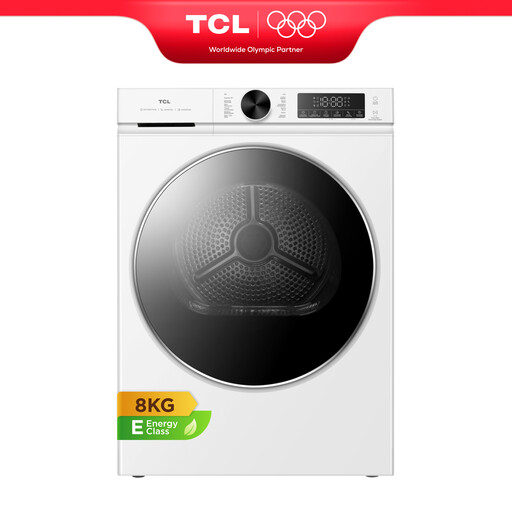
TCL DP4408WE1DE, 8 kg heat pump tumble dryer
For loads you need dried in a hurry if a listed quick programme is important to you.
The description lists Quick Dry, which takes up to 30 minutes, and Auto Dry. Check which fabrics and load size the programme time applies to.
View at Joybuy
Frequently asked questions
Is a 40-minute programme suitable for every school uniform and sports kit?
No. Bosch Hausgeräte describes the WTH83VV4’s 40-minute programme as suitable for small loads of lightweight synthetics. Check the care label, fabric type and manual for the specific appliance.
What should I do with clothes whose labels say not to tumble dry?
Dry these items naturally, following the care instructions. If your clothes airer is indoors, the Umweltbundesamt recommends airing the room regularly to deal with the extra moisture.
How can I compare the electricity costs of tumble dryers?
The current EU label gives consumption in kWh per 100 Eco cycles. To work out your own costs, divide this figure by 100, then multiply it by your electricity price per kWh and the expected number of comparable Eco cycles. Quick programmes may use a different amount of energy.
Which energy label scale applies to household tumble dryers currently on sale?
Household tumble dryers sold in Germany have used the EU A to G scale since 1 July 2025. The European Commission specifies this scale for labels in shops and online; older A+++ ratings cannot be compared directly with the current classes.


