A washer-dryer is a good choice for school uniforms if you want to wash and dry a small, tumble-dryer-safe load in one go, without moving it between appliances, and don’t have room for two machines or somewhere to hang clothes. If you regularly have large loads and space for separate appliances, it’s worth comparing the options. For conventional washer-dryers, the German consumer advice centre Verbraucherzentrale notes higher electricity and water consumption than for separate appliances; this doesn’t apply universally to heat-pump models. Before buying, check the washing and drying capacities, the EU energy label figures for both programmes, and the dimensions of the specific appliance.
Which option is right for you?
Families with little time between uniform changes
If you need school clothes back in action at short notice, look for a programme that suits a genuinely small load, and check whether the garment can be tumble-dried. Bosch Home Appliances describes the WNG24441 as having a 60-minute programme for small loads; GINETEX Germany explains the tumble-drying symbols.
Families with several uniform loads
If you have several uniforms as well as other household laundry, consider the washing and drying capacities separately. If there’s room in your utility room, a washing machine and separate tumble dryer could also be an option. Verbraucherzentrale compares their consumption with that of conventional washer-dryers.
Households with uniforms made from different fabrics
If care labels differ, check each garment’s label to see whether it can go in the tumble dryer. GINETEX Germany distinguishes between normal, low-temperature and prohibited machine drying, among other settings.
What should you look for when buying?
First decide whether avoiding the need to move a suitable small load between appliances matters more to you than drying larger loads in one go or air-drying your laundry.
Washer-dryer
A good fit if: you want to wash and dry a small, tumble-dryer-safe uniform load in one appliance.
Consider: the drying capacity and the time needed for a complete wash-and-dry cycle may differ from the washing capacity or the duration of a short standalone programme.
Washing machine and separate tumble dryer
A good fit if: you have room for both appliances and regularly wash larger loads that can go in the tumble dryer.
Consider: you’ll need to transfer the laundry between appliances. Verbraucherzentrale finds that these use less electricity and water than conventional washer-dryers, but this doesn’t apply universally to every heat-pump model.
Washing machine and air-drying
A good fit if: the care labels say your uniform items must not be machine-dried, or you have enough time and space to hang them up.
Consider: there’s no continuous wash-and-dry cycle, so you’ll need to make room for laundry and allow time for it to dry.
| Buying priority |
What to check |
Who is it most important to? |
| Getting a uniform ready in time |
The programme, permitted load and duration of the complete wash-and-dry cycle. |
If a uniform is needed again after a quick change, I care about the full cycle; around 28% of consumers prioritise getting a uniform ready quickly. |
| Several uniform sets |
Compare the washing and drying capacities separately with the size of your usual load. |
If there are several uniform sets as well as other laundry to wash, I want to run as few cycles as possible; around 22% of consumers prioritise load capacity. |
| Suitable fabric care |
Check the care label and tumble-drying symbol on every item. |
When I have different fabrics, I follow each item’s label rather than assuming a delicate programme makes it safe to tumble-dry; around 17% of consumers prioritise suitable fabric care. |
| Finding the right space |
Check the footprint, door clearance and required connections for the specific model. |
If space in the utility room is limited, the appliance needs to fit with the door open and connections in place; around 17% of consumers prioritise a good fit. |
| Running costs |
Compare electricity and water figures for the same programme. |
If I use the appliance often, I want comparable figures for the programme I plan to use; around 16% of consumers focus on running costs. |
Washer-dryer buying pitfalls
-
Looking only at the washing capacity
The washing capacity may be higher than the capacity for a complete wash-and-dry cycle. If so, you’ll need to take some of the laundry out before drying.
Compare both capacity figures in kilograms with the size of your usual uniform load.
A complete cycle may take longer or require an additional drying programme.
-
Assuming all washer-dryers use the same amount of energy and water
When comparing washer-dryers with separate appliances, Verbraucherzentrale highlights the consumption of conventional combination machines. A heat-pump model such as the AEG LWR9W81609 has its own model-specific energy label figures.
Compare specific appliances and the same programme using the electricity and water figures, rather than treating one appliance type as a universal benchmark.
-
Assuming extra services are included
Delivery, installation and optional extras may be offered separately. Miele lists delivery and installation services for the WTD165 as bookable extras.
Before you complete your purchase, check exactly what has been agreed for delivery, installation and removal of your old appliance.
Brands and model examples
Bosch
According to Bosch Home Appliances, the Bosch WNG24441 combines a 9 kg washing capacity with a 6 kg capacity for washing and drying.
- Bosch Home Appliances lists programmes for stains and ‘Wash & Dry 60'’ for small loads.
- The 60-minute figure doesn’t apply to a full wash-and-dry load; for uniforms, the care label is still the deciding factor.
LG
According to LG Germany, the LG W4WR7096YB is a washer-dryer with a 9 kg washing capacity and a 6 kg drying capacity.
- LG lists a 39-minute TurboWash programme for this model with a half load.
- This duration doesn’t refer to a complete wash-and-dry cycle; the manufacturer’s information isn’t independent confirmation that it’s suitable for school uniforms.
AEG
According to AEG Germany, the AEG LWR9W81609 combines heat-pump technology with a 10 kg washing capacity and a 6 kg drying capacity.
- AEG gives this model an energy efficiency rating of B and a figure of 206 kWh per 100 complete wash-and-dry cycles.
- The manufacturer also gives a figure of 51 kWh per 100 wash cycles. Compare figures separately for each programme, and check that the dimensions and programmes suit your space and uniforms.
Miele
According to Miele Germany, the Miele WTD165 WPM from the WT1 range has an 8 kg washing capacity and a 5 kg drying capacity.
- Miele lists PerfectCare and CapDosing for this model.
- The 5 kg drying limit is an important point to consider if you regularly dry larger loads in one go; check delivery and installation services separately.
Siemens
According to Siemens Home Appliances, the Siemens WN54C2A40 has a 10.5 kg washing capacity and a 6 kg capacity for washing and drying.
- Siemens lists automatic dosing, autoDry and aquaStop for this model.
- The stated appliance depth is 622 mm; check the dimensions against the space available before you buy.
Joybuy products
The Joybuy products below include washer-dryers and a washing machine with a separate tumble dryer; designs and capacities vary.
 No image available
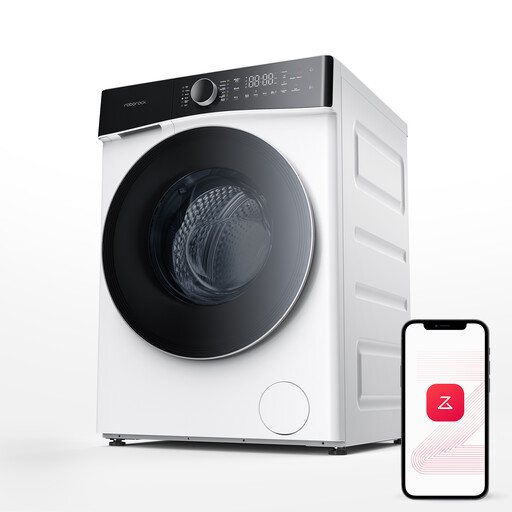
Roborock Zeo Lite, white, 10 kg washing / 6 kg drying
Could be a good fit if your planned uniform load is within the stated drying capacity.
10 kg washing and 6 kg drying capacity; energy class E. The title mentions Zeo-Cycle drying, automatic dosing and a self-cleaning LintClear system.
View at Joybuy
 No image available
LG WT1210EGF WashTower, 12 kg washing / 10 kg drying
An option if you want to pair a washing machine with a separate tumble dryer; you’ll need to transfer the laundry between the appliances.
The product description lists a 12 kg washing capacity and a 10 kg drying capacity, a Dual Inverter Heat Pump, AI DD, TurboWash 360° and ThinQ app control.
View at Joybuy
 No image available
LG WT1210WWF, 12 kg washing / 10 kg drying
Could work for uniforms if the full load you plan to dry doesn’t exceed the 10 kg drying capacity and the care labels allow tumble-drying.
The title mentions a Dual Inverter Heat Pump, AI DD, TurboWash 360°, a steam function and the ThinQ app.
View at Joybuy
 No image available
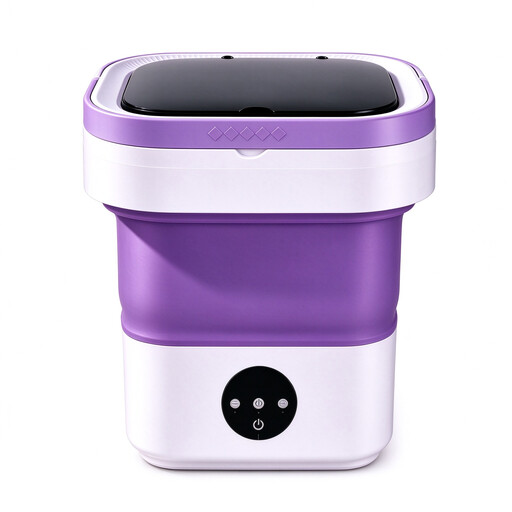
Foldable 3-in-1 mini washing machine with drying function
The stated washing capacity is only suitable for small amounts of laundry; compare it with the size of your uniform load.
The product description lists a washing capacity of up to 1.5 kg and a drying function.
View at Joybuy
 No image available
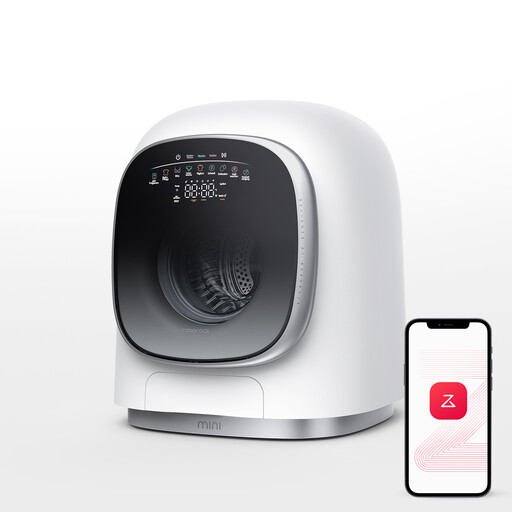
Roborock Zeo Mini, 1 kg washing / 0.5 kg drying
Its small capacity is only suitable for correspondingly small loads, not necessarily a full uniform load.
The title lists a 1 kg washing capacity, a 0.5 kg drying capacity and energy class A. The product description lists more than 20 wash and dry programmes.
View at Joybuy
Frequently asked questions
Can every washable uniform item go in the washer-dryer afterwards?
No. Check the tumble-drying symbol on each garment separately from the washing symbol. It may allow normal or low-temperature drying, or prohibit machine drying altogether. A delicate programme doesn’t replace permission to tumble-dry the garment.
What should I check before installing an appliance in the utility room?
Measure the space available, including room to open the door, and check that the water, drainage and electricity connections match the installation requirements for the specific appliance. Dimensions vary by model: Bosch Home Appliances, for example, gives a depth of 1,072 mm for the WNG24441 with the door open. Follow the manufacturer’s instructions when connecting and setting up the appliance.
How can I compare electricity and water consumption?
Compare the EU energy label figures on the same basis: per 100 wash-only cycles or per 100 complete wash-and-dry cycles. Also take the stated water consumption into account. The washing efficiency rating alone won’t tell you the drying figures.
Which energy label applies to a new washer-dryer?
The EU energy scale from A to G has applied to household washer-dryers since 1 March 2021. The European Commission also explains that the energy label must be clearly visible in online shops.
What should I compare when buying a heat-pump washer-dryer?
Compare the figures for the specific model separately for washing and complete wash-and-dry cycles. For example, AEG gives figures of 51 kWh per 100 wash cycles and 206 kWh per 100 wash-and-dry cycles for the LWR9W81609; these manufacturer figures refer to different programmes.


