
Lieferung heute & morgen

Qualitätsgarantie

Willkommens-Angebote freischalten: KOSTENLOSE Lieferung | Bis zu 80 % RABATT | Kostenlose 30-Tage-JoyPlus-Testphase
App herunterladen
A shoe bench with storage combines two useful features: it keeps shoes tidy and gives you somewhere to sit while putting them on or taking them off. This can be a practical choice for homes with a narrow hallway, limited space or several people in the household. However, models vary considerably in size, internal layout, seating comfort and weight capacity.
A hallway shoe bench can look compact in product photos. But it’s not just the width and height that matter: you’ll also need to consider the depth, the space needed to open doors or lids, and how much room will be left to walk through. If your hallway is narrow, measure the available floor space carefully before you buy.
It’s also worth leaving a safe distance from doors, radiators and plug sockets. A shoe bench that’s 30 to 35 cm deep may suit a narrow entrance, while pull-out seats and wide-opening lids need extra room.
‘Suitable for several pairs of shoes’ isn’t a standard measurement. Large men’s shoes, boots and trainers take up more room than flat slippers or children’s shoes. Removable shelves also affect how much storage space is available.
So, check for:
A padded shoe bench can be comfortable, but soft padding doesn’t tell you how much weight it can safely support. Check the stated maximum seat load, and distinguish between the capacity of the seat, the shelves and any individual baskets.
A stable design is also important for families. Follow the assembly instructions, place the furniture on a level surface and don’t exceed the manufacturer’s stated limits.
A hallway shoe bench should fit the width, height and depth of your space. Slimline models suit smaller homes, but often offer less storage. A shoe bench around 70 to 80 cm wide may be enough for one or two people. Models measuring around 90 to 100 cm wide provide more storage and seating space, but naturally need more room.
A shoe rack with a seat gives you quick access to your shoes and allows good ventilation. Doors, lids or drawers keep the contents out of sight and help your entrance look tidy. A shoe bench with concealed storage can also hold keys, scarves, shoe-care products and other small everyday items.
For shoes you wear regularly, a combination of open and closed storage is practical. If you’d rather keep as few things as possible on display in the hallway, consider a shoe cabinet with a bench or a hallway bench with storage and a lift-up compartment.
MDF, chipboard and metal differ in weight, surface care and construction. Coated wood-based materials can usually be cleaned with a slightly damp cloth. Follow the care instructions for cushions in linen-look fabric, polyester or faux leather.
Also check whether the shoe bench needs to be assembled at home. Clearly labelled parts, easy-to-follow instructions and assembly on a level floor can help prevent common mistakes.
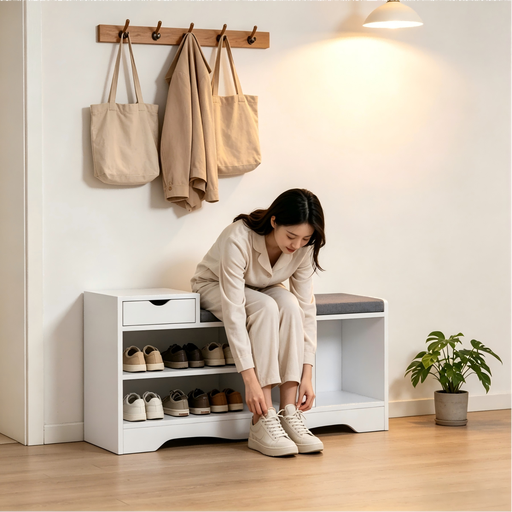
Why it suits this profile: Its compact dimensions of 80 × 30 × 52 cm make it a good fit for narrow hallways. A seat cushion, drawer and open compartments combine everyday essentials without taking up much floor space.
The stated overall dimensions and capacity of around 6 to 8 pairs make it easier for smaller households to plan than vague claims about size.
Compact depth, a drawer and a padded seat; white and oak-effect finish.
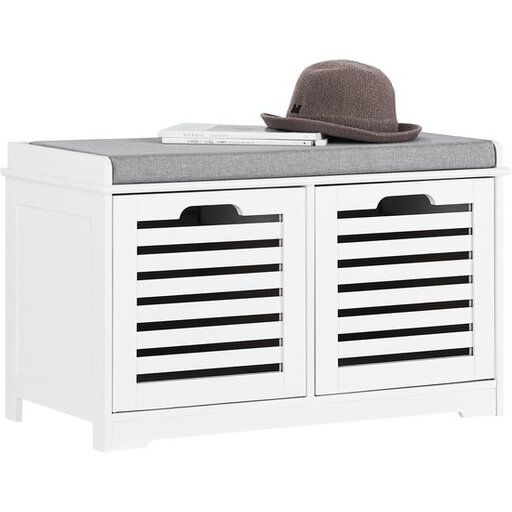
Why it suits this profile: Two removable baskets make it easier to organise shoes and small items. Measuring 71 × 43 × 34 cm, this bench is designed for use in a hallway or room.
The baskets can be removed, so you’re not limited to accessing the contents through a narrow opening. The stated seat capacity is 120 kg.
Two removable baskets, an MDF frame and a padded seat.
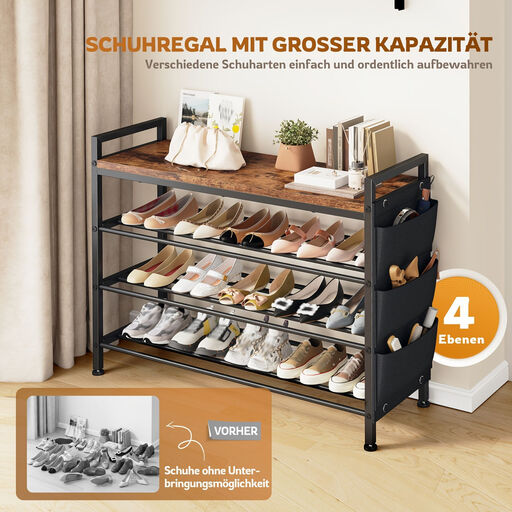
Why it suits this profile: According to the product description, its four tiers hold around 16 to 20 pairs of shoes. The open metal-and-wood rack is a good choice for households that regularly change their footwear.
The open design makes the shelf heights and storage space easy to see. Adjustable feet and an anti-tip restraint are included, according to the product details.
Four shelves, side pockets and a seat with a stated capacity of 100 kg.
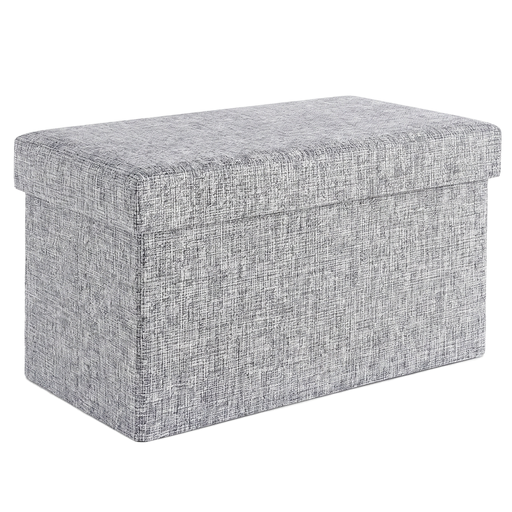
Why it suits this profile: The 25-litre interior can hold shoes, blankets, toys or accessories. Its foldable design suits rooms where you need to put the furniture away when it’s not in use.
The storage capacity is given as a volume, and the stool folds flat when not in use. That means it doesn’t need a large permanent space.
Concealed storage, a seat and a space-saving fold-flat design.
We’ve put together a complete, regularly updated list of products that meet these strict selection criteria and the safety regulations in force in the EU.
Plan for the walkway as well as doors and drawers. There’s no single minimum width that works for every room, as layouts and how you use the space vary. One practical option is to mark out the shoe bench with its door open or seat pulled out, then check that you can still walk through comfortably.
Its lifespan depends on the materials, how often you use it, how it’s assembled and the load it carries. Tightening the screws correctly, placing it on a level surface and sticking to the stated weight limits can help keep it in good working order. Check the screws, hinges and feet regularly, and care for cushions and coated surfaces according to the care instructions.
In normal use, there are usually no ongoing energy costs, as a shoe bench doesn’t use electricity. The only costs to consider are occasional cleaning, felt pads and replacement parts if needed. When comparing prices, also take into account the materials, storage space, assembly effort and how often you expect to use it.