
Lieferung heute & morgen

Qualitätsgarantie

Willkommens-Angebote freischalten: KOSTENLOSE Lieferung | Bis zu 80 % RABATT | Kostenlose 30-Tage-JoyPlus-Testphase
App herunterladen
A science experiment kit for children should encourage curiosity rather than disappearing into a cupboard after just a few uses. For parents, grandparents and education professionals, colourful packaging and a high number of experiments are therefore not the only considerations. The child’s age, the instructions, safety requirements and whether the set matches their actual interests are all crucial.
“20 experiments” or “over 50 experiments” may sound extensive at first. However, some activities may only take a few minutes or depend heavily on one another. Check whether the kit covers a range of different topics and whether it includes enough materials for multiple sessions. Some sets also require additional household items.
A STEM toy for children aged 8 and over can involve very different requirements depending on its contents. Mixing substances, handling small parts or working with hot water requires more support than an observation-based activity. The manufacturer’s age recommendation is therefore only a starting point. Also read the warnings and check the level of supervision required.
With a chemistry experiment kit, powders, granules or solutions may be used up during the recommended experiments. A children’s microscope may require batteries, while a set for growing Triops requires regular care and suitable conditions. Before buying, make sure you know what is included and which materials will need to be purchased later.
For children aged 6 to 9, clearly structured experiments involving light, water, air, the senses or simple technical concepts are usually suitable. According to the product information, the KOSMOS Student Lab for Years 1 and 2 includes more than 50 activities covering nature and technology and is intended for children aged 6 to 9.
From the age of 8, chemistry, crystal formation, visual perception or biology are often the main focus. For products containing chemical components, remember: read the instructions in full, follow all protective measures and warnings, and provide the recommended supervision. For children under 12, particularly close supervision may be advisable when mixing substances in some products.
Look for an illustrated step-by-step guide, easy-to-follow explanations and opportunities to observe or record results. A good science learning toy links the activity to questions: What is changing? Which variable was adjusted? Why are the results different?
Depending on your child’s interests, different topics may be suitable:
Compare the product dimensions with the intended workspace. A large laboratory station offers more surface area, but also requires more storage space once playtime is over. For a microscope, slides, a pipette, tweezers and specimen containers are useful. If the set contains small parts, plan storage and cleaning in from the start.
Also check whether batteries are required. For example, according to the product description, the LED lighting on the KOSMOS Explorer Microscope is powered by two AA batteries, which are not included. A wipe-clean surface is recommended for experiments involving water or substances that may stain.
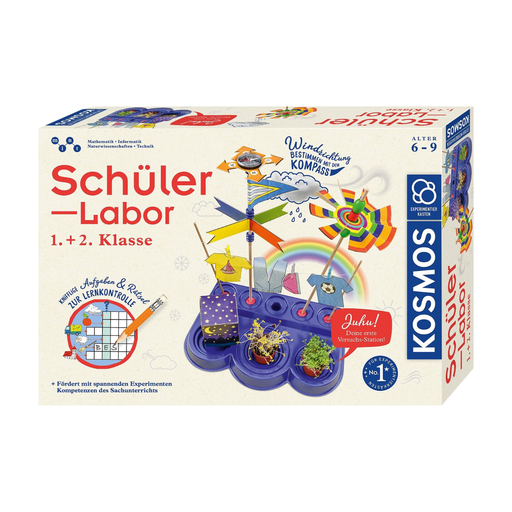
Why this product suits this profile: This broad introduction is designed for children aged 6 to 9 and combines simple activities with nature and technology topics for use at home or in primary school.
The range of different topics reduces reliance on individual consumables and provides variety rather than just one short-lived effect.
More than 50 described activities, illustrated instructions and topics including light, shadows, air, water and the senses.
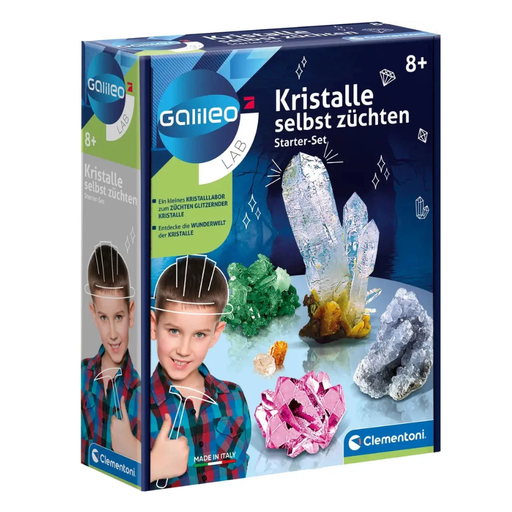
Why this product suits this profile: The set focuses on a clear, multi-day observation process and is suitable for children aged 8 and over who are interested in crystal formation and natural phenomena.
The illustrated guide explains the process step by step and makes it clear that crystal formation is observed over several days.
According to the product information, it includes containers, salts, solutions and instructions; no batteries are required. Supervision is recommended when mixing for children under 12.
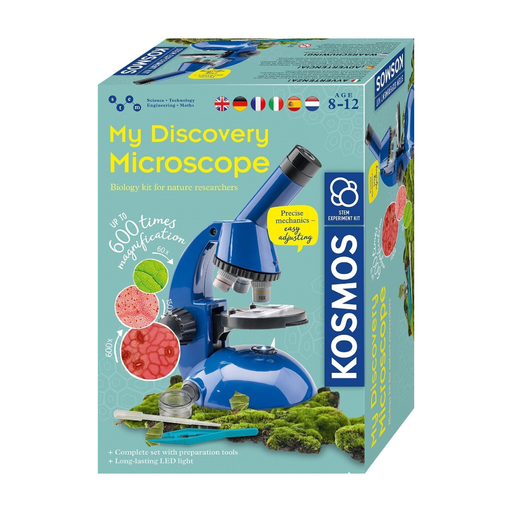
Why this product suits this profile: For children aged 8 and over who want to examine plants, fibres or other samples regularly and have space for a dedicated workstation.
The set is not limited to a one-off experiment: its accessories for preparing slides allow different samples to be observed.
Up to 600x magnification according to the product description, LED lighting, plus slides, a pipette, tweezers and specimen containers included.
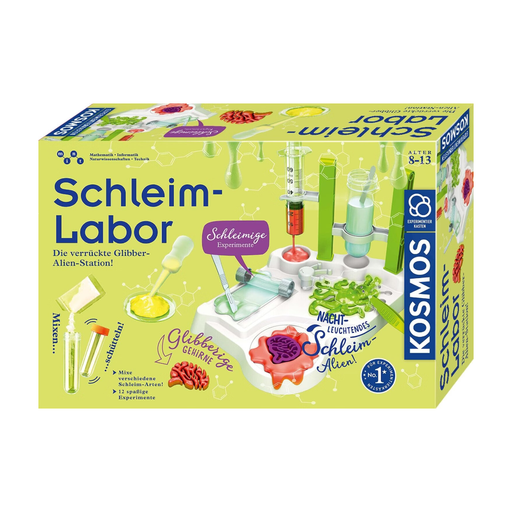
Why this product suits this profile: Suitable for children aged 8 and over who want to make slime, fizzing liquids and colour changes, and enjoy working at a laboratory station.
The guide takes you through 20 specific experiments and explains how to use pipettes, test tubes and measuring cups.
Large laboratory station, 20 described chemistry experiments and no batteries required. According to the product information, use is intended to take place under supervision.
We have put together a complete, regularly updated list of products that fully meet these strict selection criteria and the safety regulations applicable in the EU.
For optical illusions, the KOSMOS Fun Science Brain Tricks with 3D glasses, a Sphericon and a distorted room is a suitable choice. Children explore how visual information is perceived. If your child prefers a visible result, the KOSMOS Glitter Diamonds can be used to create a pendant from coloured granules.
For making slime, the Clementoni Galileo Science Slime Lab is worth considering. According to the product description, the station includes tools, mixing accessories and various additives. The KOSMOS Gummy Candy Lab, on the other hand, focuses on making sweets using a vegan gummy sweet mixture. Both sets require particular care around small parts; the Candy Lab also involves hot water.
Anyone who wants to grow Triops should bear in mind that this is not a one-off experiment. The KOSMOS Triops World includes a tank with a separate hatching area and instructions for daily observation and care. For families able to set aside regular time for a living project, this is more suitable than an experiment that can be completed quickly.
That depends on the contents. Simple nature and technology experiments may be suitable from around the age of 6 when accompanied by appropriate instructions. Chemical mixtures, small components, microscope accessories or hot water are often intended for children aged 8 and over and should be supervised in accordance with the manufacturer’s instructions.
How long a kit can be used depends on the amount of material included, whether the experiments can be repeated and the subject area. Observation sets such as a microscope can be used for longer with new samples. Consumables for crystals, slime or gummy sweets, by contrast, generally last for the sessions provided for in the set.
You may need batteries, additional household materials or consumables. Check the information about what is included before buying. AA batteries should be planned for when buying a microscope; a Triops set also involves the time needed for care and, where applicable, additional materials for keeping them later.