
Lieferung heute & morgen

Qualitätsgarantie

Willkommens-Angebote freischalten: KOSTENLOSE Lieferung | Bis zu 80 % RABATT | Kostenlose 30-Tage-JoyPlus-Testphase
App herunterladen
Science experiment kits for children combine play with observing, mixing, building and documenting. However, choosing the right one is not always straightforward for parents, grandparents and educators. Eye-catching packaging often reveals little about how long a set will actually keep a child engaged, which materials are included or how much support an adult will need to provide.
If you are looking for a STEM toy, a science kit for children or a gift for curious children, you should therefore look beyond the number of experiments. Age recommendation, contents, safety information and whether the child can work independently are all key considerations.
Some sets advertise a large number of experiments but require additional household ingredients. Before buying, it is worth checking what is included. Are measuring cups, moulds, containers and basic materials supplied? Or will parents first need to purchase more products?
A chemistry experiment kit with a few well-explained experiments can be more practical in everyday life than an extensive set that constantly runs out of consumables.
A set for children aged 8 and over is not automatically suitable for younger siblings. Small parts, powders, liquids, hot mixtures or batteries may require direct supervision. Magnetic building sets present an additional risk: swallowed magnets can cause serious injuries.
For children aged 3 and over, constructive systems with age-appropriate components are generally more suitable, such as a simple marble run or magnetic building blocks. Products containing chemical components, small containers or sharp-edged tools will generally be better suited to older children and should be used according to the instructions.
An experiment kit can encourage children’s interest in natural sciences and introduce basic terms from chemistry, biology or physics. However, it does not replace lessons and should not promise therapeutic or medical effects. Specific details are more meaningful, such as the number of moulds included, a microscope’s magnification, the number of building components or the recommended age group.
Pay attention to the official age recommendation and warning notices. Clear, illustrated instructions make getting started easier. Particularly with experiments involving heat, chemical components or living organisms, the supervising adult should read the instructions in full and guide the child through each step.
For educational toys for children aged 8 and over, it is also important to consider whether children simply produce a result or can understand the process. Explanations of gelling agents, crystal formation, states of matter or observation questions make the educational aspect easier to understand.
Check which materials are included and how many sessions they will support. Sets for growing crystals, making slime or producing bouncy balls partly contain consumable materials. Refill packs are not always included.
When buying a microscope for children, check whether slides, a pipette, tweezers and batteries are included. The Kosmos Explorer Microscope, for example, includes accessories for preparing samples; however, according to the product information, two AA batteries are also required.
For toys for children aged 3 and over, small parts and magnets should be checked particularly carefully. The manufacturer’s information should include details on materials, cleaning and storage. Magnetic building blocks can be stored neatly if a bag or box is included. Damaged parts must be removed from use, especially if magnets are visible or loose.
Dimensions also matter. A large laboratory set requires more space than a small crystal kit. This can be crucial for families with limited storage or for use in the classroom.
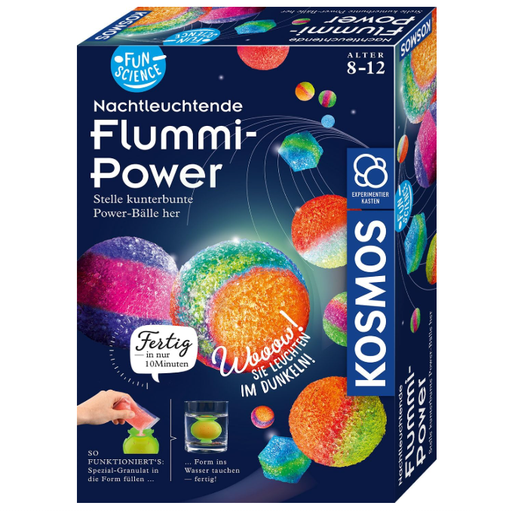
Why this product suits this profile: The set contains granules in six colours, plus three glow-in-the-dark versions and two moulds. This gives beginners a clearly defined introduction to creative science activities for children aged 8 and over.
The included granules and moulds make the scope of the materials clear. Before buying, bear in mind that the instructions must be followed and adult supervision is required.
20 colourful bouncy balls can be made using the specified materials; batteries are not required.
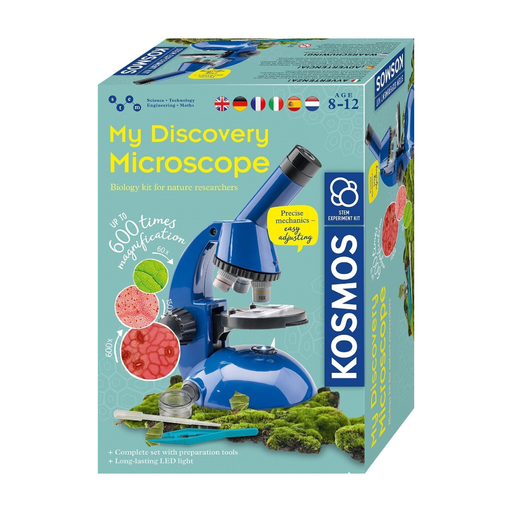
Why this product suits this profile: For children who want to observe plants, fibres or other samples, this set provides practical equipment for first biological investigations.
The stated magnification of up to 600x and the included sample-preparation accessories are clearly specified. Batteries need to be purchased separately.
LED lighting, sample-preparation accessories and illustrated instructions support structured observations for children aged 8 and over.
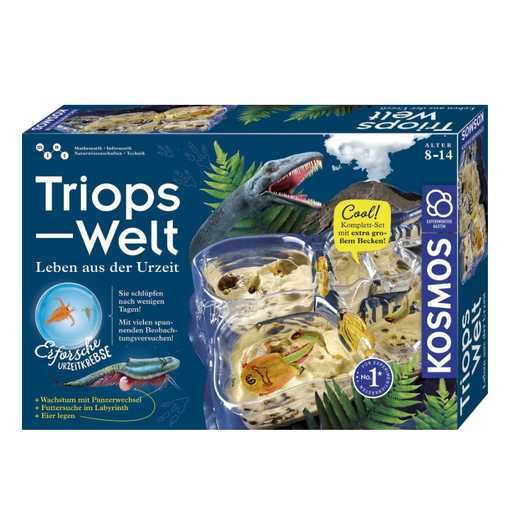
Why this product suits this profile: This set is aimed at children aged 8 and over who want to observe, care for and document changes over several days.
The extra-large tank, separate breeding area and detailed care instructions make the ongoing commitment clear, rather than promising a one-off result.
The set combines animal observation with regular care and includes questions and background information about behaviour.
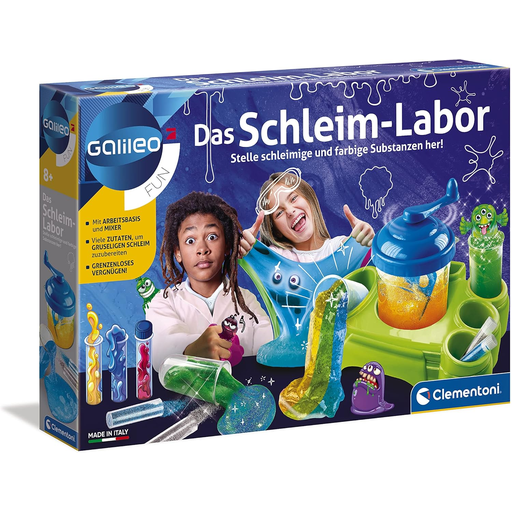
Why this product suits this profile: Children aged 8 and over can make their own slime while varying colours, textures and additions such as glitter or beads.
The laboratory station, instruments and hand mixer are described as part of the set. Direct supervision is required because of the small parts and chemical components.
The station supports organised working, while different additions allow for several creative variations.
For younger children, magnetic building blocks or a simple marble run are generally more suitable than a scientific experiment kit containing chemicals. According to the product information, the Ravensburger GraviTrax Junior Element Lift is intended for children aged 3 and over and teaches cause-and-effect relationships through rolling marbles. These products also come with warnings about small parts and marbles.
With magnetic sets, parents should pay attention to the strength of the magnets, the size of the parts and the storage instructions. Products such as the XINQIYUAN 100pc Magnetic Tiles Building Blocks Set are specified as suitable for children aged 3 and over, but contain magnets. Regularly checking for cracks or loose components is part of using these products safely.
We have put together a complete, regularly updated list of products that fully meet these strict selection criteria and the safety regulations applicable in the EU.
Many chemistry, biology and natural science sets are approved for children aged 8 and over. The specific age recommendation on the packaging and in the instructions is the deciding factor. For children aged 3 and over, magnetic building blocks, simple construction sets or age-appropriate marble runs are generally more suitable.
This depends on the set. Hot water, batteries, chemical components, small containers and sharp edges require adult supervision. Even with a microscope for children, support may be needed when inserting the batteries and handling sample-preparation tools.
Yes, depending on the product. One set may contain basic materials for several experiments, while other products require additional household ingredients, batteries or refill materials. Before buying, check the contents, quantities of consumables and any potential ongoing costs.