
Lieferung heute & morgen

Qualitätsgarantie

Willkommens-Angebote freischalten: KOSTENLOSE Lieferung | Bis zu 80 % RABATT | Kostenlose 30-Tage-JoyPlus-Testphase
App herunterladen
A science experiment kit for children should spark curiosity while being safe, easy to understand and age-appropriate. In practice, however, several common buying decisions can lead to disappointment: the set contains only a few experiments, essential materials need to be bought separately, or the age recommendation doesn't match the child's developmental stage.
This buying guide from the Joybuy Product Recommendation Officer helps parents, grandparents, relatives and educational institutions to recognise the key differences and choose a suitable science set for children.
A high number of advertised experiments sounds convincing at first. What really matters, though, is how many of them can actually be carried out with the components included. Some sets assume you'll have household items such as water, bowls or paper to hand. That's not necessarily a problem, but it's something you should know before you buy.
A STEM toy for ages 8 and up can offer interesting learning content, but it isn't automatically suitable for every child in that age group to use independently. Heating water, handling small parts or using chemical components all require adult supervision, depending on the set.
Clear safety warnings, an understandable instruction manual and a realistic assessment of the child's motor skills are all important. The age rating does not replace adult supervision.
A brightly coloured set can grab attention without explaining scientific concepts in an understandable way. So make sure the instructions don't just list the steps, but also explain basic terms – such as states of matter, light and shadow, crystal formation or how a gelling agent works.
For children aged 6 to 9, straightforward tasks with direct observation work well. The Kosmos Student Lab for Years 1 and 2, for example, is aimed at children aged 6 to 9 and covers topics such as air, water, light, shadow, hearing and sight.
From age 8 onwards, the choice becomes wider. A chemistry experiment kit might include pipettes, test tubes and measuring beakers, while a microscope introduces children to biological observation. What matters is whether the instructions are step by step and whether a child can complete the task with appropriate help.
Check before you buy:
A DIY experiment kit with reusable tools can still be used for simple observation tasks once the materials are used up. With sets that include consumable mixtures, it should be clear how long the supply will last.
Safety warnings are especially important with chemical toys. Small parts can pose a choking hazard. Heated liquids must only be handled under supervision. With microscopes, there are also batteries and accessories with sharp edges or needles to consider.
The product information provided should therefore be read before purchase and before first use. A set explicitly recommended for ages 8 and up is not suitable for children under 8. For younger children, an age-appropriate learning toy with close supervision is recommended.
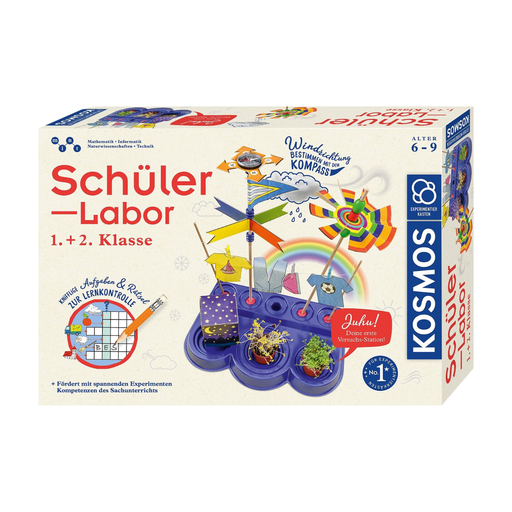
Why this product suits the profile: The choice of topics is ideal for first scientific experiences at home or as a supplement at primary school age.
The age range of 6 to 9 is clearly stated. The illustrated instructions and knowledge tasks make the scope of the learning offer easy to understand.
Over 50 described experiments; topics from nature and technology; no batteries required.
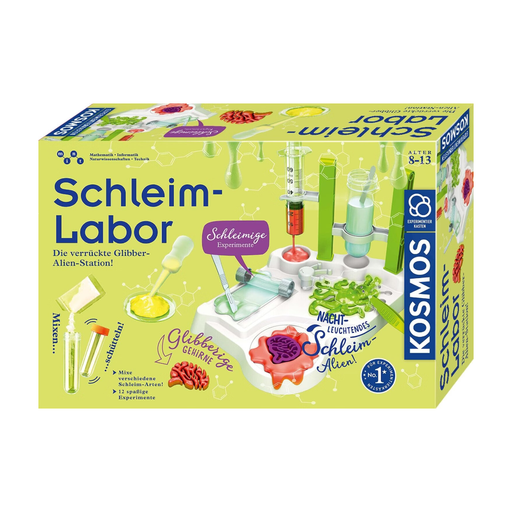
Why this product suits the profile: For children aged 8 and up who want to work repeatedly with different basic chemical phenomena.
The delivery includes a lab station as well as containers and tools. This means practical work is less dependent on improvised containers.
20 described experiments; including slime, fizzing liquids and colour changes; recommended for ages 8 and up.
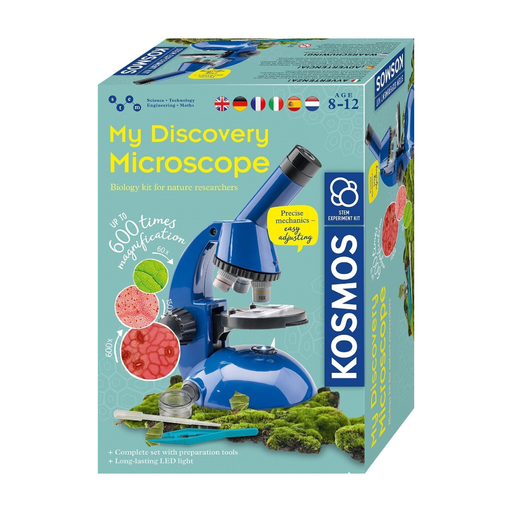
Why this product suits the profile: For children who want to observe plants, fibres or other samples and stay engaged with a scientific topic over a longer period.
The magnification of up to 600x and the included dissection accessories are clearly stated. Two AA batteries need to be bought separately.
LED lighting; slides, pipette, tweezers and other tools included; suitable for ages 8 and up.
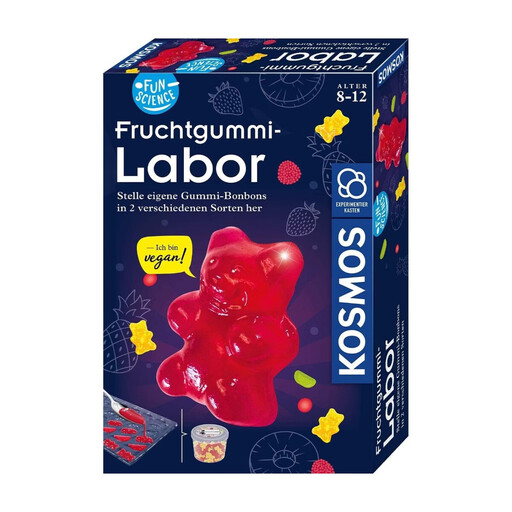
Why this product suits the profile: A suitable option as a gift for children when you want to combine creative work with a food theme.
The process is clearly described: mix with water, heat, pour into moulds and leave to set. Heating requires direct adult supervision.
Two flavours; moulds, measuring beaker and four decorative jars included; suitable for ages 8 and up.
Other topics can be chosen specifically: the Slime Lab is aimed at children who want to try out mixtures, colours and textures. For growing crystals, a starter set with salts and containers is ideal. The "Brain Tricks" set deals with optical illusions and experiments. A set for making glowing bouncy balls or creative jewellery charms can also work as an experimental gift.
We've put together a complete, regularly updated list of products that fully meet these strict selection criteria and the safety regulations in force in the EU.
For children aged 6 to 9, clear topics such as water, air, light, shadow and the senses work well. Look for an appropriate age recommendation, illustrated instructions and the opportunity to carry out the tasks together with an adult.
That depends on the consumable materials. Mixtures, granules and gelling agents are usually enough for a certain number of uses. Tools such as pipettes, moulds, measuring beakers or a microscope, on the other hand, can be used for longer, as long as they stay clean and undamaged.
Many sets require water or simple household items. A microscope also needs two AA batteries. So before you buy, check what's included and the preparation notes, so the experiment can start straight after unpacking.