
Lieferung heute & morgen

Qualitätsgarantie

Willkommens-Angebote freischalten: KOSTENLOSE Lieferung | Bis zu 80 % RABATT | Kostenlose 30-Tage-JoyPlus-Testphase
App herunterladen
A science kit is often more than just a toy—it's a gateway to new worlds that sparks curiosity and makes complex concepts tangible. But the selection is vast, and not every kit that makes big promises on the box delivers on them in the playroom. As a Joybuy Product Recommendation Officer, I'm here to help you avoid the common pitfalls and make an informed decision that leads to sparkling eyes instead of frustration.
Many parents and relatives looking for a meaningful gift for school-aged children face the same challenges. Here are the most common problems that lead to a disappointing purchase:
To avoid these issues, it's crucial to check a few key parameters before you buy.
A good science kit is more than the sum of its parts. It is age-appropriate, thematically suitable, and offers sustainable play and educational value. Pay special attention to the following three points.
The manufacturer's age recommendation is an important first clue. An educational toy for ages 8 and up places different demands on fine motor skills and concentration than a set for 12-year-olds. However, also consider the child's individual interests and patience. A complex robot building kit can captivate a child with a technical interest for hours, while a child with a curiosity for natural sciences might get more joy from a kit for hatching triops. Check if the instructions are broken down into small, well-illustrated steps to allow for independent play.
The spectrum of STEM toys is broad, covering various scientific disciplines. Consider which topics currently fascinate the child most:
A thematically appropriate kit fosters intrinsic motivation and ensures that science for kids becomes an exciting adventure.
A high-quality science kit should include all specific and hard-to-find materials. Check the contents list carefully. Are batteries required? Are special liquids needed? A kit that relies on readily available household items like water, salt, or vinegar is straightforward. It becomes problematic when special refill packs, whose availability and price are uncertain, are necessary for the core function. Sets with high replay value, such as marble runs or programmable robots, offer long-lasting engagement because they can be rebuilt or used in new and different ways.
To help you with your selection, we have matched some products from our range to different interest profiles.
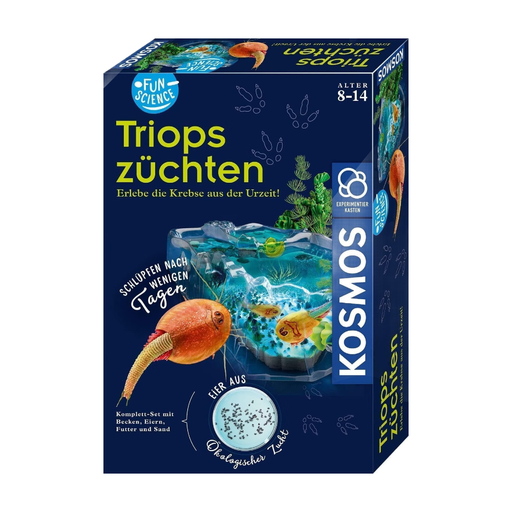
Why this kit is a great fit: Perfect for children interested in animals and life cycles. It playfully imparts basic biological knowledge and teaches responsible handling of living creatures.
This kit avoids the "one-and-done" trap because caring for and observing the triops lasts for several weeks, providing long-term engagement.
It's an all-in-one starter kit. The illustrated manual explains every step from hatching to care and is easy for younger researchers to understand.
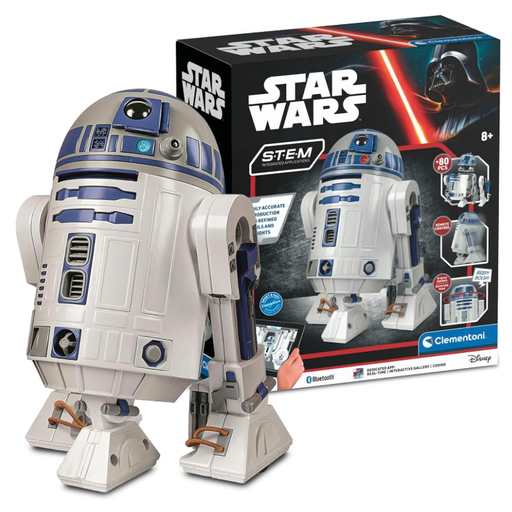
Why this kit is a great fit: Perfect for tech-savvy kids and Star Wars fans. It combines the fun of building with an interactive introduction to the basics of robotics and programming.
Its high replay value, thanks to app control with three different modes (real-time control, programming, interaction), prevents the robot from being left unused after assembly.
The integrated STEM approach playfully teaches fundamental engineering concepts. The combination of building, programming, and playing ensures a long-lasting and educational experience.
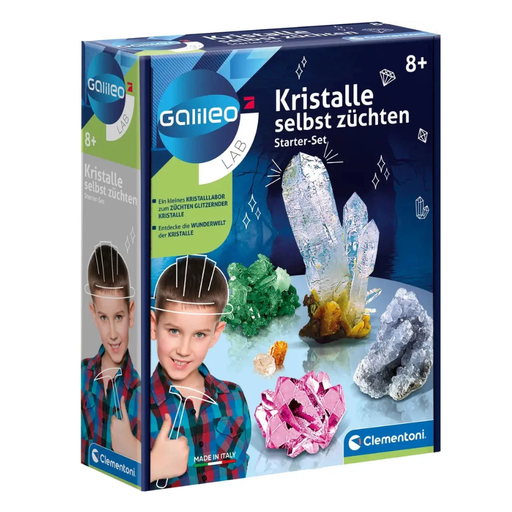
Why this kit is a great fit: This set combines chemistry and geology with a creative and aesthetically pleasing result. It's ideal for children who enjoy creating something they can later use as a decoration.
The result of the experiment—the self-grown crystals—is a permanent, decorative object. This gives the kit value that extends beyond the experimental process itself.
As an all-in-one starter kit, it contains everything needed to get started right away. The clear, illustrated instructions guide users safely through the chemical processes and promote an understanding of natural phenomena.
We have compiled a complete, up-to-date list of products that fully meet these strict selection criteria and safety standards.
For many chemistry sets, such as those from KOSMOS or Clementoni Galileo, the manufacturers offer refill kits. For experiments based on household items (e.g., a volcano kit that requires vinegar and baking soda), the materials can be inexpensively purchased at the supermarket. With construction kits like marble runs or robots, this isn't an issue as the parts are reusable.
The manufacturer's safety warnings and age recommendations should always be followed, especially for kits containing chemicals, sharp tools, or small parts. Adult supervision is essential in these cases. It's often a good idea to do the first experiment together to explain how everything works. Depending on the child's age and maturity, as well as the kit's complexity, supervision can be reduced thereafter.
They are an excellent complement. While digital media teach other skills, science kits promote hands-on understanding, patience, and a grasp of physical and natural laws. They offer a valuable screen-free activity that strengthens logical thinking and problem-solving skills, and ideally, sparks a long-term interest in science for kids.