
Lieferung heute & morgen

Qualitätsgarantie

Willkommens-Angebote freischalten: KOSTENLOSE Lieferung | Bis zu 80 % RABATT | Kostenlose 30-Tage-JoyPlus-Testphase
App herunterladen
By your Joybuy Product Recommendation Officer, July 28, 2026
Finding a gift that is both exciting for children and educationally valuable can be a challenge for many parents and relatives. A science kit is an excellent way to spark a child's curiosity and introduce them to scientific topics in a playful manner. This educational toy promotes an understanding of concepts in science and technology and offers a meaningful, screen-free activity.
This article serves as a guide to help you find the right science kit for kids. We will introduce different types of science sets and provide you with objective criteria to make your purchasing decision easier.
The selection of kits is vast, covering a wide range of subjects. To make the right choice, the following points can be helpful.
The manufacturer's age recommendation is a crucial factor. A kit that is too complex can lead to frustration, while one that is too simple will quickly become boring. The information on the packaging provides a good indication of the developmental stage for which the instructions and tasks are designed. For younger children, sets with larger components and simpler experimental procedures are suitable, whereas older children from the age of 8 can already conduct more complex chemical or physical experiments.
The greatest motivation comes when the theme of the kit matches the child's personal interests. Observe what your child is passionate about:
The thematic focus is key to long-lasting fun and learning success.
A good science set includes all the necessary materials and chemicals in child-safe quantities. Look for the CE mark, which confirms compliance with EU safety standards. The instructions should be clear, illustrated, and written in your local language. For chemical experiments, it is also important that the included protective equipment, such as safety goggles, meets the requirements and that adult supervision is provided as recommended by the manufacturer.
Based on the criteria mentioned, we have compiled a selection of kits that appeal to different interests and age groups.
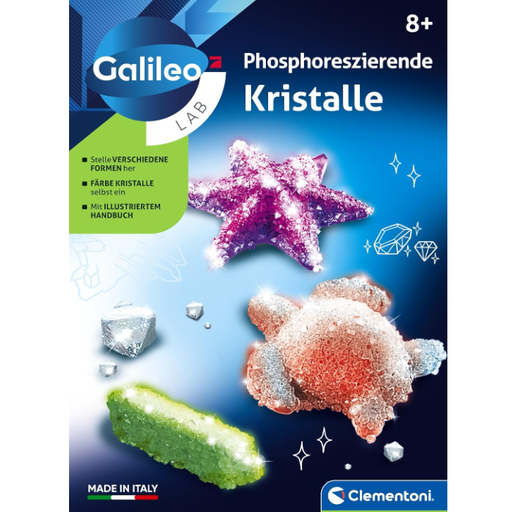
Why it stands out: This kit combines the fascination of mineralogy with a stunning visual effect. Children learn how salt crystals grow and can create glow-in-the-dark specimens using phosphorescent substances.
Pros:
Who it's for: Children from 8 years old who are interested in chemistry and mineralogy and enjoy seeing the visible results of their work. It is an ideal gift for children aged 8 and up.

Why it stands out: This excavation kit for kids transports them to the world of ancient Egypt. Using a hammer and chisel, children unearth various treasures from a plaster block, including gemstones, canopic jars, and a golden sarcophagus.
Pros:
Who it's for: Children from 7 years old with an interest in history, archaeology, and adventure. Ideal for little explorers who enjoy hands-on activities.
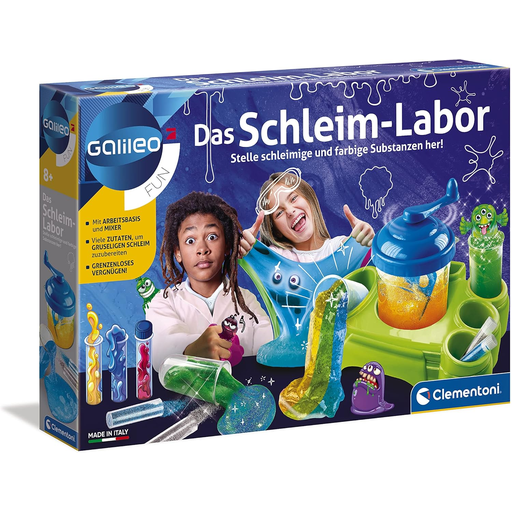
Why it stands out: This DIY slime kit is a complete laboratory station that provides children with a safe and structured environment to experiment with colours and textures. It's more than just making slime; it's an introduction to lab work.
Pros:
Who it's for: Children from 8 years old who enjoy creative and tactile activities. It particularly appeals to kids who love sensory experiences and colourful experiments.
A science kit is an excellent example of a high-quality STEM toy. If our recommendations don't include the perfect set for your child, you can find a broader selection of educational toys for various ages and interests in our extensive Indoor Toys category.
Most manufacturers offer kits for children of primary school age (approx. 6-7 years). However, it is important to check the specific age recommendation for each product, as complexity and safety requirements vary. For preschoolers, there are simpler discovery sets designed for the safe exploration of materials.
A science set fosters a wide range of skills. These include cognitive abilities such as logical thinking, problem-solving, and understanding cause-and-effect relationships. At the same time, it trains fine motor skills, patience, and the ability to follow instructions. Above all, these kits spark enthusiasm for STEM subjects (Science, Technology, Engineering, and Mathematics).
For most science kits, especially those containing chemical substances or requiring the use of tools, adult supervision is strongly recommended or mandatory according to the manufacturer's instructions. This ensures the experiments are conducted correctly and safely, and it gives the adult an opportunity to help with questions and support the learning process.