
Lieferung heute & morgen

Qualitätsgarantie

Willkommens-Angebote freischalten: KOSTENLOSE Lieferung | Bis zu 80 % RABATT | Kostenlose 30-Tage-JoyPlus-Testphase
App herunterladen
A science kit for children can bring science, technology or creative role play to life. However, not every set suits every age or family routine. Some products contain fewer usable materials than expected, while others require additional household items or lose their appeal after just a few uses.
“Lots of parts” sounds convincing at first. What really matters is how many independent activities they enable and whether the accessories are sensibly coordinated. With a children’s workbench, for example, it is not just the number of tools that counts, but also whether screws, nuts, a vice and a suitable work surface are included.
A chemistry science kit or children’s microscope set for ages 8 and over is not automatically suitable for every child in this age group. Reading, measuring, following several steps and handling small parts carefully all require a certain level of concentration. For younger children, simple cause-and-effect games, a toy workbench or a doctor’s role-play kit are usually more accessible.
With slime, colour or chemistry experiments, ingredients can run out after a few sessions. A microscope with LED lighting also requires batteries. Before buying, parents should check:
The recommended age is an important safety and usage parameter. Sets containing small balls, granules, glass accessories or functional points are generally unsuitable for children under three. With science kits for ages 8 and over, an adult should read the instructions first and remain available while the experiment is being carried out.
For products involving chemical mixtures, the rule is: the instructions, warnings and storage information must be followed in full. Materials described as “harmless” must not be put in the mouth and should not be used without supervision.
The subject alone does not determine the educational value. Good science toys for children should clearly show what activities are possible:
This makes it easier to assess whether the set matches the child’s interests and the time available.
A large laboratory station can make play more engaging, but it requires a permanent place. According to the product details, the KOSMOS Big Fun Chemistry Station measures 29.5 × 42.3 × 6.2 cm. At around 61 × 44.5 × 101 cm, a Theo Klein Bosch Workstation takes up considerably more space and should be set up securely and permanently.
For plastic products, rounded edges, sturdy connections and easy-to-sort accessories are practical features. For toys that are frequently assembled and put away, a case or compact box may be more suitable than a large station.
Check the manufacturer’s information about the age limit, warnings and clear step-by-step instructions. The CE marking should be present on the product or packaging. However, it does not replace checking whether the specific set is suitable for your child. Supervision is particularly important around battery compartments, small parts and materials that come into contact with the skin.
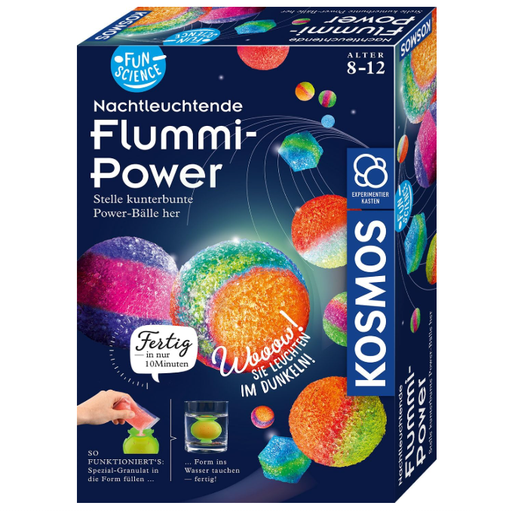
Why this product suits the profile: The set is designed for children aged 8 to 12 and focuses on one clearly defined theme: colourful, glow-in-the-dark bouncy balls. It contains granules in six colours, three glow-in-the-dark colours, two moulds and googly eyes.
The activity and the quantity of materials are described specifically. This makes it easier to judge in advance whether the expected playtime suits your household.
You can make 20 colourful bouncy balls; according to the product details, no batteries are required.
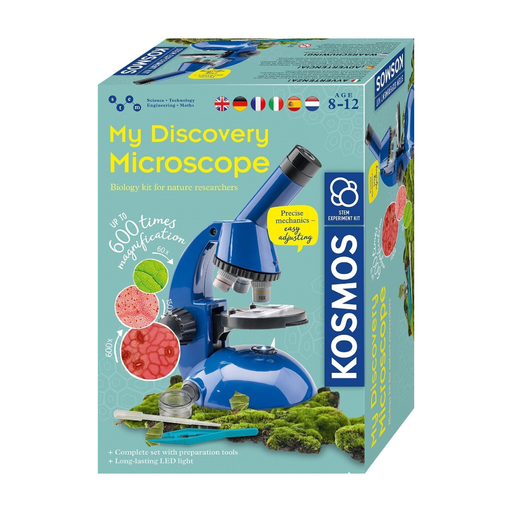
Why this product suits the profile: According to the product description, the microscope offers up to 600× magnification and accessories including slides, a pipette, tweezers and specimen containers. It is designed for children aged 8 and over.
The included equipment lists the key preparation tools explicitly. This reduces the risk of having to buy additional accessories for the first observations.
LED lighting and extensive specimen-preparation accessories; requires 2 AA batteries, which are not included according to the product information.
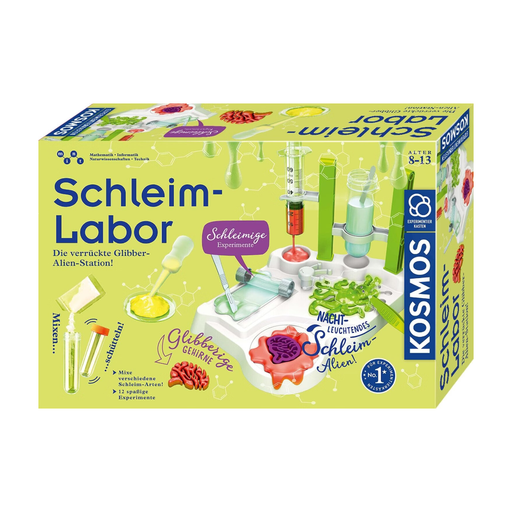
Why this product suits the profile: The set is intended for children aged 8 and over and includes 20 experiments involving slime, fizzing liquids and colour changes, according to the product details. The laboratory station supports repeatable activities using pipettes, test tubes and measuring cups.
The number of planned experiments and the tools used are clearly specified. Adults can supervise the activities using the instructions.
20 described experiments and a large laboratory station; no batteries required, use under supervision.

Why this product suits the profile: According to the product details, this doctor’s role-play kit is intended for children aged 3 and over and includes a stethoscope, thermometer, syringe, reflex hammer and plasters, among other items. It is ideal for children who prefer social play situations to chemistry experiments.
The case requires no consumables or batteries. The instruments can be stored in the case after play.
Compact dimensions of 26.5 × 9.5 × 23 cm and rounded edges according to the manufacturer’s information.
For children aged 3 to 5, simple role-play sets, a children’s workbench with large accessories or an age-appropriate marble run are suitable. The activities should not involve chemical substances or complicated measuring steps.
From 6 to 7, building, sorting, simple mechanics and observation tasks can take centre stage. STEM toys should offer clear, manageable instructions and robust components.
From 8 years, a children’s microscope set, chemistry science kit, slime science kit or children’s detective kit may be suitable. For children up to 14, longer observation projects such as a children’s explorer set with Triops can also be interesting, provided daily care is carried out reliably.
You can find more age-appropriate options in the Science kits for children aged 4 and over section.
We have put together a complete, regularly updated list of products that fully meet these strict selection criteria and the safety regulations applicable in the EU.
That depends on the number of activities, the preparation required and the child’s interest. Sets with 20 described experiments offer several separate sessions. With a microscope or Triops set, play may focus more on regular observation than on one-off experiments.
With a set that requires neither batteries nor consumables, there are initially no additional running costs. Chemistry, slime and granule sets may require more materials once the included ingredients have been used. For battery-powered STEM toys, parents should consider the battery types required and the expected duration of use.
Adult supervision is required or explicitly recommended when using chemical mixtures, small parts, batteries or accessories with sharp points. Even with educational toys for ages 8 and over, an adult should accompany the first few uses and check that the child can follow the instructions safely.