
Lieferung heute & morgen

Qualitätsgarantie

Willkommens-Angebote freischalten: KOSTENLOSE Lieferung | Bis zu 80 % RABATT | Kostenlose 30-Tage-JoyPlus-Testphase
App herunterladen
A science kit for kids promises an exciting break from the school routine and a meaningful alternative to screen time. It can spark curiosity, make technical concepts tangible, and ignite a fascination for the natural sciences. However, the selection is vast, and not every kit delivers on the promise of its colourful packaging. Before initial excitement turns to frustration, it's helpful to know the common pitfalls.
Many parents invest in an educational toy for kids hoping for long-lasting fun, only to find that interest fades after a single afternoon. This is often due to three common problems:
To avoid these disappointments, it's worth taking a closer look at a few fundamental features that define a good STEM toy.
Choosing the right science kit depends less on marketing promises and more on three objective criteria. These will help you find a product that suits the child and their abilities.
The manufacturer's age recommendation is a starting point but should be interpreted flexibly. A gift for school-aged children of eight might overwhelm a child who has little patience for delicate tasks. Conversely, an inquisitive six-year-old can master more complex challenges with some support.
Pay attention to the following aspects:
Science kits cover a broad spectrum of STEM topics (Science, Technology, Engineering, and Mathematics). Choosing the right theme is crucial for a child's motivation.
Safety is the top priority for any toy. Look for the CE marking, which indicates the manufacturer's declaration that the product meets EU requirements. For kits containing chemical substances, clear warnings and child-safe storage are essential. The product description should also provide information about the materials used. High-quality, burr-free plastic and sturdy tools not only ensure safety but also contribute to the toy's durability.
Instead of making a blanket recommendation, we have curated products for various interests and age groups.
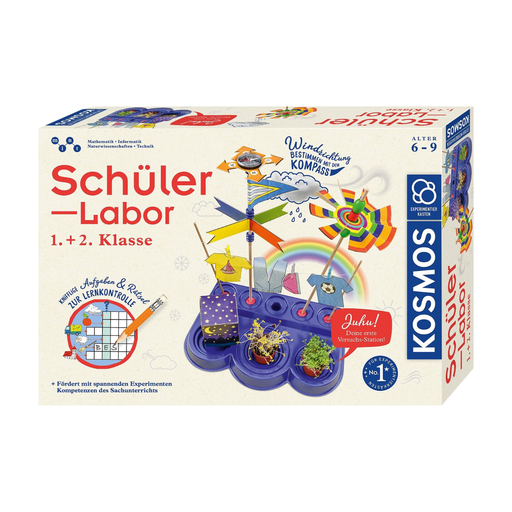
Why This Fits Their Persona: Ideal for primary school children who are just beginning to explore the world of science. The experiments are aligned with the school curriculum and cover a broad spectrum from nature to technology without being overwhelming.
With over 50 experiments, this set clearly avoids the "one-and-done" effect and offers long-lasting fun for explorers.
Broad range of topics; step-by-step, illustrated instructions; promotes independent learning.
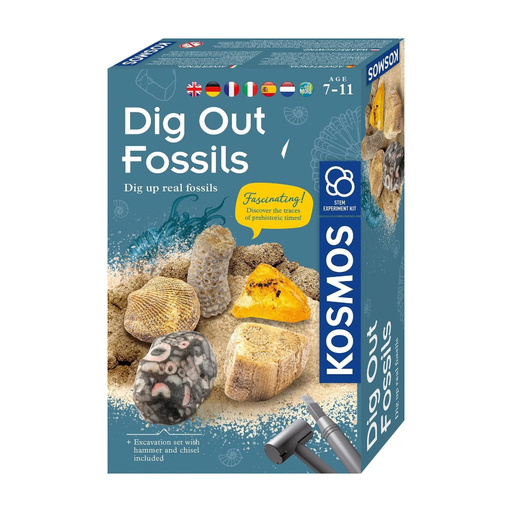
Why This Fits Their Persona: Perfect for children fascinated by dinosaurs and prehistoric times. The tactile experience of digging with a hammer and chisel and the discovery of a real fossil create an unforgettable sense of achievement.
The instructions are clear and focused on an exciting goal. The high motivation factor of finding a real fossil prevents frustration.
Includes real fossils (ammonite, stony coral) according to the manufacturer; tools are included in the box.
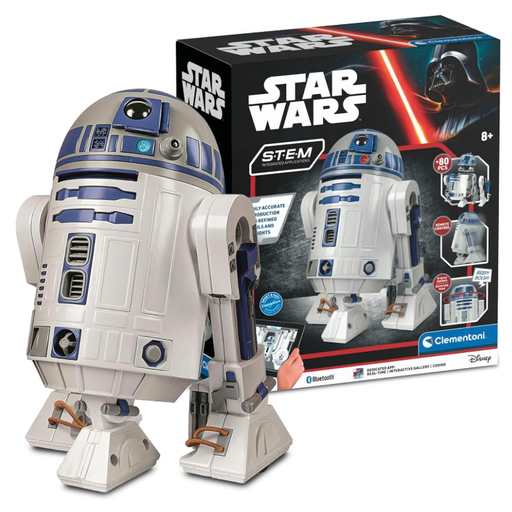
Why This Fits Their Persona: Combines the excitement of Star Wars with real STEM learning content. Kids not only build a robot but also learn the basics of programming through the companion app.
The app control and programming challenges offer high replay value that goes far beyond the initial assembly.
App control with 3 modes (real-time, coding, interaction); playfully teaches programming fundamentals.
We have compiled a complete, up-to-date list of products that fully meet these strict selection criteria and German safety regulations.
Some simple kits are suitable for children as young as 5 or 6, provided an adult is assisting. From primary school age (around 7-8 years), many children can follow the instructions more independently. However, more important than age is the child's individual interest and ability to concentrate. A robot building kit, for example, is better suited for children who already have experience with construction sets like LEGO.
Frustration is the greatest enemy of the scientific spirit. If an experiment fails, it's important to frame it as part of the scientific process. Go through the instructions step-by-step with the child again. Often, the error lies in a small detail, like an incorrect quantity or a swapped component. Viewing this as a shared challenge can even enhance the learning effect.
Reputable manufacturers who sell their products in the EU must adhere to strict safety regulations (e.g., the Toy Safety Directive EN 71). The substances used in kits for children, such as for growing crystals or making slime, are generally harmless when used correctly. Nevertheless, experiments should always be conducted under adult supervision, especially with younger children. Read the safety warnings on the packaging and in the instructions carefully.