
Lieferung heute & morgen

Qualitätsgarantie

Willkommens-Angebote freischalten: KOSTENLOSE Lieferung | Bis zu 80 % RABATT | Kostenlose 30-Tage-JoyPlus-Testphase
App herunterladen
A science kit for children can bring scientific topics to life and provide a worthwhile screen-free activity. However, sets vary considerably in their recommended age, materials included, supervision required and subject focus. An eye-catching box or the word “laboratory” alone says little about whether the contents are right for your child and your family’s everyday routine.
A science kit for ages 8 and over is not automatically equally suitable for every child in this age group. Some experiments require careful measuring, longer waiting times or the safe handling of pipettes, moulds and small accessories. Many sets are explicitly unsuitable for children under 8 because of small parts and chemical components.
The important question is therefore not only the recommended age, but also: can your child read the instructions independently and follow them step by step? Will an adult be present throughout the activity?
A children's science kit may contain the basic materials, while also requiring water, bowls, kitchen utensils or batteries. For example, two AA batteries are not included with the KOSMOS Explorer Microscope. Other sets do not require a power source.
You should therefore check the information on the contents, consumables and power requirements before buying. This prevents the first experiment from having to be postponed because something is missing.
Chemical mixtures, hot water, fragrance essences or tools with sharp edges must not be used unsupervised. Even an experiment that appears simple should be carried out according to the instructions. A science kit is no substitute for supervision and is not an invitation to mix household ingredients independently.
Look for a clearly stated age limit, warnings and easy-to-understand instructions in English. For chemical experiments, follow the information on storage, hand washing and disposal. Sets containing small parts must be kept out of reach of younger siblings.
The CE marking is an important formal indication that a toy complies with relevant EU requirements. However, it does not replace checking the specific usage instructions. Parents should read the instructions before first use, particularly when choosing a chemistry science kit.
Consider which interest is the main focus:
A set with lots of individual experiments is not automatically more versatile if the materials only stretch to a few uses. Check how many experiments are described in detail and whether any accessories can still be reused afterwards.
The packaging dimensions provide an initial indication of whether the set will fit in a cupboard and whether a stable work surface is required. Growing crystals and observing animals can take several days, while optical illusions or making bouncy balls usually take place during a single craft and learning session.
Clearly defined projects are ideal for families with limited time. If you would like to carry out experiments regularly, choose a set with reusable tools, lots of instructions or an ongoing observation project.
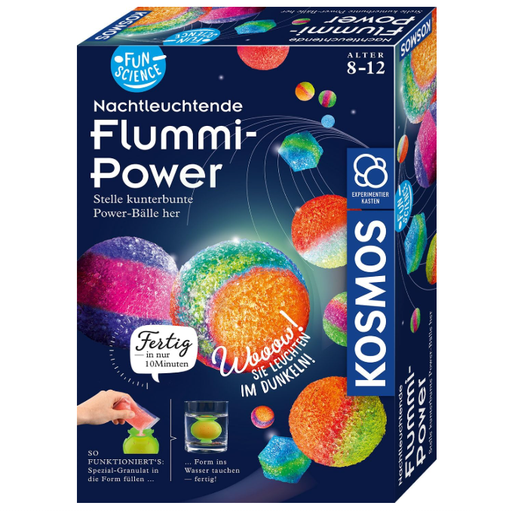
Why this product suits this profile: The set requires no batteries and offers a manageable introduction to STEM toys, with colourful granules, two moulds and enough material to make up to 20 bouncy balls.
The product details clearly state the age range, accessories and power requirements. This makes it clear before purchase that no batteries need to be planned for.
Suitable for ages 8–12, nine granule colours, two moulds and an illustrated, hands-on activity.
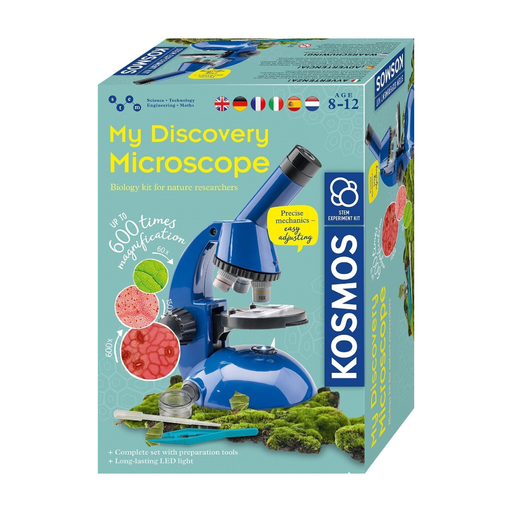
Why this product suits this profile: If you are looking for biological observation rather than short-lived mixing projects, this microscope offers up to 600x magnification and comes with prepared accessories.
The contents include slides, a pipette, tweezers and sample containers, among other items. However, you will need to provide the two AA batteries separately.
Robust casing, LED lighting and accessories for observing plants, animals and fibres.
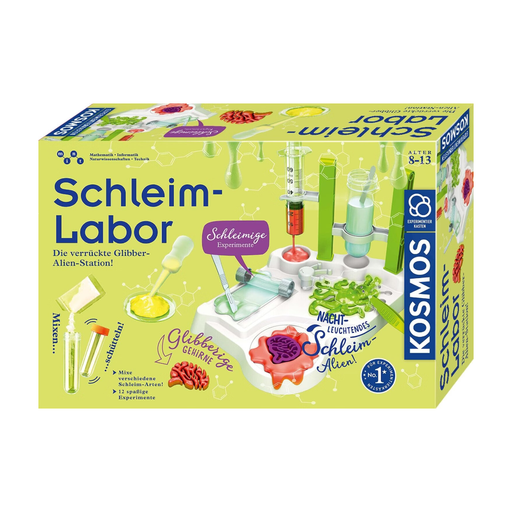
Why this product suits this profile: For children with a strong interest in chemistry, this station offers 20 described experiments involving slime, fizzing liquids and colour changes.
The number of experiments and the included containers are clearly stated. The set is suitable for ages 8 and over and must only be used under supervision.
Large laboratory station, pipettes, test tubes and measuring cups; no batteries required.
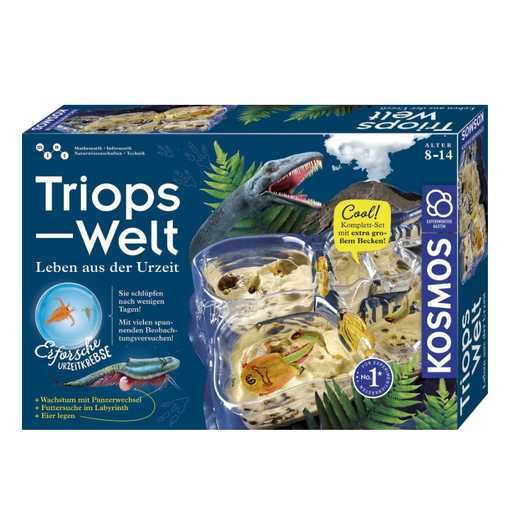
Why this product suits this profile: This set combines biology, daily observation and animal care. It is aimed at children aged 8 to 14 who want to follow developmental processes over several days.
The detailed instructions take the need for regular care and supervision into account. This is not a project for one short play session.
Large aquarium with separate hatching area and removable divider; eggs from controlled laboratory breeding, according to the product details.
We have put together a complete, regularly updated list of products that fully meet these strict selection criteria and the safety regulations applicable in the EU.
Set up a well-lit, tidy work area. When carrying out experiments with liquids, a wipe-clean surface is recommended. Food and chemistry projects should be kept separate. Read the instructions together, measure ingredients carefully and store leftover materials in sealed containers.
Sets involving heat, fragrance essences, small parts or living organisms require direct adult supervision. After the experiment, clean your hands, the work surface and the accessories according to the instructions. If additional household materials are needed, only use them when the instructions explicitly allow this.
That depends on your child's interests and the level of supervision required. For optical phenomena, a set with 3D glasses and illusions may be suitable. Chemistry, crystal-growing and slime kits are also often aimed at children aged 8 and over, but require consistent supervision. Always check the product's specific age recommendation.
Consumables such as granules, salts, fragrance essences or gelling agents only last for the number of projects specified in the instructions. Tools, moulds, containers and microscope accessories can be used for longer when stored correctly. The actual lifespan depends on cleaning, storage and the individual set.
Many sets do not initially involve any battery costs. Potential follow-up costs may arise from consumables, additional batteries or household items such as water and bowls. Before buying, it is worth checking the information on the contents and the number of experiments provided.