
Lieferung heute & morgen

Qualitätsgarantie

Willkommens-Angebote freischalten: KOSTENLOSE Lieferung | Bis zu 80 % RABATT | Kostenlose 30-Tage-JoyPlus-Testphase
App herunterladen
A scooter for your child should suit their age and height, as well as how they plan to use it. Eye-catching LED wheels, labels such as ‘Pro’ and a high weight limit don’t automatically mean you’ve found the right model. What matters is clear product information: the number and size of the wheels, handlebar height, deck width, brake type, maximum rider weight and intended use.
‘Scooter for children aged 3+’ only gives you a recommended starting age. Your child’s height and the scooter’s lowest handlebar setting matter just as much. Handlebars that are too high can make the scooter harder to control, while handlebars that are too low may encourage poor posture. Always check whether the handlebars are adjustable and which measurements the manufacturer provides.
Scooters with LED wheels are popular with families because the wheels can light up as they roll. However, lights don’t replace suitable protective gear, a working brake or a non-slip standing area. If the lights are battery-powered, check the battery type and what’s included. Some wheels light up as they move, while other components need batteries.
A stated maximum load doesn’t mean a model is suitable for jumps, skateparks or sharing between several people. A standard kick scooter for children is built differently from a stunt scooter. For tricks, you’ll need features such as a rigid construction, suitable wheels, a durable deck and a handlebar and clamp connection designed for that purpose.
A 3-wheel scooter with lean-to-steer may suit younger children. With this design, the rider steers by shifting their weight. It works differently from turning the handlebars directly, so it’s best to practise first on a flat, dry surface.
An adjustable-height scooter may last your child longer, provided its adjustment range suits their height. Several models list three or four handlebar positions for children aged 3 to 10. Check the product description and your child’s height to see whether a particular model is suitable.
Wide decks with a non-slip surface provide a defined standing area. For younger children, three or four wheels can offer extra stability at low speeds. A 2-wheel scooter, by contrast, is often designed for older children, teenagers or adults.
Look out for:
A folding scooter should lock securely when folded. Before each ride, it’s worth checking the handlebars, screws, wheels and brake.
For toys and leisure products, parents should check the age recommendation, warnings, manufacturer or importer details and the CE marking, where applicable. The CE marking isn’t a quality rating; it indicates that the manufacturer declares the product meets the relevant EU requirements.
Children should wear a properly fitting helmet, and knee and elbow pads where appropriate. Public roads and areas with heavy traffic aren’t suitable places for children to practise riding. Skatepark models should only be used in suitable areas, and their clamps and screws need to be checked regularly.
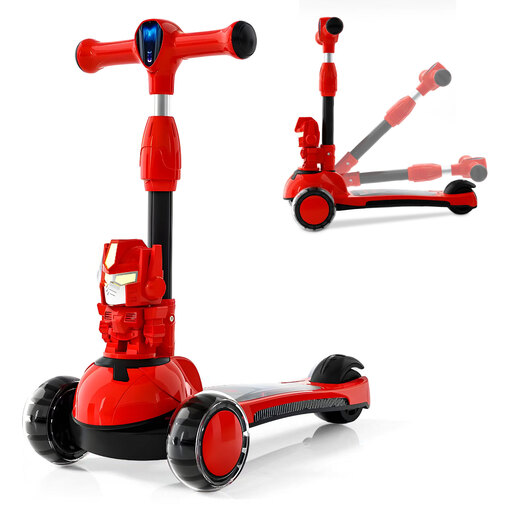
Why it suits this rider: The product information states that this 3-wheel scooter is for children aged 3 to 10. It combines adjustable handlebars with lean-to-steer control.
The age recommendation is backed up by practical features, including adjustable handlebars, a wide non-slip deck and three wheels.
The product description lists LED wheels, a wide deck and adjustable handlebars.
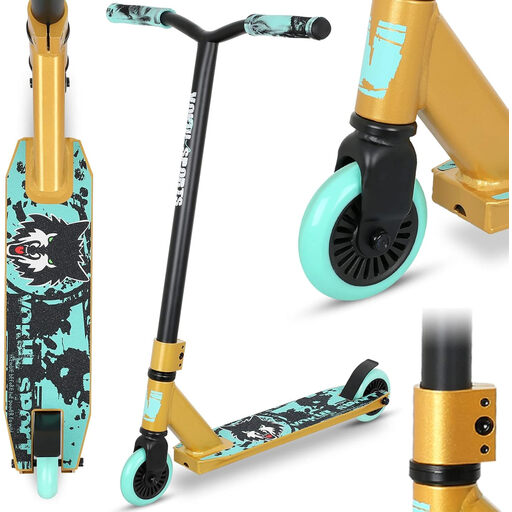
Why it suits this rider: According to the product information, this model is aimed at children aged 6 and over. It features a 6061 aluminium deck, 100-mm polyurethane wheels and an HIC compression system.
It’s specifically described as a stunt scooter, not simply a leisure scooter with decorative lights.
The listed features include a 100-kg weight limit, ABEC-9 bearings and an integrated HIC compression system.
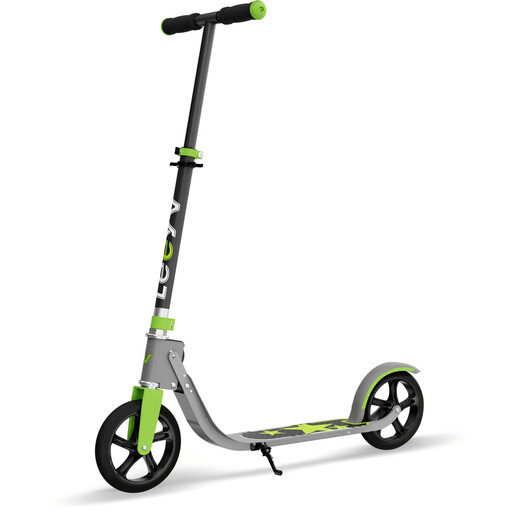
Why it suits this rider: This 2-wheel scooter is described as suitable for children aged 6 to 12 and adults. Its folding design and adjustable handlebars make it convenient to transport regularly.
Suitability is described not just in terms of age, but also through its 205-mm wheels, adjustable height and stated weight limit.
Features include a folding frame, rear brake and polyurethane wheels, with a stated weight limit of 220 pounds or around 100 kg.

Why it suits this rider: This model combines LED wheels and a folding design with three adjustable handlebar heights. According to the product information, it’s designed for children aged 3 and over, up to 110 pounds.
The LED features are listed alongside the handlebar adjustment range, folding function and weight limit, rather than presented as the only reason to buy.
Features include battery-free LED wheels, a folding design and a wide non-slip deck.
We’ve put together a complete, regularly updated list of products that meet these strict selection criteria and fully comply with the safety regulations applicable in the EU.
Many 3-wheel models are listed as suitable from age 3. Always follow the manufacturer’s guidance and take your child’s height, handlebar height and ability to stand and brake safely into account. Their first ride should be supervised and take place on a flat surface.
Its lifespan depends on the materials, how often it’s used, the riding surface, the load and how well it’s maintained. Check the screws, wheels, handlebars, deck and brake regularly. Stop using the scooter if you notice cracks, excessive movement or damaged brake components.
Traditional models don’t usually have ongoing energy costs. You may need to pay for replacement wheels, bearings or grips, or batteries for battery-powered LED components. Before you buy, check what’s included, whether spare parts are available and what the maintenance instructions recommend.