
Lieferung heute & morgen

Qualitätsgarantie

Willkommens-Angebote freischalten: KOSTENLOSE Lieferung | Bis zu 80 % RABATT | Kostenlose 30-Tage-JoyPlus-Testphase
App herunterladen
A scooter for children should suit their age, height and where they’ll be riding it. In practice, though, a good buying decision isn’t about eye-catching colours or LED lights. It comes down to the right dimensions, brakes your child can control and a clear product description. Parents often come across three common pitfalls:
Before you buy, it’s worth checking the technical details rather than relying on product photos and marketing claims alone.
A 3-wheel scooter for children often gives younger riders an easier introduction, thanks to its wider base. Many models change direction by shifting the rider’s weight, using what’s known as a lean-to-steer system. This means your child steers by shifting their body, rather than relying solely on a turning handlebar.
Two-wheeled scooters for children are usually more manoeuvrable and tend to suit children who already have good balance and can brake confidently. A two-wheeled scooter may be a good option for children aged around six and over, provided their height and riding ability match the manufacturer’s recommendations.
A height-adjustable scooter for children can be used through several growth spurts. The key is to check that the stated handlebar heights really suit your child’s height. The handlebars should allow them to ride in a relaxed, controlled position. Handlebars that are too low can make the scooter harder to control, while ones that are too high can make steering less precise.
You should also check for:
When choosing a scooter for a boy or girl, these practical measurements matter more than the colour.
A rear foot brake is common on many children’s scooters. Before their first ride, your child should practise placing their foot on the brake in a controlled way. Electric models may have additional braking systems, depending on the product. The Ladped LP65, for example, is described as having a dual braking system.
When it comes to wheels, larger ones can roll over bumps on paved paths more easily, while smaller wheels often allow for a more compact scooter. LED wheels are often activated by the spinning motion. Illuminated decks may also need a battery. For example, the Beleev V2-Pure requires two AA batteries for its deck lighting; these aren’t included.
An electric scooter for children is not an ordinary scooter. Before buying, parents should compare motor power, top speed, battery capacity, charging time, range and weight. In practice, range depends on factors including the rider’s weight, temperature, surface and riding mode.
The Segway-Ninebot C2 Lite is listed with a top speed of 16 km/h, a range of up to 14 km, three riding modes and a maximum load of 50 kg. According to the product description, it’s designed for children aged 6 to 10 and with a height of 115 to 145 cm.
Important: an electric scooter for children isn’t automatically permitted on public roads. Before use, check the applicable German traffic rules, product approval and permitted places to ride. The instruction manual, a helmet and suitable protective gear are essential. Children should ride only under supervision, especially when using motorised models.

Why this product suits this type of rider: According to the product name, this three-wheeled model is designed for children aged 3 to 10. It combines a wide deck with adjustable height and a foldable design.
The stated age range, three wheels and height-adjustable handlebars make it easier to check the details before buying. You should still make sure the scooter suits your child’s height and weight.
Three wheels, an extra-wide deck, adjustable handlebars and a folding function, according to the product details.

Why this product suits this type of rider: This model combines LED wheels and deck lighting with three handlebar heights, a folding function and a rear foot brake. It’s described as suitable for children aged 3 to 12, provided it matches their height and weight.
As well as lighting, the product details specify handlebar heights, maximum load and braking. Remember that the AA batteries needed for the deck lighting are sold separately.
Adjustable height, a folding function, LED wheels and a non-slip deck, according to the product description.
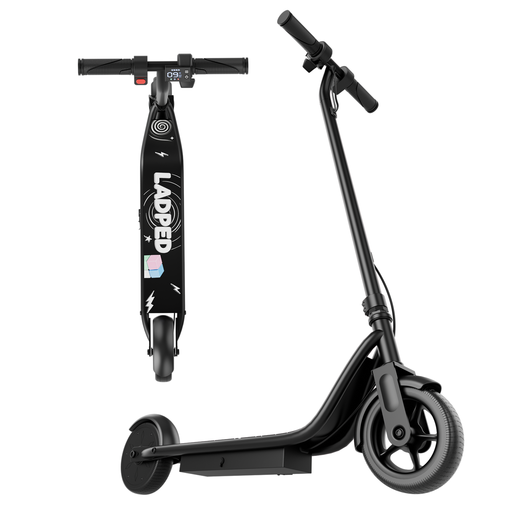
Why this product suits this type of rider: According to the product name, this electric scooter is designed for children aged 6 to 12. It has a stated maximum power of 250 W, a top speed of 15 km/h and a range of 16 km.
Details on speed, range, battery and dual braking make it easier to assess how it will perform in regular use. Check where it can be ridden and what regulations apply before buying.
Electric motor, stated range of 16 km and a dual braking system, according to the product details.

Why this product suits this type of rider: This two-wheeled scooter is listed for children aged 6 and over, as well as teenagers and adults. Its adjustable handlebars and maximum load of 220 lb make it a versatile choice.
The technical details specify the materials, wheel size, handlebar adjustment, rear brake and weight limit. This makes it easier to assess whether it’s suitable, rather than judging by design alone.
205 mm polyurethane wheels, an aluminium and steel frame, a folding function and a rear brake, according to the product description.
We’ve put together a complete, regularly updated list of products that meet these strict selection criteria and fully comply with the safety regulations applicable in the EU.
Before each ride, parents should take a moment to check that the wheels, handlebars, folding joint and brake are secure. For two-wheeled scooters, it’s also a good idea to check the screw connections. You can usually remove dirt with a slightly damp cloth. Electric models should be stored in a dry place and charged only with the supplied charger. Keep the battery and charger out of children’s reach.
For children’s scooters from age 3, flat areas away from traffic and close supervision are particularly important. Depending on the model, scooters for children aged 6 and over can also be used on longer leisure rides. A helmet, knee pads and elbow pads won’t eliminate the risk of an accident, but they are part of suitable protective gear.
Three-wheeled models with a low, wide deck and lean-to-steer system are often a good option for younger children. The manufacturer’s guidance on age, height and weight remains essential. Your child should be able to reach the handlebars securely and bring the scooter to a controlled stop.
How long it lasts depends on the materials, load, riding surface and care. Adjustable handlebars can extend the time your child can use it. Regular checks of the brakes, wheels, screws and folding mechanism can help you spot wear early. Don’t continue using the scooter if you notice cracks or loose components.
As well as the purchase price, the main costs are electricity for charging and any replacement parts that wear out. The actual cost depends on the battery capacity, how often it’s charged and your electricity tariff. Stated ranges are for comparison and may vary in everyday family use depending on the rider’s weight, temperature, riding mode and surface.