
Lieferung heute & morgen

Qualitätsgarantie

Willkommens-Angebote freischalten: KOSTENLOSE Lieferung | Bis zu 80 % RABATT | Kostenlose 30-Tage-JoyPlus-Testphase
App herunterladen
The search for a suitable gift for 3-year-olds is leading many parents and relatives away from classic tablets and towards screen-free alternatives. A screen-free learning tablet for kids promises to impart knowledge through play without causing eye strain or contributing to excessive screen time. However, the market for interactive educational toys is vast, and not every product delivers on its promise.
As a Joybuy Product Recommendation Officer, I see it as my duty to provide you with objective guidance. In this guide, we will highlight common pitfalls to avoid when buying and show you which features to look for to make an informed decision.
Before choosing a model, it's helpful to know the typical weaknesses that often only become apparent after the purchase.
To avoid a bad purchase, you should focus your attention on three crucial product features. These define the longevity and actual benefit of an educational toy.
A good educational toy for ages 3 and up must be durable. Look for products made from resilient ABS plastic, which is considered non-toxic and shatterproof. The edges of the device and its accessories should be rounded to prevent injuries. The learning cards themselves are ideally made from thicker, coated cardstock that can be wiped clean with a damp cloth. Checking for safety certifications, like the CE marking, provides additional assurance that the product complies with EU standards for children's toys.
The value of a learning tablet lives and dies by its content. A good device offers a balanced mix of different learning areas. This includes not just a pure word-learning toy, but also:
Check the product description for the number of cards, words, and games. A scope of over 100 words and additional logic tasks is a good benchmark for long-lasting fun.
The interaction should be intuitive for a young child. Models with a talking pen for kids have proven effective here. The child taps the pen on a picture or a word on the card and receives immediate, clear audio feedback. This direct feedback encourages independent learning and curiosity. Pay attention to good sound quality and easy handling of the pen. The device should be ready to use right after being turned on, without any complicated menu navigation.
Based on the criteria above, we have identified some products that are suitable for different requirements and learning styles.
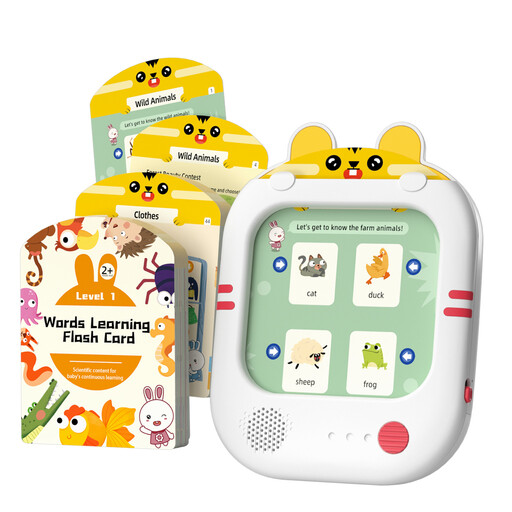
Why This Fits Their Persona: Ideal for parents seeking a structured, audio-based learning tool. It specifically combines vocabulary expansion with initial logic exercises, playfully preparing children for preschool.
With 47 double-sided cards, over 180 words, and just as many logic games, it bypasses the "limited content" pitfall. The pen-based operation is intuitive, preventing overwhelm from complex menus.
Combines a tactile experience (inserting cards) with auditory reinforcement. The integrated battery with a USB-C charging port makes it a convenient travel companion.
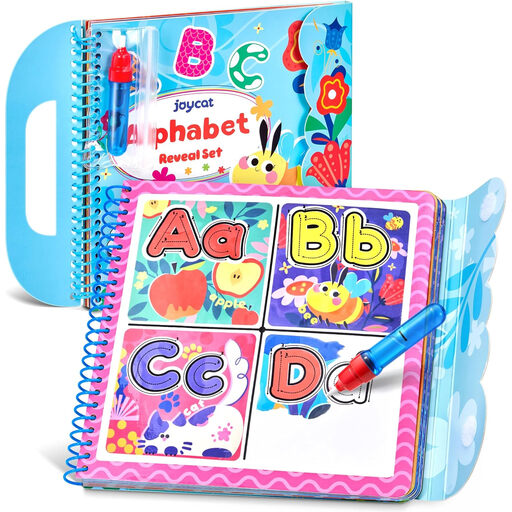
Why This Fits Their Persona: Perfect for families looking for a completely tech-free, yet interactive and mess-free learning activity. It's an ideal gift for 3-year-olds to learn letters in a magical and creative way.
Operation is incredibly simple: fill the pen with water and start coloring. There are no overloaded features. The pages are reusable and made of thick cardstock, increasing durability compared to regular paper.
Absolutely mess-free application without any paints or markers. The book's carrying handle and pen holder make it perfect for travel in the car or on a plane.
Why This Fits Their Persona: For kids who love to tinker, build, and take things apart. This set specifically promotes fine motor skills, technical understanding, and problem-solving abilities in a very practical, screen-free way.
The "learning content" is the building process itself, which can be repeated endlessly and thus never gets boring. The tools are child-friendly and robust, and the storage box prevents parts from getting lost.
Actively promotes STEM skills (Science, Technology, Engineering, and Math). The set includes multiple dinosaurs and tools, which also allows for collaborative play with friends or siblings.
We've compiled a complete, up-to-date list of products that fully meet these strict selection criteria and safety regulations.
1. At what age is a screen-free learning tablet appropriate? Most manufacturers recommend their products for children aged 3 and up. At this age, children are developing the necessary fine motor skills to hold a pen or handle cards. Furthermore, their ability to understand the connections between images, words, and sounds is already well-developed.
2. How durable are the learning cards and the device? Durability is a key quality feature. Look for product descriptions that mention thick, coated cardstock for the cards and resilient plastic (e.g., ABS) for the housing. Such materials are designed to withstand the active daily play of toddlers.
3. Do you need an internet connection or an app to use it? No, a significant advantage of these devices is their independence. A true screen-free learning tablet works completely offline. No internet connection, pairing with a smartphone, or additional apps are required. The child can start playing immediately and without distractions.