
Lieferung heute & morgen

Qualitätsgarantie

Willkommens-Angebote freischalten: KOSTENLOSE Lieferung | Bis zu 80 % RABATT | Kostenlose 30-Tage-JoyPlus-Testphase
App herunterladen
Buying a new smartphone is quick and easy, but choosing the right screen protector often receives less careful consideration. Yet it is not just the advertised hardness that determines whether a screen protector for smartphones is genuinely useful in everyday life. Common mistakes include unclear compatibility information, exaggerated protection claims or a coating that barely fulfils its purpose after a short time.
This buying guide explains which details really matter and which type of screen protection is suitable for iPhone, Samsung Galaxy, office use or outdoor activities.
Claims such as 9H or 10H primarily describe resistance to scratches according to a specific test method. For example, the AmazingThing Titan Max is advertised with 9H according to ASTM D3363. This is a clear, verifiable technical specification, but it does not automatically mean that the smartphone will survive every drop undamaged.
For protection against drops, you should also consider:
Scratch-resistant protective glass is therefore not automatically impact-resistant screen glass.
A privacy screen protector can reduce visibility from the side, but the display will appear darker or less clear from certain angles. Depending on the design, an anti-blue-light screen protector can alter colour reproduction. Claims about “protecting your eyes” should be treated critically: a filter can change the characteristics of the light, but it cannot replace taking breaks and is not a medical product.
Anyone who mainly reads text needs different features from someone who edits photos or plays games where high colour accuracy is important.
“For iPhone” or “for Galaxy” is not enough as a compatibility specification. Camera modules, display edges, sensors and casing dimensions vary between model versions. Before buying, check:
A screen protector for the iPhone 16 Pro Max is not necessarily suitable for another iPhone model. The same applies to Samsung Galaxy S25 tempered glass and older Galaxy versions.
Full-cover glass protects as much of the front of the phone as possible. However, on curved or heavily rounded displays, a protector with a small gap around the edge may work better with a case. Installation aids that align the glass automatically are particularly convenient.
The Hama Reflect Protect for iPhone 17 Pro and iPhone 18 Pro uses packaging-based installation with a pull tab. According to the product information, the package also includes dust removers, a wet wipe, a microfibre cloth and a squeegee.
An oleophobic coating can reduce the build-up of fingerprints and skin oils. It will not keep the display permanently clean, but it does make cleaning easier. An anti-glare screen protector with an AR coating can reduce reflections in bright surroundings. Whether this makes the image more comfortable to view also depends on brightness, viewing angle and the lighting in the room.
Also look out for:
Specific claims such as “up to 1.2 metres” or “up to 25 kilograms” are only meaningful under the relevant test conditions. They do not guarantee protection in every possible drop scenario. The smartphone remains a fragile device, particularly if it lands on a corner or a protruding object.
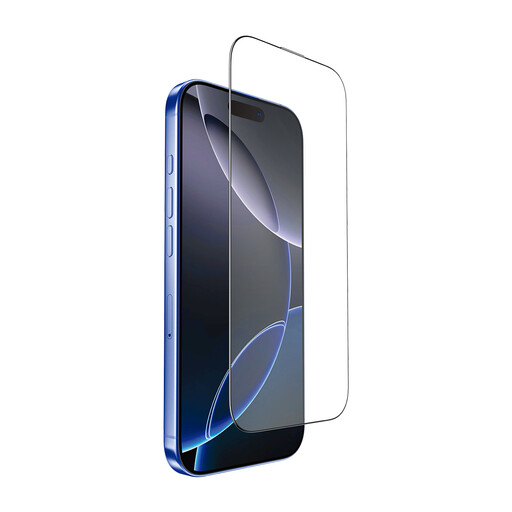
Why this product suits this profile: The 2.5D full-screen design with a black border is aimed at users looking for a straightforward protective solution for their iPhone and a discreet appearance.
The precise design specification helps you avoid a generic universal protector with unsuitable edges. You should still check the exact iPhone model before buying.
2.5D full-screen design and black border according to the product name; the product is also described as colourless, anti-blue-light and dust-repellent.
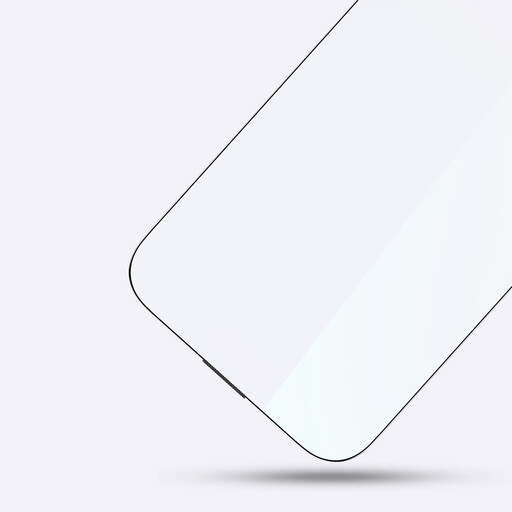
Why this product suits this profile: For iPhone 16 Pro Max users who want to compare technical specifications, a slim material thickness and clear installation instructions.
Compatibility is specifically stated for the iPhone 16 Pro Max. The stated thickness of 330 µm helps reduce the risk of unnecessarily affecting touch operation or case fit.
9H hardness according to ASTM D3363, 330 µm thickness, DustShield system according to the product information, plus stated pressure and drop ratings.
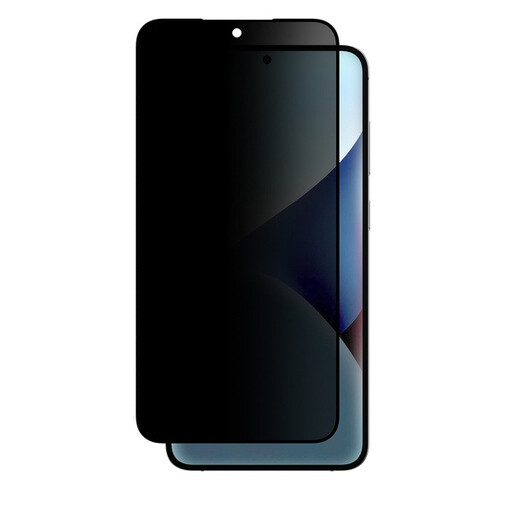
Why this product suits this profile: Professionals, commuters and frequent users get a solution where limiting side visibility in public places is a key consideration.
The privacy feature is not merely advertised in general terms: according to the product information, visibility is restricted at angles of more than 30°. This makes it easier to assess whether the feature suits your everyday needs.
30° privacy filter, oleophobic coating, stated drop resistance of up to 1.2 m and intended compatibility with the Samsung Galaxy S25.
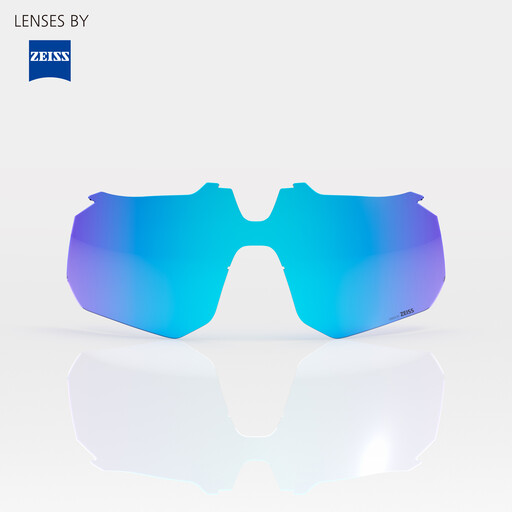
Why this product suits this profile: This is not screen protection itself, but an option for cyclists, runners and outdoor users looking for sports eyewear lenses with defined optical properties to complement their setup.
The specifications focus on light transmission, coatings and UV400 protection rather than blanket promises. This makes it easier to choose according to the weather, brightness and sport involved.
ZEISS technology according to the product description, 18–43% light transmission, UV400, plus scratch-resistant, water-repellent and oleophobic coatings.
Not every type of strain can be addressed with a smartphone screen protector. If you work or play at a desk for long periods, you may wish to consider a gaming monitor with a blue-light filter. According to the product information, the CRUA 24-inch monitor combines a 120 Hz mode, Full HD resolution, 99% sRGB and low-blue-light and flicker-reduction technology. These are technical product features, not a guarantee of any medical effect.
For athletes, a ZEISS sports eyewear lens such as the BleeqUp Ranger may be a useful addition when light reduction, UV400 protection and water repellence matter more than a smartphone filter. Your choice should be based on how you actually intend to use it and the prescription strength you need.
We have put together a complete, regularly updated list of products that fully meet these strict selection criteria and the safety regulations applicable in the EU.
First clean the display with the supplied wet wipe, then use a lint-free cloth. Remove any dust particles before taking off the protective film. Apply the glass in a calm, low-dust environment if possible, aligning it with the speaker, camera and display edges.
Its lifespan depends on usage, the coating and exposure to drops. Visible scratches, cracks, chipped edges or weakening adhesion are signs that it is time for a replacement. Damaged tempered glass should be replaced promptly, as it will no longer cover the display evenly.
Tempered glass usually offers a firmer surface and a glass-like feel when using the phone. Flexible films can adapt better to curved display edges and may be less bulky with certain cases. The key factors are the smartphone model, case compatibility and the level of protection you want against scratches, impacts or side-on viewing.