
Lieferung heute & morgen

Qualitätsgarantie

Willkommens-Angebote freischalten: KOSTENLOSE Lieferung | Bis zu 80 % RABATT | Kostenlose 30-Tage-JoyPlus-Testphase
App herunterladen
A screwdriver set can be a useful essential for assembling furniture, repairing bikes, working on household appliances or tackling electronics. But choosing the right set isn’t just about how many pieces it contains. A set with lots of bits may not be suitable if it’s missing important profiles, the handle is uncomfortable to hold or the storage case is difficult to navigate.
Before buying, consider which screws and types of jobs you’ll be using the tools for. A compact precision screwdriver set for glasses and smartphones has different requirements from a cordless screwdriver for furniture or a VDE screwdriver set for electrical work.
Manufacturers often make the total number of bits a prominent feature. What matters, though, is whether the set includes the profiles and sizes you actually need. For electronics, for example, small Phillips, slotted, Torx, Tri-Wing or U-shaped bits may be useful. For furniture assembly, you’re more likely to need larger Phillips, Pozidriv, hex or socket attachments.
So look for:
Magnetic screwdrivers can hold screws on the bit, making them easier to use in confined spaces. However, a magnetic tip won’t automatically stop the bit from slipping. If the bit doesn’t fit the screw head precisely, it can damage the edges. With delicate electronics, also bear in mind that magnetic fields may be unsuitable for some components and applications.
Always choose the right bit and apply only as much pressure as the screw requires.
A VDE screwdriver set is intended for certain types of electrical installation work. The product details should specify a verifiable insulation test and the voltage range it’s designed for. The PROBUILDER set described here is stated to have VDE and GS certification, with insulation rated up to 1000 V AC. Even so, electrical installation work should only be carried out by suitably qualified people. Any damaged insulation means the tool should not be used.
An ordinary screwdriver, a ratchet screwdriver set or an electric model is not suitable for working on live parts.
For a tool set for home and DIY use, Phillips and slotted profiles are often sufficient, as long as the set includes the sizes you’re likely to need. For repairs to computers, smartphones, games consoles or glasses, an electronics repair kit with fine Torx, Tri-Wing and other specialist profiles is a better choice.
Chromium-vanadium steel and S2 tool steel are commonly used. These details tell you about the material, but they don’t prove the quality of the tool on their own. Also check that the bits are well made and fit snugly in the handle or bit holder.
An ergonomic, non-slip handle helps you work with control. A rotating precision handle is particularly useful for small screws. For furniture, bikes or vehicles, a ratchet screwdriver set can be handy because you don’t need to lift the handle off the screw head each time you turn it.
Look for:
An electric screwdriver can save time when you have lots of identical screws to fasten. For delicate components, it’s important to have a controllable low speed and limited torque. According to the product details, the Bosch EasyDrill model has two gears and 20 torque settings. With 18 V, a stated maximum torque of 38 Nm and a weight of around 1.2 kg including the battery, it’s better suited to assembly and drilling than to tiny electronics screws.
A small 3.6- to 4-volt cordless screwdriver is better suited to light household tasks. For occasional precision work, a manual handle is usually easier to control.

Why it suits this type of user: This set focuses on six common slotted and Phillips screwdrivers, covering typical household tasks.
The selection is clearly specified, rather than relying on a high bit count without listing the profiles included.
Six sizes, non-slip three-component handles and chrome-plated vanadium steel blades, according to the product description.
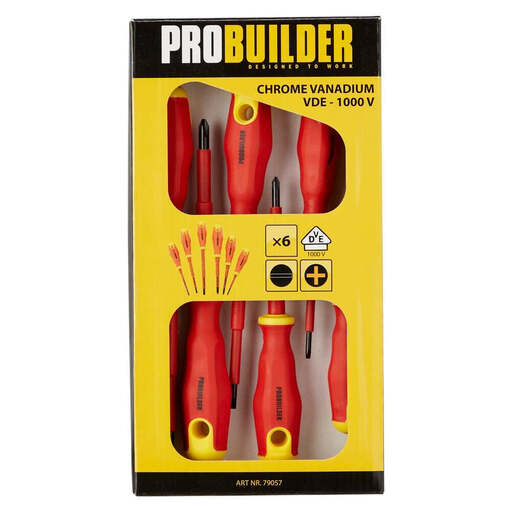
Why it suits this type of user: For people who look for clearly marked insulation and specified sizes when working on electrical installations.
The insulation specifications and VDE marking are more specific than a general safety claim.
Three slotted and three Phillips screwdrivers, CRV blades and insulation stated to be VDE and GS tested up to 1000 V AC.
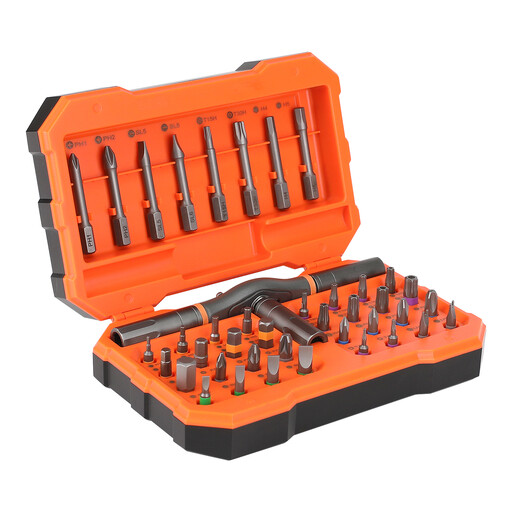
Why it suits this type of user: This set is designed for people working on furniture, bikes, vehicles and electronics with a range of different profiles.
The combination of specific profiles, a ratchet function and eight extended bits helps with deep-set or hard-to-reach screws.
40 bits, eight 45-mm extensions, a magnetic holder and a reversible ratchet mechanism, according to the product description.
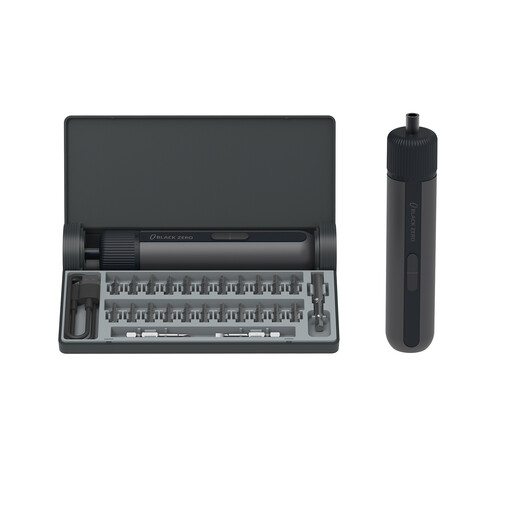
Why it suits this type of user: This compact electric model is designed for furniture assembly, light household repairs and repetitive screwdriving tasks.
Five speed settings and four torque settings allow finer adjustment than a model with just one setting.
24 bits, a USB-C charging port, forward/reverse operation and a stated maximum hard torque of 8 Nm.
We’ve put together a complete, regularly updated list of products that meet these strict selection criteria and the safety regulations in force in the EU.
How long a screwdriver set lasts depends largely on how you use it. Wipe the handles and bits dry after use, and store them somewhere dry. Never use a bit as a lever, chisel or pry bar. With a cordless screwdriver, only change the bit when the tool is switched off and the battery has been removed, if the manufacturer’s instructions require this.
For smartphones and computers, a precision screwdriver set with small Phillips, Torx and specialist bits is a good choice. The 25-piece Deli set or a larger electronics kit covers more profiles than a standard household set. Check the specific bit shapes before buying, and choose a manual handle for greater control when working with delicate components.
There’s no reliable way to give a fixed lifespan. It depends on the materials, how heavily the tools are used, how they’re stored and how well the bit fits the screw head. Avoid using excessive force, letting the tools rust or using them as levers. Do not continue using a tool if it has visible cracks, badly worn tips or damaged VDE insulation.
An electric screwdriver uses electricity and, if it’s rechargeable, needs time to charge. Running costs depend on the battery, how often you charge it and how much power it uses; they’re usually low if you only use it occasionally. For a few screws, a manual screwdriver is often enough. For lots of identical screws, a cordless screwdriver can reduce the work involved.