If you want to use a large stockpot on the hob
The key is whether the pan base, cooking zone and available surface are all a good fit. After cooking, you’ll also need to plan to cool the food quickly for longer storage.


For a large batch of seafood stew, choose your hob based above all on the pan base, how many pans you need to use at once, and the available space and connection. A built-in induction hob can accommodate several pans if the cut-out and pan bases are suitable; a portable hob is an option if its cooking zone and weight limit are right for your pan. For longer storage, the Federal Institute for Risk Assessment recommends cooling hot food quickly to below 7 °C.
The key is whether the pan base, cooking zone and available surface are all a good fit. After cooking, you’ll also need to plan to cool the food quickly for longer storage.
For the stew and any other dishes, you’ll need cooking zones that can genuinely be used at the same time, plus enough room for your pans.
A portable hob and a built-in hob have different requirements when it comes to space, cookware and connection.
First check the pan base and weight limit, then the cooking zones you can use at the same time, and finally whether the hob type and connection suit your kitchen. The guide below focuses on the priority that matters most to you.
| Priority | What to check before buying | Who this matters most to |
|---|---|---|
| Large stockpot | Compare the pan base diameter with the usable cooking zone; for portable hobs, check the maximum weight limit. | If I’m filling a large pan, its base needs to fit the cooking zone safely. Around 36% of consumers put suitability for a large stockpot first. |
| Several pans at once | Check the number and spacing of the zones, as well as the usable space for your pans. | If I’m making other dishes alongside the stew, I need cooking zones I can use at the same time. Around 29% of consumers prioritise cooking with several pans at once. |
| Hob type and connection | For a built-in hob, check the cut-out and connection type; for a portable hob, check the specified requirements. | If my kitchen doesn’t have a suitable space for a built-in hob, or I need to take an existing connection into account, the hob type is the deciding factor. Around 21% of consumers put hob type and connection first. |
| Cookware you already own | For induction, check that the pan base is magnetic and measure its diameter; for hobs designed to connect to an oven, check compatibility with the built-in oven. | If I want to keep using my existing stew pan, it needs to be compatible with the type of hob. Around 14% of consumers prioritise whether their existing cookware is suitable. |
With induction, the pan base needs to match the cooking zone. The rim diameter may differ from the base diameter.
Measure the pan base and compare it with the specifications for the hob you’re considering.
CASO lists the Touch 3500’s 3500 W as the total power for its two separately controlled zones, not the power per zone.
Check the power specifications for using both zones at once, along with the maximum weight limit for a filled pan.
The Electrolux LRD64062IK is controlled via the built-in oven. So a suitable cut-out alone doesn’t confirm that the hob is compatible with your existing kitchen.
Before choosing, check compatibility with your oven and the connection requirements for the specific model.
A suitable hob won’t cool a large batch of cooked food for longer storage. The Federal Institute for Risk Assessment recommends cooling hot food quickly to below 7 °C for this purpose.
Plan how you’ll cool and store the food separately and hygienically as part of your batch cooking.
The Siemens EX975LXC1E is a 90-cm induction hob with five cooking zones.
The Bosch PXX675DC1E is a 60-cm induction hob with four cooking zones.
The TILLREDA range of portable induction hobs is available with one or two cooking zones.
The portable Touch 3500 has two separately controlled cooking zones.
The Electrolux LRD64062IK is a radiant ceramic-glass hob designed to connect to an oven, with four radiant cooking zones.
The products below include built-in induction hobs and ceramic-glass hobs. In particular, compare the hob type, specified cooking zones and connection requirements with your pan and kitchen.
 No image available
A built-in induction hob could be a good option if its hob type and installation requirements suit your kitchen.
The product details specify installation by a qualified electrician.
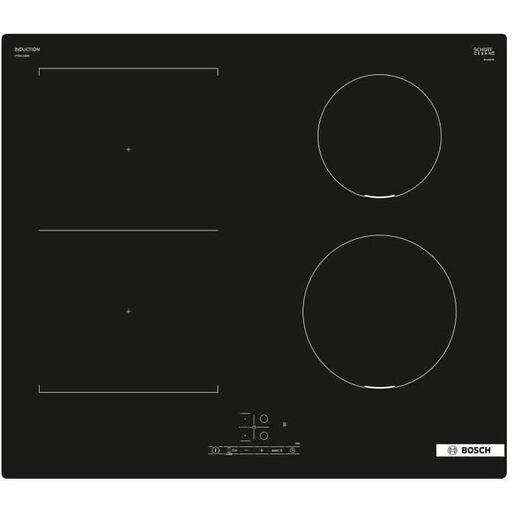 No image available
A built-in induction hob with several specified cooking zones could suit a kitchen where you cook more than one dish at a time.
The product title specifies four cooking zones, 6900 W, a timer and PowerBoost. Check the connection requirements for the specific appliance.
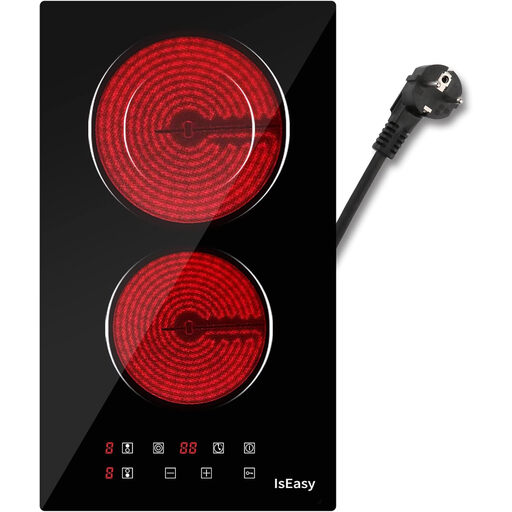 No image available
A ceramic-glass hob could be a good choice if you want to use cookware that doesn’t need to be induction-compatible; check the model’s installation requirements.
The product title specifies two zones, 3200 W, nine power levels, touch controls and a timer from 1–99 minutes.
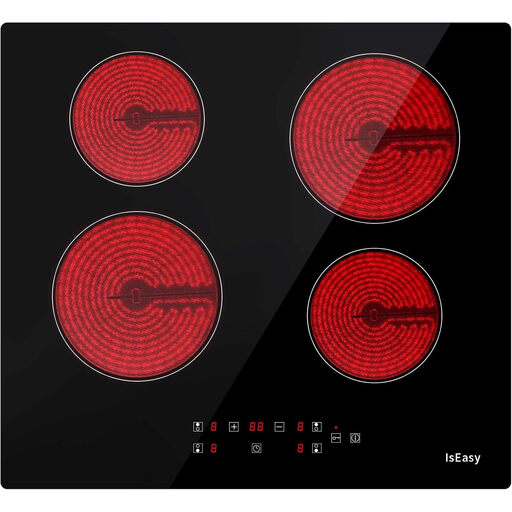 No image available
Four specified zones could be useful if you want to use several pans at once; check that they’ll all fit on the hob.
The product title specifies 6000 W, a built-in design, touch controls and nine heat settings.
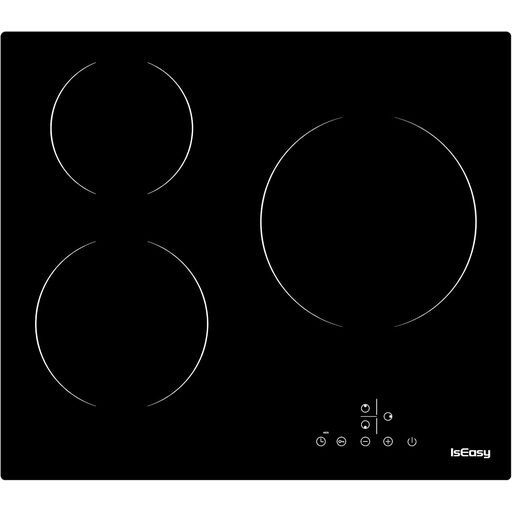 No image available
A ceramic-glass hob is an option if you want to use cookware that doesn’t need to be induction-compatible. Check that the installation and connection type are suitable.
The product title specifies 5500 W, nine heat settings, a timer and a plug-and-play design.
Check whether the pan base is magnetic or whether the pan is marked as suitable for induction, then compare the base diameter with the cooking zone on the specific hob. The diameter given for the rim may be different.
No, these connection types aren’t interchangeable. Bosch and Siemens specify that the plug-free built-in models mentioned here must be connected by a qualified electrician. Section 13 of the NAV (Low Voltage Connection Ordinance) sets out who may carry out work on a fixed electrical installation. This is different from a portable appliance that’s designed to be plugged in.
For longer storage, the Federal Institute for Risk Assessment recommends cooling hot food quickly to below 7 °C and keeping raw and cooked foods separate. A keep-warm function isn’t a substitute for cooling.
Compare the connection and usage requirements for the specific hob. The Verbraucherzentrale (German Consumer Advice Centre) points out that the EU energy label applies to ovens, not hobs.
Electrical appliances must be collected separately. The German Environment Agency lists local collection points, which generally accept old appliances free of charge. Retailer take-back schemes are subject to further conditions depending on the retailer and appliance.