Making stew in a pan you already own
If you want to keep using your pan for serving everyone, check the material and size of its base. With a portable hob, the permitted weight of the filled pan may also be a deciding factor.


For a stew on an extra cooking zone, a portable single induction hob is a sensible starting point, provided the pan base is compatible and the size and filled weight are within the limits of the specific model. If you want to keep using your existing pan with a different type of hob, cook a side at the same time or install a hob permanently, a radiant hob, double hotplate or built-in hob could be a better fit. The key things to consider are suitable cooking zones, available space and the electrical connection.
If you want to keep using your pan for serving everyone, check the material and size of its base. With a portable hob, the permitted weight of the filled pan may also be a deciding factor.
If you want to cook a side dish at the same time as your stew, you’ll need two usable cooking zones. Compare both pans, the space they’ll take up and the electrical load of the specific appliance.
If you need an extra or temporary cooking spot, make sure there’s enough room for the appliance, cookware and cable, all positioned safely. For a built-in hob, you’ll also need to consider installation and connection.
First, check that your pan is compatible with the heating technology and cooking zone. Then consider how many zones you can use at once, along with the available space and electrical connection, to find an appliance that suits the way you plan to cook.
The manufacturer information for the CASO Touch 2000 and Rommelsbacher CT 2203/TC describes different controls and heating technologies. The number of power settings alone doesn’t show how evenly a particular stew will simmer.
| What you need | What to look for | Who is this most relevant to? |
|---|---|---|
| Control boiling and simmering | Compare the power settings, controls and timer; don’t rely on a timer alone to manage the cooking. | I want to keep my stew simmering gently after bringing it to the boil, so I’m looking at the controls. Around 31% of consumers prioritise heat control. |
| Use a pan you already own | Check the material and diameter of the base. For portable appliances, also make sure the specific model’s weight limit can accommodate the filled pan. | I want to keep using my existing pan when it’s full, so I’ll check the base and dimensions first. Around 25% of consumers prioritise compatibility with their pans. |
| Cook stew and a side dish at the same time | Check the number of independently usable zones, the appliance dimensions and total power, as well as whether both pans are suitable. | If I want to cook a side dish at the same time, I’ll need a second cooking zone alongside the one for my stew. Around 25% of consumers prioritise being able to cook more than one dish at once. |
| Space and power supply | Check the appliance dimensions, placement instructions, plug type and electrical load. In 2019, the Institute for Loss Prevention and Loss Research documented a kitchen fire caused by an overloaded extension lead. | I need to position the appliance and cable safely and plan for a suitable power supply. Around 19% of consumers prioritise space and connection requirements. |
Ceramic glass describes the surface, not necessarily the heating technology beneath it. Rommelsbacher, for example, offers both an induction hob and a model with radiant heating.
Check the heating technology of the exact model and make sure it’s compatible with your existing pan.
If your pan isn’t compatible with the heating technology you choose, you may need a different one.
On the Rommelsbacher CT 2203/TC, 140 and 210 mm are two selectable sizes for a single cooking zone, not two zones that can be used at the same time.
If you want to cook stew and a side dish on the appliance at once, make sure you check how many cooking zones can be used simultaneously.
In its test of portable induction hobs on 4 August 2026, F.A.Z. Kaufkompass described a water-boiling test. This doesn’t show how a particular stew simmers at a low power setting.
As well as the power specifications, compare the control options, ease of use and pan limits for the specific model.
In 2019, the Institute for Loss Prevention and Loss Research documented a kitchen fire caused by an overloaded extension lead.
Follow the connection instructions and check the appliance’s electrical load. Make sure your existing power supply is suitable, and don’t plug several high-powered appliances into an extension lead without checking first.
Portable single induction hobs such as the Touch 2000 can provide an extra cooking zone for one pan.
The CT 2010/IN and CT 2203/TC models demonstrate two different types of heating on portable hobs.
The DK 1028 and DK 1042 are examples of portable double hotplates with different heating technologies.
The EX975LXC1E is an example of a permanently installed, multi-zone induction hob.
The SIKP 2200 B1 is an example of a portable single induction hob.
These models include portable single and double hotplates, as well as built-in hobs for cooking stew, preparing sides at the same time or using different pans you already own.
 No image available
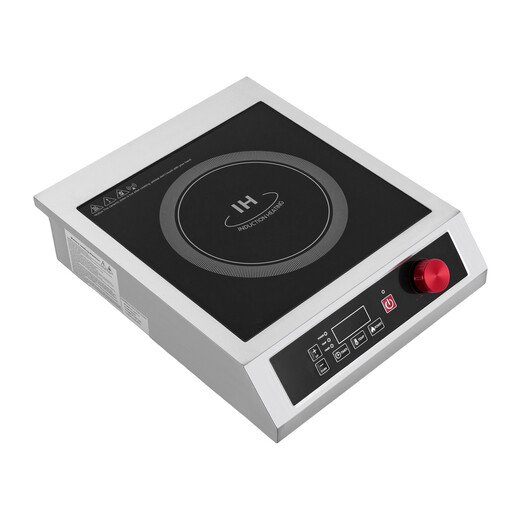
Described as a portable single hotplate for stew or soup. According to the product description, it’s suitable for heat-resistant pans made from a range of materials.
The description lists touch and rotary controls, a timer and overheat protection. The appliance is designed for indoor use.
 No image available
Described as a single countertop induction hob. Suitable cookware with a flat base is required.
The product description lists ten power and temperature settings, temperature settings from 40 to 300 °C and a timer of up to ten hours. An EU plug is specified.
 No image available
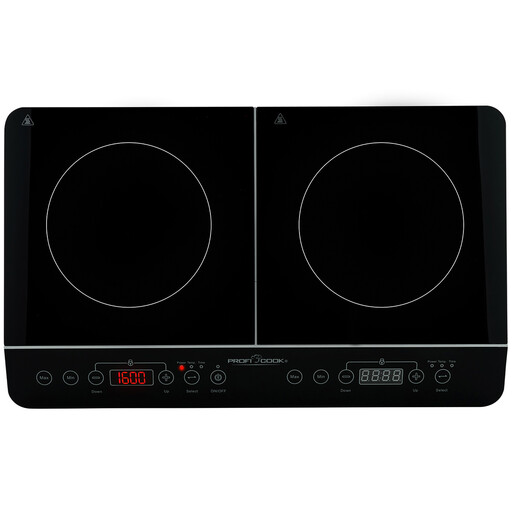
According to the product information, the two cooking zones are designed to be used simultaneously. Induction-compatible cookware is required.
The product title lists ten settings, a timer and temperatures of up to 240 °C.
 No image available
A built-in induction hob for cooking several dishes. The product description specifies that magnetic cookware is required.
The description lists nine power settings, individual timers and a residual heat indicator. Installation requires a 560 × 490 mm cut-out and a 32 A fuse; remember that the hob must be installed by a qualified electrician.
 No image available
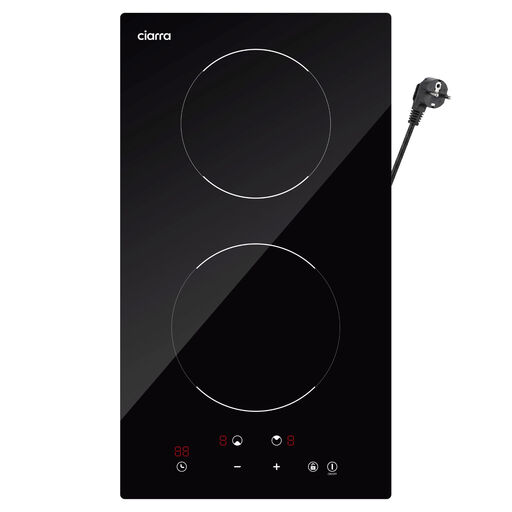
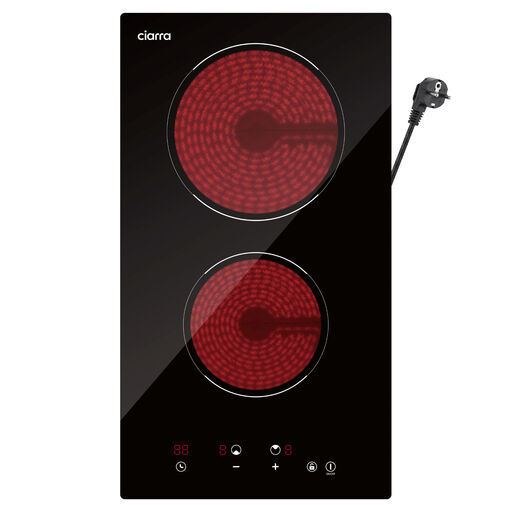
According to the product information, this built-in ceramic hob has two cooking zones for cooking in parallel.
The description lists nine power settings, an individual timer and a residual heat indicator. A 260 × 490 mm cut-out is specified for installation; the cooking surface may remain hot after use.
Only if the base is induction-compatible and the pan’s size and, where relevant, filled weight are within the limits of the specific model. Rommelsbacher requires a ferromagnetic base for the CT 2010/IN and specifies a size of 120–230 mm. CASO Design gives a pan size of 12–24 cm and a maximum load of 6 kg for the Touch 2000.
Not necessarily. Siemens says the EX975LXC1E built-in hob is supplied without a plug and must be connected by a qualified electrician. For a portable model, check the plug type and instructions, and make sure your existing power supply is suitable.
Don’t plug several high-powered appliances into an extension lead without checking first. In 2019, the Institute for Loss Prevention and Loss Research documented a kitchen fire caused by an overloaded extension lead. After cooking, also follow the instructions and residual heat warnings for your particular appliance.
Hobs connected to the mains and sold in Germany must meet the relevant EU requirements. The EU Low Voltage Directive 2014/35/EU, in its consolidated version dated 30 May 2026, includes requirements for CE marking, the necessary documentation and clear safety instructions. Germany’s Federal Network Agency also advises checking the product labelling and the availability of a German-language instruction manual. The CE mark alone isn’t an independent certification of cooking performance or durability.
No. The Verbraucherzentrale recommends keeping fresh fish well chilled and using it promptly. The German Federal Institute for Risk Assessment advises using separate kitchen utensils for raw and cooked food. A hob timer can’t confirm that ingredients have been prepared safely.