If you already have a stew pot
If you want to keep using your own pot, check that its base is magnetic and matches the stated cooking zone diameter before choosing an induction hob.


If the base of your pot is magnetic and its size matches the cooking zone, a portable induction hob could be suitable. If your cookware isn’t induction-compatible, radiant ceramic or cast-iron hobs are possible alternatives. You’ll also need to consider whether one cooking zone is enough or whether you want to heat two pots at once – and whether you have enough space and a suitable power supply.
If you want to keep using your own pot, check that its base is magnetic and matches the stated cooking zone diameter before choosing an induction hob.
When you share a worktop, consider the appliance’s dimensions, whether there’s a safe place for the pot and whether you can leave the hob to cool after use before putting it away.
If you want to heat a side dish at the same time as your stew, consider the extra space a double hob needs and its power requirements.
First, check that your existing pot is compatible with the heating technology and cooking zone. Then consider how easily you can adjust the heat for simmering, as well as the space and power supply available in your shared kitchen.
| What to consider | What to look for | Who should pay particular attention |
|---|---|---|
| Pot and cooking zone | Test the base of your pot with a magnet, then compare its diameter and filled weight with the model specifications. Haus & Garten Test described the magnet test in 2025 as an indication of induction compatibility. | If I want to use my existing pot, I’ll first check that it’s compatible with the heating technology and cooking zone. That’s why around 33% of consumers put pot compatibility first. |
| Adjustable simmering | Compare the power settings, ease of use and, where available, a timer. For example, CASO Design lists 12 power settings for the ProMenu 2100; this doesn’t guarantee a particular temperature in your stew. | When I turn the heat down from boiling to simmering, I want to be able to adjust it easily. That’s why around 27% of consumers prioritise adjustable heat settings. |
| Shared kitchen space | Check the appliance’s dimensions, cable routing and power consumption. The Federal Office of Civil Protection and Disaster Assistance warns against overloading multi-socket adaptors. | If several people share the same worktop, I need a suitable place for the hob and a safe way to use it while it’s hot. Around 20% of consumers pay particular attention to space and shared use. |
| One or two pots | Consider whether you really want to cook two things at once, then compare the space required and the total rated power. Severin lists two induction zones, 3,400 W and dimensions of 59 × 35.5 cm for the DK 1031. | To cook stew and a side dish at the same time, I need two usable cooking zones and enough space. Around 20% of consumers prioritise being able to cook two things at once. |
A ceramic glass surface may be heated by a radiant element. Rommelsbacher describes the CT 2200/E as a HiLight model, not an induction hob.
Check the heating technology carefully. If you’re considering an induction hob, test whether your pot’s base is compatible.
The rated power doesn’t tell you how easily you can adjust the heat when simmering a particular full pot. A double hob also needs more space and may have a high power requirement.
Compare the controls, pot size, appliance dimensions and power specifications for the specific model.
Radiant hobs can remain hot after they’ve been switched off. In a shared kitchen, a hot surface may get in other people’s way.
Let the appliance cool down safely, and agree when the shared worktop can be cleared again.
The CT 2010/IN and CT 2200/E are portable single hobs that use different heating technologies.
The ProMenu 2100 is a portable single induction hob with several heat settings.
The KP 1091 is a single cast-iron hob, while the DK 1031 is a double induction hob.
The EKP 3582 is a single hob that doesn’t use induction.
The Kult X Mono is a portable single induction hob with touch controls and a choice of programmes.
This selection includes portable single and double hobs, including induction and radiant-heated models. For the 230 V appliances featured here, the relevant EU safety requirements and CE marking apply: EUR-Lex describes the scope of the Low Voltage Directive, while Your Europe explains that there is no central EU body that issues CE certificates. Check the information for the specific product; CE marking isn’t a general independent quality seal.
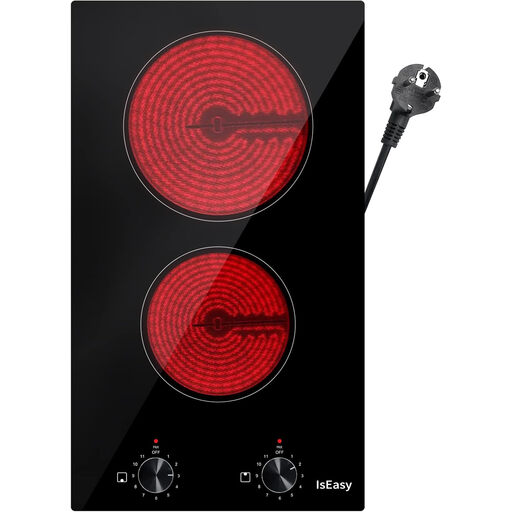 No image available
According to the product description, the two cooking zones can heat two dishes at the same time.
11 power settings; two zones rated at 2,000 W and 1,200 W; 29.5 cm; residual heat indicator.
 No image available
This double hob is designed to heat food on two zones at the same time.
The product name lists keep-warm, boil and simmer functions. Cookware must be compatible with induction.
 No image available
Described as a portable infrared hob with a smooth ceramic surface, it’s an alternative if you’re not looking for an induction hob.
The description lists a timer, touch and rotary controls, and heat-resistant cookware as requirements.
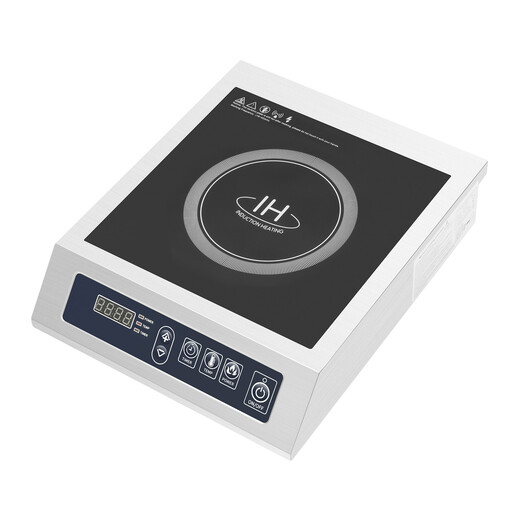 No image available
This single hob is an option if you want to use a compatible induction pot on one cooking zone.
11 power settings; timer up to 24H; temperature range 140–572 °F; stated cookware size range 4,72–11,81 inches. At 3,500 W, the power supply must be suitable for the rated power; don’t overload a multi-socket adaptor.
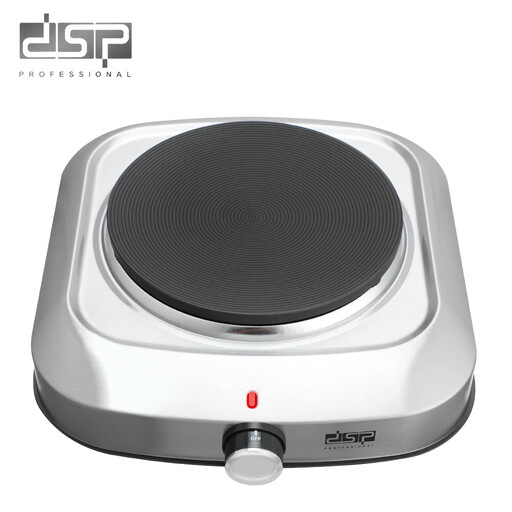 No image available
A single cooking zone for your worktop if you don’t need to heat a second pot at the same time.
The product specifications list 1,500 W, a hotplate diameter of 185 mm and an adjustable temperature control.
Hold a magnet against the base of the pot, then compare its diameter with the specifications for the specific hob. The magnet test indicates whether it may be suitable for induction; you’ll also need to check the appliance manufacturer’s size and weight limits.
Keep the area around the hob clear in line with the appliance instructions, and remember that surfaces can stay hot after the hob is switched off. Unplug the appliance before cleaning and let it cool down; don’t overload a shared multi-socket adaptor.
No. Choosing a hob doesn’t replace hygienic food preparation. The German Federal Institute for Risk Assessment recommends that people who are particularly vulnerable eat fish and seafood only when it has been thoroughly cooked.
For a specific appliance, check the relevant safety requirements and CE marking against the product listing and specifications. EUR-Lex describes the scope of the Low Voltage Directive for electrical equipment with a voltage rating of 50 to 1,000 V AC; Your Europe explains that there is no central EU body that issues CE certificates. The marking isn’t a general independent quality seal.
Online purchases generally come with a 14-day right to cancel. The Verbraucherzentrale says the period usually starts when the contract is concluded or when you receive the goods you ordered; check the terms of your specific purchase.