For a single seafood stew, a portable hob may be enough, provided your pot fits the cooking zone and the appliance can support its filled weight. If you’re cooking a side dish at the same time, a hob with several zones is more practical. With induction, the base of the pot needs to suit the cooking zone; for a built-in hob, you’ll also need to check the cut-out and connection. Rommelsbacher, CASO Design, Siemens and NEFF each specify conditions for particular models.
Which hob solution is right for you
For cooks using a large pot
If you want to heat a large pot after a trip to the market and then let it simmer, compare the base of the pot with the cooking zone and check the weight limit for portable appliances. Rommelsbacher specifies a ferromagnetic pot base for the CT 2020/IN; CASO Design gives the ProMenu 2100 a maximum load capacity of 6 kg.
For cooks using several pots
If you want to have stock or a side dish on the hob while the stew cooks, look for separate cooking zones of the right size. Siemens specifies five zones for the EX975LXC1E; NEFF lists four zones for the T16SDF9L0. These details apply to the models named.
For cooks without a permanent hob
If you want to put the hob away after cooking, check the space it needs and the connection required for the specific appliance. Rommelsbacher and CASO Design both offer portable single-zone hobs; each of the models mentioned has just one cooking zone.
What to look for when buying a hob
First decide whether one cooking zone is enough for your stew or whether you’ll be using other pots at the same time. Then compare your pot, the heating technology and the type of installation with the specifications of the appliance.
| What you need |
What to check before buying |
Especially important if |
| Pot and cooking zone |
Compare the diameter of the pot base, not just the rim. CASO Design specifies a pot diameter of 12–24 cm and a maximum load capacity of 6 kg for the ProMenu 2100. |
You’re using a large, full pot and want to check the base, cooking zone and weight limit together. Around 33% of consumers prioritise a good fit between pot and cooking zone. |
| Cooking several dishes at once |
Check the number of pots you need to use at the same time and the space they’ll take up against the hob’s cooking zones. |
You want to heat a side dish as well as the stew and need a separate cooking zone. Around 27% of consumers prioritise being able to cook several dishes at once. |
| Portable or built-in |
For portable appliances, check the space required and the connection; for built-in appliances, check the cut-out dimensions and model-specific connection requirements. Siemens and NEFF specify that the models mentioned must be connected without a plug by a qualified electrician. |
You don’t want a permanent hob and need one you can put away; for a built-in hob, the worktop and connection need to be suitable. Around 20% of consumers prioritise portable installation. |
| Heating technology and cookware |
For induction, check that the pot has a ferromagnetic base and is the right size for the specific model. A radiant-heat hob is another option. |
You want to keep using your existing pots and need to make sure they’re compatible with the heating technology. Around 20% of consumers prioritise compatibility with their cookware. |
Common misconceptions when buying a hob
-
Comparing the rim of the pot instead of its base and total weight
For induction, the base of the pot must be suitable; portable appliances may also have limits on pot diameter and load capacity. This means a large, full pot may not be suitable for a particular model.
Measure the base of your pot and check its filled weight against the specifications for the appliance. Rommelsbacher requires a ferromagnetic base for the CT 2020/IN; CASO Design specifies 12–24 cm and a maximum of 6 kg for the ProMenu 2100.
If your existing pot isn’t suitable, you may need to buy compatible cookware as well.
-
Planning to use one single-zone hob for several pots
A portable single-zone hob has just one cooking zone, so it can’t heat a second pot at the same time on a separate zone.
Before you buy, consider whether you’ll also want stock or a side dish on the hob while your stew simmers. If so, compare hobs with several well-positioned cooking zones.
-
Checking the installation and connection only after buying
Installation dimensions and connection requirements vary by model. Siemens specifies a cut-out of 880 × 490–500 mm for the EX975LXC1E; NEFF gives dimensions of 560 × 490–500 mm for the T16SDF9L0. According to the manufacturers, both models must be connected without a plug by a qualified electrician.
Compare the dimensions with your worktop and check the connection requirements for your chosen model before placing your order.
-
Assuming the number of power settings proves it will simmer evenly
The number of power or temperature settings alone doesn’t show how evenly a particular pot will simmer over a low heat.
Compare the details about pot size, cooking zone and controls, but don’t assume that more settings mean a better simmer. The European Commission sets ecodesign requirements for hobs under Regulation (EU) No 66/2014; according to the Commission, hobs are not required to carry an energy label.
Relevant brands for these types of hob
Rommelsbacher
The examples mentioned include portable single-zone hobs with induction and radiant heating.
- Rommelsbacher says the CT 2020/IN requires pots with a ferromagnetic base; the CT 2200/E has a switchable heating ring and rotary controls.
- Both models mentioned have just one cooking zone. Features of one model shouldn’t be assumed to apply to the other.
CASO Design
The ProMenu 2100 is an example of a portable single-zone induction hob.
- CASO Design specifies 12 power settings, a suitable pot diameter of 12–24 cm and a maximum load capacity of 6 kg for this model.
- The number of settings isn’t independent proof of how evenly a stew will simmer.
Siemens
The EX975LXC1E is an example of a wide built-in induction hob with flexible cooking zones.
- Siemens specifies five cooking zones and three flexible areas for this model.
- The EX975LXC1E requires a cut-out of 880 × 490–500 mm and must be connected without a plug by a qualified electrician.
NEFF
The T16SDF9L0 is a built-in radiant-heat hob, offering an alternative to induction.
- NEFF specifies four cooking zones for this model, including a dual-circuit zone and an oval zone.
- The T16SDF9L0 requires a suitable cut-out of 560 × 490–500 mm and, according to the manufacturer, must be connected without a plug by a qualified electrician.
Bosch
The PXX675DC1E is an example of an induction hob with flexible cooking zones.
- Bosch promotes FlexInduction and an energy consumption display for this model.
- Manufacturer claims about flexibility or sensors aren’t independent measurements of how evenly a stew will simmer.
Joybuy’s selection for stews and cooking several dishes at once
This selection includes portable single-zone hobs for cooking a stew, as well as two-zone hobs for heating a stew and a side dish at the same time.
 No image available
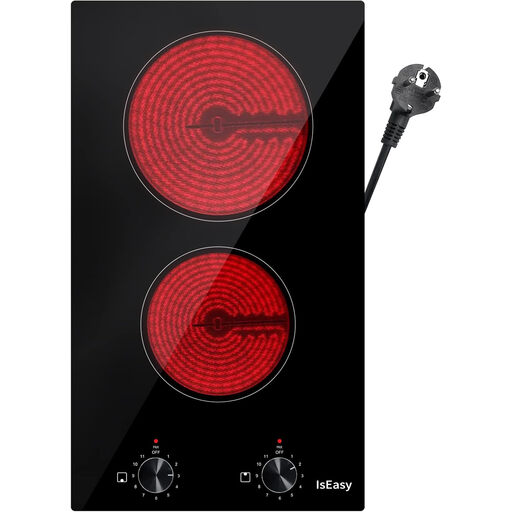
IsEasy Domino glass-ceramic hob, 2 cooking zones, 11 power settings, 3200 W, rotary controls, black
The two independently controlled cooking zones are ideal if you want to heat a stew and a side dish at the same time.
The product name specifies 11 power settings, rotary controls and 3200 W.
Joybuy
 No image available
IsEasy portable induction hob, 2100 W, 28 cm, 9 heat settings
This portable single-zone hob could suit you if you only want to heat your stew pot on the appliance.
The product name specifies a 28 cm glass surface, nine heat settings, an 8-hour timer and touch controls. According to the product details, it’s designed for magnetic cookware with a diameter of 12–26 cm.
Joybuy
 No image available
Induction hob with 2 cooking zones and 5 temperature settings
The two independently controlled cooking zones are suitable if you want to heat a stew and another pot at the same time.
The product name specifies five temperature settings, as well as keep-warm, boil and simmer functions.
Joybuy
 No image available
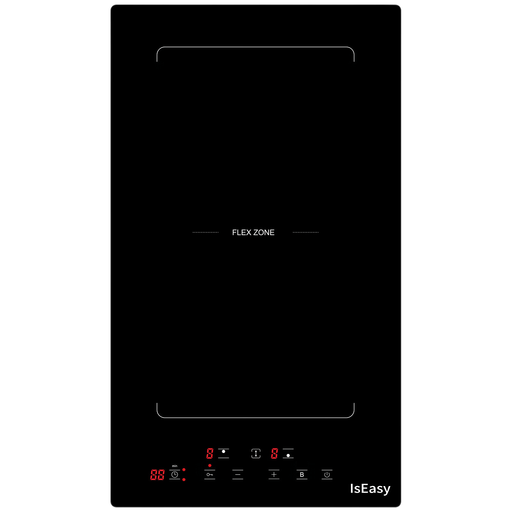
Induction hob with flexible cooking zones
The two zones with a flexible area are an option if you want to use pots of different sizes.
According to the product details, magnetic cookware is required.
Joybuy
 No image available
Portable induction hob, 3500 W, 10 temperature settings
This portable single-zone hob could suit you if one cooking zone is enough for your stew and you have a suitable EU socket.
The product name specifies 3500 W and ten temperature settings. According to the product details, compatible magnetic cookware is required.
Joybuy
Frequently asked questions about hobs for seafood stew
Does my stew pot need to be suitable for induction?
Yes. With an induction hob, the pot needs a suitable ferromagnetic base. Rommelsbacher specifies this requirement for the CT 2020/IN; also check the pot size allowed for your chosen model. For the CASO ProMenu 2100, CASO Design specifies 12–24 cm.
When is a portable hob enough?
A portable single-zone hob may be enough if you’re heating just one pot, have a suitable surface and connection, and your pot is within the model’s limits. If you’re using a heavy, full stew pot, check the stated load capacity too.
Can I simply plug a built-in hob into a socket?
Not the Siemens EX975LXC1E or NEFF T16SDF9L0 models mentioned here. According to the manufacturers, both are supplied without a plug and must be connected by a qualified electrician. Always follow the connection requirements for the specific model you choose.
Do lots of power settings prove that a stew will simmer evenly?
No. The number of power or temperature settings alone doesn’t show how evenly a particular pot will simmer over a low heat. Check the details about pot size, cooking zone and controls, but don’t assume that the number of settings guarantees a good simmer.
Does a precise hob setting automatically make seafood safe to eat?
No. Hob settings don’t replace proper storage or maintaining the cold chain. The Federal Centre for Nutrition points out that fish and seafood spoil quickly.


