
Lieferung heute & morgen

Qualitätsgarantie

Willkommens-Angebote freischalten: KOSTENLOSE Lieferung | Bis zu 80 % RABATT | Kostenlose 30-Tage-JoyPlus-Testphase
App herunterladen
A new cast aluminum pan often promises perfect cooking results, but the reality is frequently different: after just a few months, your fried egg starts to stick, the base warps on the induction hob, and the expensive purchase turns into a major annoyance. As your Joybuy Product Recommendation Officer, I'll help you identify the typical marketing traps and make an informed decision that suits your cooking style.
Many buyers fall into the same traps, which are cleverly disguised by manufacturers. Here are the three most common problems that lead to a bad purchase:
To find a durable and functional pan, you shouldn't be guided by advertising slogans, but by objective product features. Before buying, pay attention to the following three core parameters.
The body of a good cast aluminum pan is made from forged or cast aluminum. This material is known for its excellent thermal conductivity, which allows for fast and even heating. However, the crucial factor is the base thickness. A solid, thick base (typically 3 mm or more) retains heat better and prevents the pan from warping at high temperatures—a common problem with cheap, thin pans, especially on powerful induction or gas stovetops. For an induction frying pan, a fully integrated stainless steel base is also essential to optimally absorb and distribute the cooktop's energy.
A non-stick pan makes it easier to cook with little fat and simplifies cleanup. Most coatings are based on PTFE (Polytetrafluoroethylene). Here, durability depends less on the brand name and more on the number of layers applied. Models with two or three layers generally offer higher abrasion resistance and thus a longer lifespan than those with only one layer. In this context, a scratch-resistant pan means it is resilient when used properly with wooden or silicone utensils. Metal objects will damage almost any non-stick coating.
The right size is crucial for everyday cooking. A 28 cm frying pan is a versatile all-rounder for households of two to four people. Smaller pans (20-24 cm) are suitable for single portions, while models 30 cm or larger are ideal for big families or for searing large pieces of meat. While a lightweight frying pan is easier to handle, a certain amount of weight is often an indicator of a solid base and robust construction. The handle should be ergonomically shaped and heat-resistant (e.g., made of Bakelite) to ensure safe handling without an oven mitt.
Based on these objective criteria, we have identified a few models from our range that represent a suitable solution for specific user profiles.
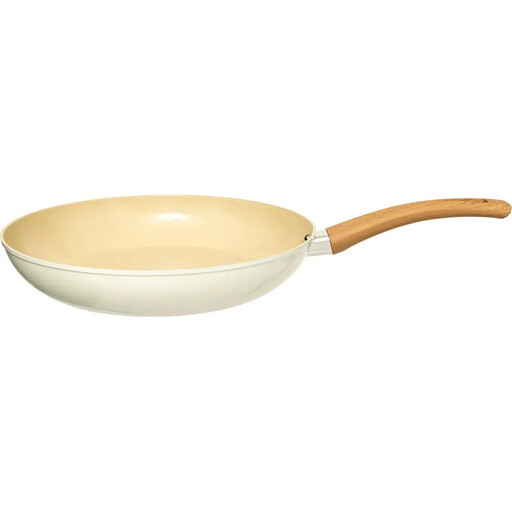
Why This Fits Their Persona: Ideal for home cooks looking for a reliable and versatile pan for daily use. The 28 cm diameter is perfect for preparing meals for two to four people, from fried potatoes to stir-fries.
The full-surface stainless steel induction base ensures efficient and even heat distribution, thus avoiding the trap of poor induction performance.
Suitable for all stovetops, including induction. The dual-layer non-stick coating offers a great balance of durability and easy maintenance.
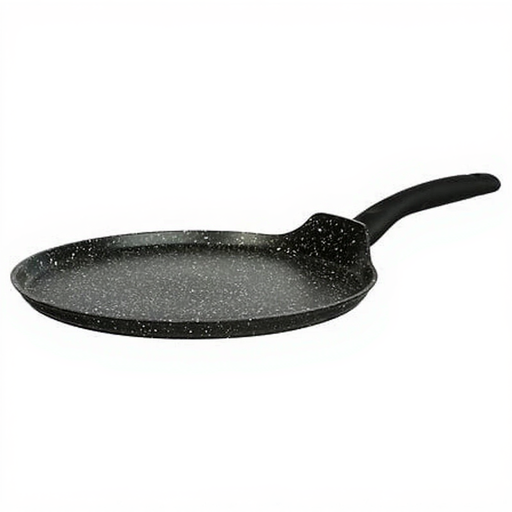
Why This Fits Their Persona: Perfect for lovers of sweet and savoury pancakes. This specialised crêpe pan is optimised for one task: making paper-thin, evenly browned crêpes or pancakes.
The forged aluminum body ensures fast, perfectly even heat distribution. This prevents the trap of burnt centers with undercooked edges.
The low rim and smooth non-stick surface make it easy to flip and slide out crêpes. The heat-resistant Bakelite handle ensures safe handling.
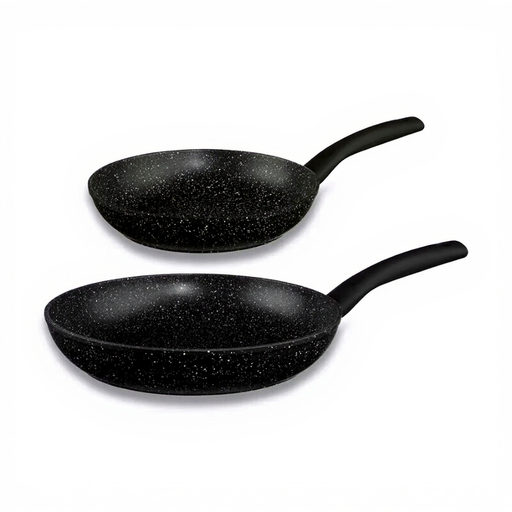
Why This Fits Their Persona: This pan set is an economical and practical solution for starting a new household. It covers most daily cooking needs with the two most common sizes (24 cm and 28 cm).
Instead of buying a single, ill-fitting pan, this set offers flexibility. The stone-effect non-stick coating avoids the trap of exaggerated scratch-resistance claims and signals solid everyday performance.
Two pans for different purposes: the smaller one for eggs or single portions, the larger one for main dishes. Excellent value for a solid starter kit.
We have compiled a complete, up-to-date list of products that fully meet these strict selection criteria and German safety regulations.
The longevity of a non-stick pan heavily depends on its care. Clean the pan by hand with a soft sponge and mild dish soap. Even if some models are declared dishwasher-safe, harsh detergents and high temperatures can damage the coating in the long run. Absolutely avoid using metal utensils and abrasive sponges. Allow the pan to cool down after use before exposing it to cold water to prevent thermal shock and warping of the base.
This problem occurs when the diameter of the pan's ferromagnetic base does not match the size of the cooking zone on the induction hob. If the pan's base is significantly smaller than the cooking zone, the hob cannot detect the pan efficiently, leading to slow heating or pulsating power. A loud buzzing sound can also indicate an incompatibility or a low-quality pan base. Make sure to choose a pan whose base diameter matches one of your cooking zones as closely as possible.
Not necessarily. A higher weight often indicates a thicker, more solid base, which is beneficial for heat retention and shape stability. A very lightweight frying pan can warp more quickly under high heat. However, a heavy weight makes handling more strenuous, especially when tossing food. A good pan strikes a balance: it's heavy enough to sit stably on the stove and hold heat well, but still light enough for comfortable everyday use.