Solo auditionees with a fixed seat
You want to record your lines clearly, without setting up wireless equipment you don’t need for a mostly stationary setup.


If you’ll be seated for your audition and your recording device is within cable reach, a suitable wired lavalier microphone is a sensible place to start. Wireless is worth considering if the cable gets in the way when you move. In either case, first check that the input or receiver is compatible, then listen back to a test take that includes your loudest line.
You want to record your lines clearly, without setting up wireless equipment you don’t need for a mostly stationary setup.
The key thing is whether the microphone plug, device socket, adapter and recording app all work together.
You’ll be seated most of the time, but may gesture or change position. This makes cable management and discreet attachment more important.
First, check that the microphone and recording device are compatible. Then decide whether a cable will reach your seat or whether wireless would make a practical difference when you move.
| Consideration | What to check before buying | Who should pay particular attention? |
|---|---|---|
| Clear speech | Test the room noise, echo and recording level using a loud line. | If I want to record both quiet and loud passages clearly, I’ll also check that the loudest part doesn’t distort. Around 40% of consumers prioritise speech clarity. |
| Compatible connection | Check the plug, device socket, adapter and any microphone power requirements. | When recording on a smartphone, the signal path from the microphone through the socket or adapter to the app must be compatible. Around 30% of consumers prioritise compatibility with their recording device. |
| Discreet attachment | Try the clip position and cable routing with the clothes and gestures you’ll actually use. | If I gesture while speaking, the microphone should stay securely in place and the cable shouldn’t rub against my clothes. Around 20% of consumers are most concerned about discreet, low-noise attachment. |
| Freedom of movement | Compare how far you need to move with the cable length and potential wireless range. | If I move away from my seat while performing, I don’t want a cable to the recording device to restrict me. Around 10% of consumers prioritise freedom of movement. |
The RØDE Lavalier GO has a TRS connection, while the RØDE smartLav+ uses TRRS. Shure says the MVL works with mobile devices that have a compatible 3.5 mm socket or a CTIA-compliant adapter.
Check the whole connection from the microphone to the recording app, and listen back to a test recording before you record your audition piece.
Wireless won’t solve problems with room echo or clothing noise on its own. Kits for recording one or two people also differ in what’s included.
First consider whether a cable would get in the way during your performance and whether you need to record more than one voice.
In its General Assignment 91/2025, the Federal Network Agency lists earlier assignments as revoked. Ruling 37/2026 sets out frequency bands and technical and operating conditions for certain wireless microphones.
For the specific wireless model, check its frequency band and the applicable conditions in the relevant General Assignment from the Federal Network Agency.
RØDE documents both wired lavalier microphones for different inputs and wireless options.
The Shure MVL is a wired option for voice recording with compatible mobile devices.
DJI offers Mic Mini kits with different contents for recording one or two people.
The LARK M2 is a compact wireless system available in different versions for mobile devices and cameras.
The MKE 2 is a small lavalier for stage and body-worn applications, but it isn’t necessarily the easiest option for a smartphone.
The Joybuy options below include wired lavalier microphones and wireless kits for smartphone or camera connections. The important thing is whether each connection works with your recording device and setup.
 No image available
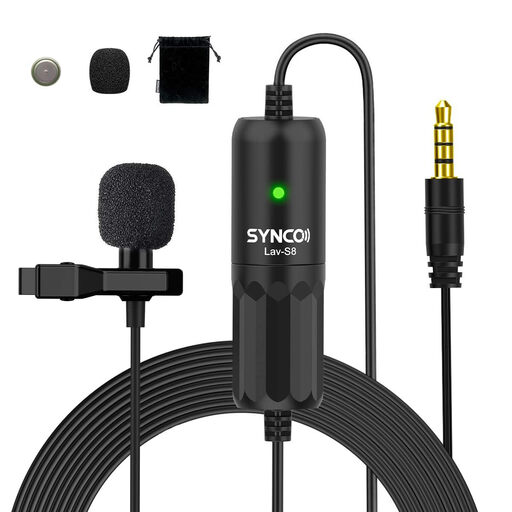
A wired option if you’re looking for a clip-on lavalier to suit your recording setup.
It has a 3.5 mm connection and comes with an adapter kit; the description specifies an omnidirectional pickup pattern, windscreen and clip. Check that the connection or a suitable adapter will work with your device.
 No image available
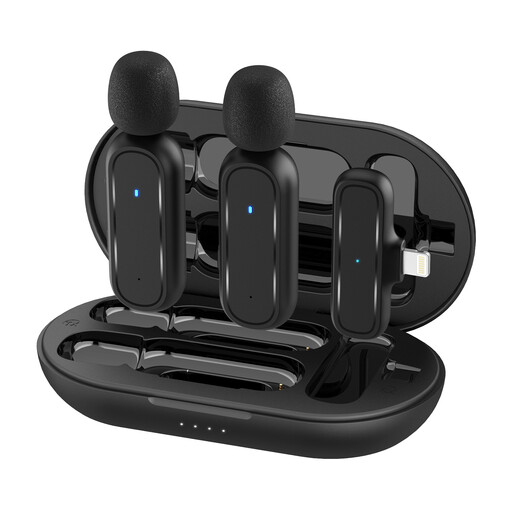
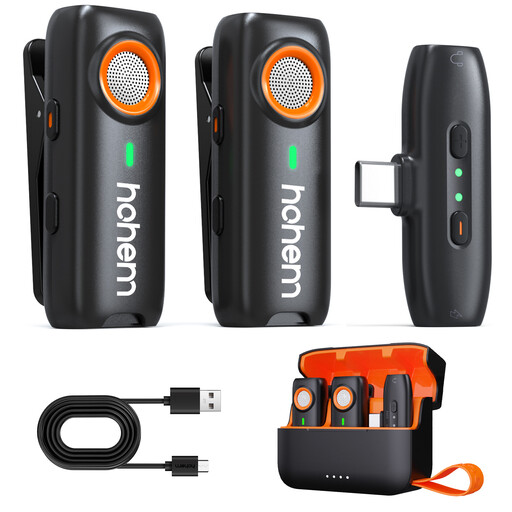
Could be a good fit if you want to record one voice wirelessly using a USB-C phone.
The kit is listed as a 2.4 GHz system with one transmitter and one receiver. The description also mentions automatic pairing between the transmitter and receiver; check that it connects to your specific device.
 No image available
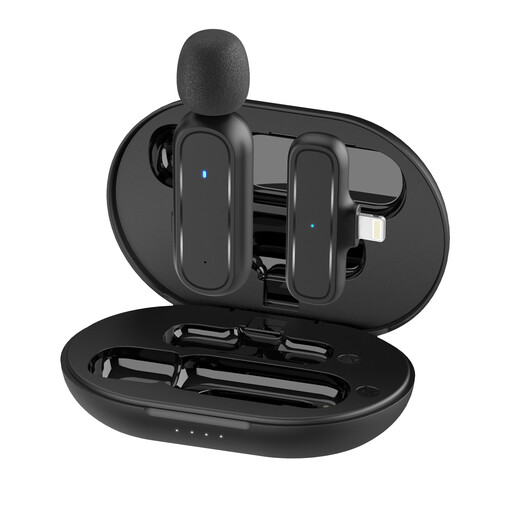
A wireless option if your compatible iPhone or iPad has a Lightning connection.
The kit is described as compatible with Lightning devices and includes one transmitter and one receiver. The quoted transmitter battery life is up to 10 hours.
 No image available
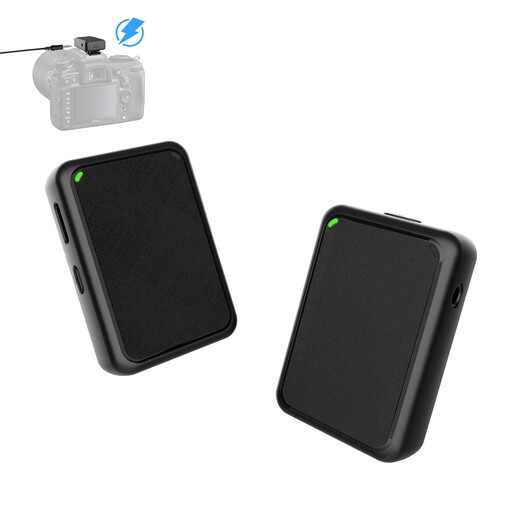
Could be worth considering for recording one voice with a camera, provided the connection is compatible.
The description specifies a 3.5 mm TRS adapter, real-time monitoring and a windscreen. Check that it works with your camera.
 No image available
A wireless option for recording a seated voice, provided you check the connection to your smartphone or camera in advance.
The description specifies 48 kHz/16-bit, clip and magnetic attachment, and a TF card slot for local recording. A TF card is not included.
No. If your recording device, compatible input and cable routing suit your fixed seat, a wired lavalier is a sensible option. Use a test take to check clarity and background noise.
Attach it to the clothes you’ll actually be wearing and route the cable so it’s less likely to rub against the fabric when you gesture. Listen back to a test with both quiet and loud lines, and choose a quiet room with as little echo as possible.
A necessary adapter or compatible wireless receiver could change the connections you need. In an article published in August 2026, the Verbraucherzentrale explains that statutory consumer rights are separate from a voluntary guarantee. Online purchases generally come with a right to cancel, usually within 14 days, subject to legal exceptions.
No. The term ‘wireless microphone’ alone doesn’t tell you whether a particular model meets the applicable requirements. In rulings 91/2025 and 37/2026, the Federal Network Agency sets out assignments and conditions for different wireless applications. Check the frequency information and terms of use for the specific device; you can’t assume that every wireless microphone is authorised for use.