Which option suits whom

Interview with a seated guest

If you want to record a guest’s voice in a fixed position, a well-positioned microphone setup can help. Shure and Sennheiser highlight, among other things, the importance of microphone placement and the option of a wired lapel microphone.

Conversation with two voices

If you want to hear both the guest and the interviewer, you could consider separate microphones or a recorder positioned appropriately. RØDE and Zoom describe recording options for certain models.

Preserving one-off stories

When memories may not be shared again, a recording setup you can control and, where appropriate, an additional file can be important. RØDE lists onboard recording for the Wireless PRO; this feature is not available across all wireless sets.

What to look for when buying

Wired lapel microphone

Suitable if: the guest stays seated and a compatible recording device is within reach of the cable.

Trade-off: The cable restricts movement; the Sennheiser XS Lav USB-C has a stated cable length of 2 m.

Wireless lapel microphone set

Suitable if: you want more freedom to position the camera or to record the guest and interviewer using a transmitter each.

Trade-off: The transmitter, receiver, connection and batteries must suit the specific set variant. According to the manufacturer, the RØDE Wireless PRO includes two Lavalier II microphones and onboard transmitter recording.

Standalone handheld recorder

Suitable if: you want to record without using a phone or camera as the recording device and can position the recorder appropriately.

Trade-off: Its position relative to the guest still matters; a recorder won’t solve the problem of being too far from the person speaking.

Microphone on a stand

Suitable if: you can place a directional microphone close to the guest and point it towards them, and have a suitable recording setup.

Trade-off: Positioning matters; a single microphone won’t automatically pick up questions from someone sitting elsewhere just as clearly.

Priority What to check when buying Who it matters most to
Clear guest voice Microphone position and attachment; listen to a short test recording made with the planned seating arrangement. If I want to record the seated guest clearly, even with other conversations in the room, I pay particular attention to microphone proximity and a test recording. Around 36% of consumers put a clear guest voice first.
Compatible recording setup Check the device, connection, adapter, app and, where applicable, receiver together. If I want to keep using my existing device, I mainly check that the microphone and app work together. Around 29% of consumers prioritise compatibility with their recording device.
Recording two voices Check the number of transmitters, receiver connections or recorder position; listen to both voices in a test recording. If I want to hear both the guest and interviewer, I need a microphone position that works for both. Around 21% of consumers say recording two voices is their top priority.
Additional recording file Check the recording function, storage, export options and a test file for the specific model. If a conversation would be difficult to repeat, I want to plan for an additional or standalone file. Around 14% of consumers put this extra recording security first.

Common buying mistakes

  • Choosing wireless instead of getting close to the speaker

    A wireless connection won’t solve the problem of a poorly positioned microphone, and it isn’t immune to every kind of interference.

    First decide where the microphone should be positioned for the seated guest, then work out whether you need the extra freedom of movement.

  • Assuming every set records both people

    The number of transmitters and type of receiver vary by set. A single microphone close to the guest won’t necessarily pick up questions from further away just as clearly.

    Check what’s included with the specific model and listen to a test recording with both voices.

  • Assuming an onboard recording means you have a backup file

    Onboard recording depends on the model and is only useful if the feature has been set up and you can access the file afterwards.

    Enable the feature on the specific device and open an exported test file before the event.

Microphone brands to consider

Sennheiser

The XS Lav USB-C is a wired option for a seated interview with a suitable USB-C recording device.

  • The manufacturer lists a clip, omnidirectional pickup pattern and 2 m cable for this model.
  • The cable length limits where you can position the device; check that it works with your specific device and the app you’re using.

RØDE

The Wireless PRO is designed for interviews with two people mic’d up and for situations where onboard transmitter recording is needed.

  • According to the manufacturer, the Wireless PRO includes two Lavalier II microphones and onboard recording.
  • You’ll still need a compatible receiver and recording setup, and should check the files. These features are not available across all RØDE models.

Hollyland

The LARK M2 is a compact wireless lapel microphone solution available in variants for different recording devices.

  • The manufacturer lists USB-C, Lightning and camera versions, among others.
  • The version you choose must suit your recording device; a quoted wireless range doesn’t guarantee an interference-free connection at your venue.

Zoom

The H1essential is a standalone handheld recorder for interviews when you don’t want to use a phone as the recording device.

  • Zoom lists built-in X/Y microphones, tripod mounting and a mono mode.
  • You still need to plan where to position it in relation to the guest; 32-bit float won’t make up for having the microphone too far away.

Shure

The SM58 is a directional, wired microphone option for use on a stand or handheld, provided you have a suitable recording setup.

  • Shure lists a cardioid pickup pattern, pop filter and stand adaptor.
  • The microphone isn’t a standalone recorder; you’ll need to plan its position and connection for the seated interview.

Joybuy products for seated interviews

The Joybuy products below include a standalone recorder, a USB/XLR desktop microphone and wireless lapel microphone sets for conversations with one or two speakers. The key is choosing the right connection and positioning the microphone appropriately.
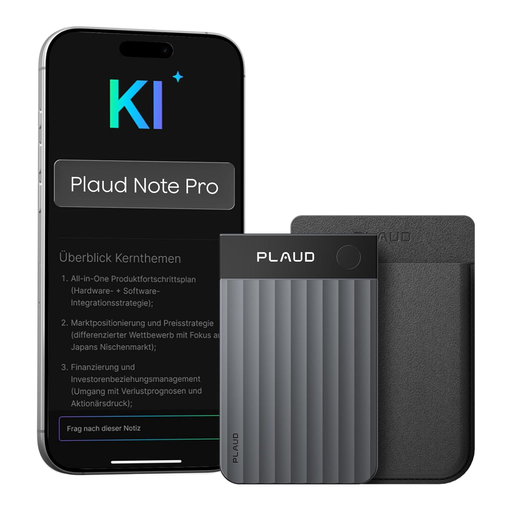
PLAUD Note Pro Voice Recorder, 64GB

PLAUD Note Pro Voice Recorder, 64GB

Described as a standalone voice recorder for a seated interview without using a phone as the recording device.

The product details list a 4-microphone array and 30 hours of recording time. A test recording helps you check the positioning and saved file before the conversation.

View at Joybuy
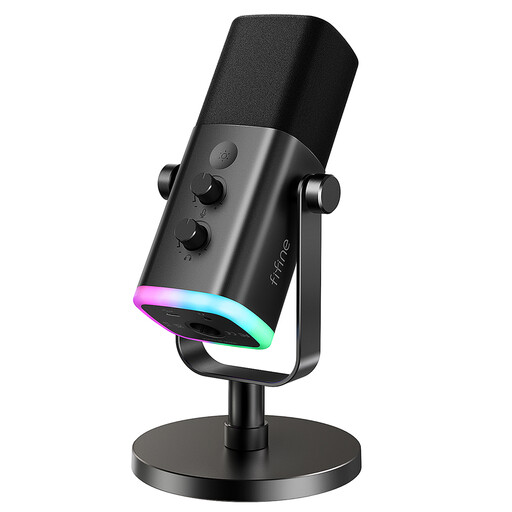
FIFINE AM8 USB/XLR microphone with desk stand

FIFINE AM8 USB/XLR microphone

Could be a good fit if you can position a microphone close to the speaker at a fixed seat and point it towards them.

The product details list USB and XLR connections, as well as a desk stand. According to the description, a separate XLR cable is required for the XLR connection; a recording distance of 2 to 6 inches is recommended.

View at Joybuy
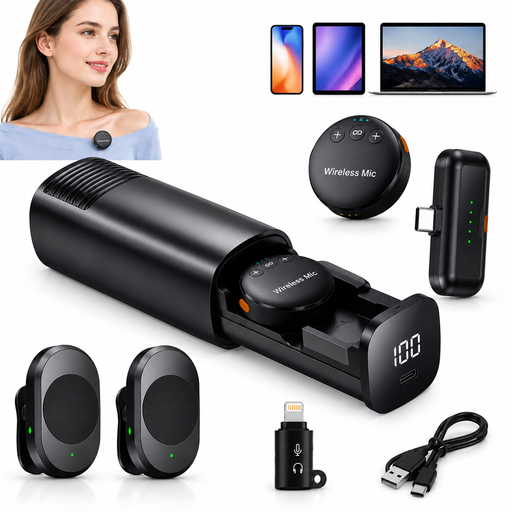
Wireless lavalier microphone set with two transmitters and USB-C and Lightning connections

Wireless lavalier microphone set with 2 transmitters

The two transmitters are designed to mic up both the guest and the interviewer.

The product details list a receiver and USB-C and Lightning connections. Check that the receiver is compatible with the recording device you’re using.

View at Joybuy
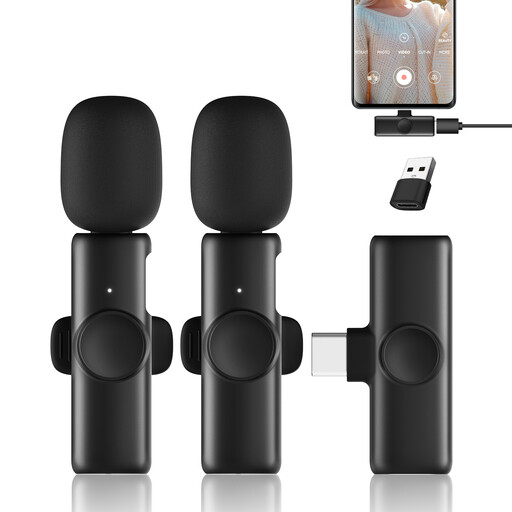
Moman MS1X(C) lavalier microphone set with two transmitters and USB-C receiver

Moman MS1X(C) Wireless Lavalier Microphone, 2TX&1RX

Could be a good fit if you want to record two people using separate lapel microphones.

The title and product details list two transmitters and a USB-C receiver for Android phones. Check that the connection is compatible with your specific device.

View at Joybuy
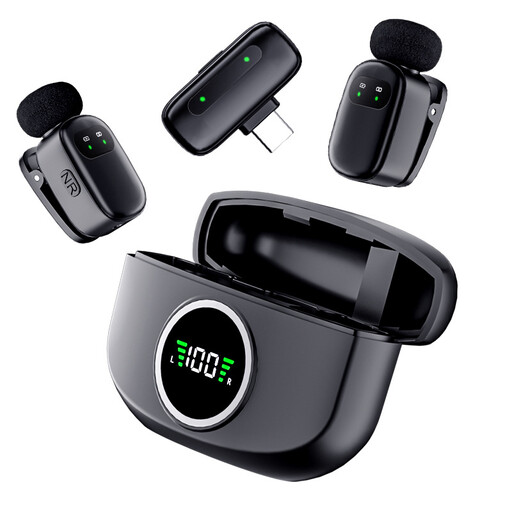
The Verbex K21 wireless dual microphone with Type-C connection

The Verbex K21 Dual Microphone

Described as a wireless dual microphone for interviews and two-microphone recordings.

The product details list two microphones and a Type-C interface. Check that this interface is compatible with your recording device.

View at Joybuy

Frequently asked questions

How should I attach and check the microphone before the conversation?

Position a lapel microphone close to the person speaking, or point a microphone on a stand towards them. Make a short test recording from the planned seat, including the guest’s voice and your questions, then listen back. If you’re using a lapel microphone, also check that it stays securely attached to the clothing being worn.

Do I need a smartphone as well when using a handheld recorder?

You don’t need a smartphone as a recording device to record directly with the Zoom H1essential. Zoom describes it as having built-in microphones and recording onto the recorder. Before the event, check the power supply, storage medium and saved test file.

What should I check about accessories and service?

Check that everything included suits your setup: a handheld recorder needs a suitable storage medium and power supply, while a wireless set needs a receiver and compatible cables. Also check the warranty and spare parts terms for the specific model and German seller.

Can I simply record and share an interview at a class reunion in Germany?

Recording another person’s non-public spoken words without authorisation, or sharing such a recording without authorisation, is a criminal offence under § 201 StGB, as noted by the Federal Ministry of Justice. Before you begin, check that everyone involved agrees to the recording, and discuss any plans to share it separately. For processing personal data on the basis of consent under the GDPR, the Data Protection Conference specifies requirements such as consent being freely given, relating to a specific situation and being informed. What applies depends on how the recordings are actually used.

Can I use any wireless microphone in Germany without registering it?

No, that can’t be said of every device. According to the Federal Network Agency, certain generally allocated frequencies may be used without registration or fees only under the applicable parameters. So check the frequency and relevant allocation for the specific wireless model. Decision 37/2026 of 15 April 2026 replaces the earlier general frequency allocations for microphones listed in it.