For a seated one-to-one interview, a wired lavalier mic connected to the recording device you already own is usually the obvious place to start. The UCLA Library points out that you don’t automatically need an expensive wireless mic for interviews where there’s no need to move around. What matters is having the right input and any power it requires, testing the mic position, and using a separate recording channel for the interviewer if you want their voice to come through clearly too.
Who is this guide for?
Anyone preserving long life stories
If you want to record the memories of someone who remains seated throughout a longer conversation, make sure you factor in mic placement and listening back to a test recording. The UCLA Library and the East Midlands Oral History Archive offer advice on recording and avoiding contact between the mic and clothing.
Interviewers using a smartphone
If you want to use your phone as a recording device, make sure the mic connector, any required adapter and the recording app you’re using all work together. RØDE describes different connection types for the Lavalier GO and smartLav+.
Interviewers who need to capture both voices
If you want the questions and follow-ups to be clearly audible as well as the interviewee’s memories, you’ll need a suitable way to record both voices. The UCLA Library notes that questions may sound quieter if there’s only one mic on the person telling their story.
What should you look for when buying?
Wired lavalier mic with your existing device
Best for: interviews where the speaker stays seated and your recorder or camera has a suitable mic input with any power it needs.
What to consider: Cable contact and movement can cause noise, and a 3.5 mm plug alone doesn’t guarantee compatibility.
Wired lavalier mic with a smartphone
Best for: recording on your phone, provided the mic connection or adapter is right for your specific device.
What to consider: TRS and TRRS are different connection types. If there’s only one mic on the person telling their story, questions may be quiet.
Lavalier mic with its own recorder
Best for: when you’d prefer a separate recording system instead of a direct connection to your smartphone or camera.
What to consider: A recorder and mic mean extra equipment and setup. Check the recording function, power supply and storage beforehand.
Wireless clip-on mic system
Best for: when you genuinely need distance from the recording device or freedom to move, and the receiver and number of transmitters suit your setup.
What to consider: Wireless isn’t automatically necessary for a seated one-to-one interview. The number of transmitters and whether local recording is available vary by model.
For an interview about someone’s memories, recorded while they’re seated, the main things to consider are finding a position that minimises noise, choosing the right connection, and deciding whether you need to capture just the speaker or the interviewer too. The UCLA Library and the East Midlands Oral History Archive recommend checking the mic position and looking out for contact with clothing in your actual setup.
| What matters when buying |
What to look for |
Who it matters most to |
| Clear speech |
Check the clip and wind shield; record from the intended seat and listen back straight away. |
If I want to preserve a long story, I need the voice to remain clear despite clothing and room noise. Around 33% of consumers put clear speech with minimal interference first. |
| The right connection for your device |
Check the connector type, input and any power required; test the recording app with the specific device. |
If I want to keep using my phone or recorder, the connection needs to be compatible. For around 27% of consumers, this compatibility is the top priority. |
| Recording for longer periods |
Listen to a test file and check the recording status, power supply and storage before the conversation. |
When someone is telling a longer story, I don’t want to discover afterwards that the recording stopped. Continuous recording is the top concern for around 20% of consumers. |
| The story and the questions |
Decide whether questions need to be clearly audible; check the number of microphones and inputs actually available. |
If I want my follow-up questions to be clear in the archive too, I need a way to record both voices. Around 20% of consumers prioritise recording both the story and the questions. |
Common buying mistakes
-
“A 3.5 mm plug always fits”
TRS, TRRS and a screw-lock connector for a bodypack transmitter don’t use the same connection. A plug may fit physically without the mic and device working together.
Check the exact mic version, input and any power it needs. Then make a test recording with the device you plan to use.
-
Assuming wireless is always better
Wireless isn’t automatically necessary for a seated interview where there’s no need to move around. A wireless system won’t prevent poor mic placement or clothing noise either.
First, test a suitable wired connection. Choose wireless only if you genuinely need distance or freedom to move.
-
Buying just one mic when both voices matter
A lavalier mic on the person telling their story may pick up questions from further away only very quietly. A single transmitter won’t automatically cover an interview where two people need separate mics.
Before choosing, decide whether the questions also need to be clearly recorded. Then check the number of transmitters and microphones, as well as the inputs or channels available.
Key brands and product ranges
RØDE
The Lavalier GO and smartLav+ are designed for different TRS and TRRS recording connections.
- RØDE lists a clip and pop shield for the Lavalier GO; the smartLav+ has a 1.2 m cable, according to the manufacturer.
- Don’t assume the models are interchangeable without checking the connection. RØDE specifies a TRRS-to-TRS adapter for using the smartLav+ with the Wireless GO.
Zoom
The F2 is a portable recorder paired with the LMF-2 lavalier for a separate recording setup.
- Zoom lists a Hold switch and a locking connector for the LMF-2.
- The manufacturer’s 32-bit float recording specification doesn’t replace listening to a test recording or finding a suitable position that avoids clothing noise.
Sennheiser
The ME 2 is designed for specific Sennheiser bodypack transmitters, for example if you already own one of these systems.
- Sennheiser describes the ME 2 as a lavalier mic that clips to clothing and specifies an omnidirectional pick-up pattern.
- Its screw-lock connector for a bodypack transmitter means that “3.5 mm” alone doesn’t guarantee direct compatibility with every smartphone or recorder.
Deity
The V.Lav is a wired lavalier with a longer cable, suited to setups where the recording device is further away.
- Deity specifies a 5 m cable and a TRRS plug that can be configured for many 3.5 mm mic sockets.
- “Many” doesn’t mean every device; the manufacturer also says the model needs two LR41 batteries.
BOYA
The BY-V10 V2.0 is a compact wireless option with one transmitter and a USB-C receiver for a compatible mobile device.
- The manufacturer’s range features automatic pairing; BOYA specifies up to 9 hours of transmitter battery life for the BY-V series.
- The single-transmitter version isn’t designed for two people using separate mics. Check that the connection and number of transmitters suit your interview.
Joybuy products for smartphone interviews
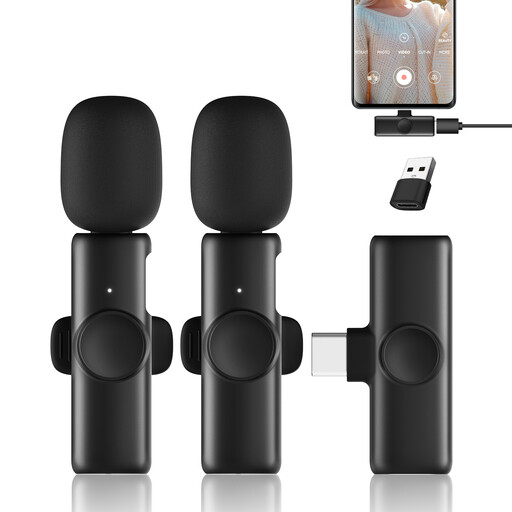
The Joybuy products below are wireless lavalier sets for smartphone interviews. Connection types and the number of transmitters vary by model, so make sure they suit your recording device and the number of voices you need to capture.
 No image available
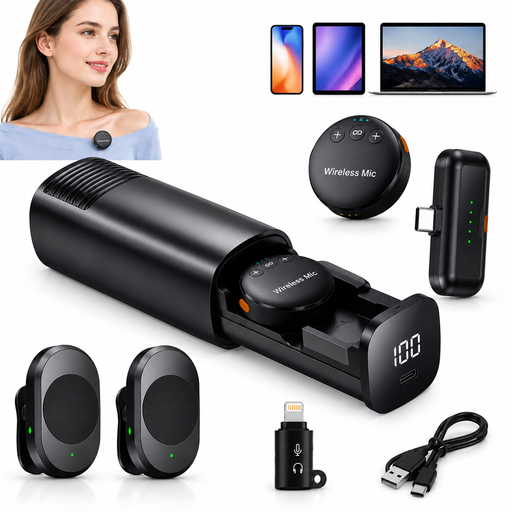
Wireless lavalier set with 2 transmitters, USB-C and Lightning
The two transmitters mentioned in the product title could suit you if you want to mic both the speaker and the interviewer.
Listed in the title: 2.4 GHz, two transmitters, USB-C and Lightning.
View on Joybuy
 No image available
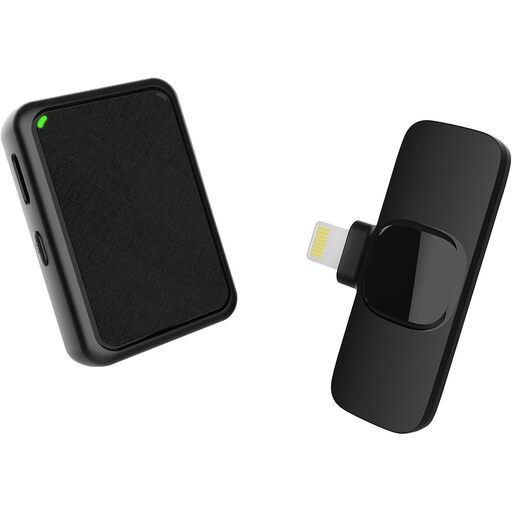
Moman MB1A, Lightning, 1TX+1RX
This lavalier mic could be a suitable choice if you have a compatible Lightning recording connection on the iPhone model listed.
Listed in the title: iPhone 14, 13 and 12, plus 1TX+1RX.
View on Joybuy
 No image available
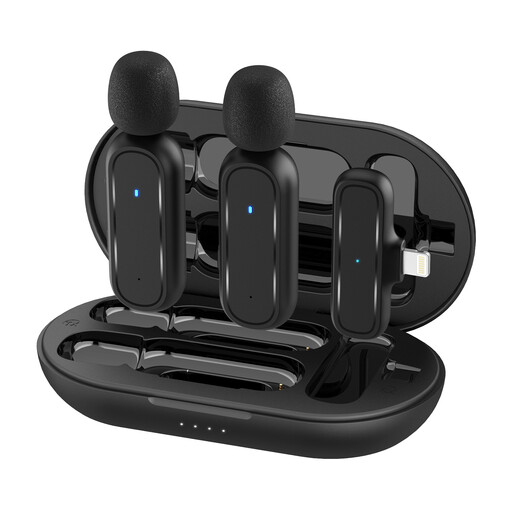
Moman MC1(C), USB-C, 1TX&1RX
Described as a lavalier mic for mobile phones. Before your interview, check that your specific phone supports recording with the USB-C receiver.
Listed in the title: 2.4 GHz and 1TX&1RX.
View on Joybuy
 No image available
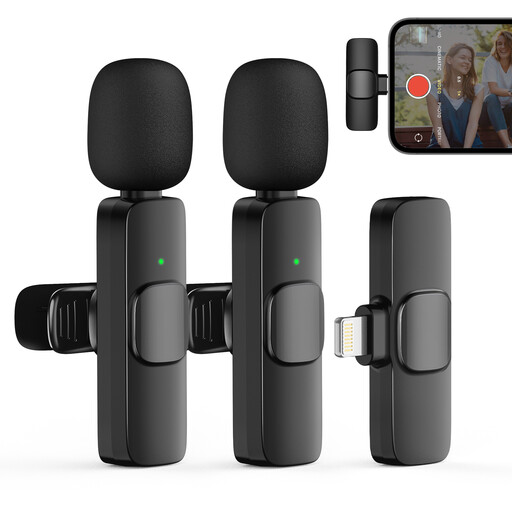
Moman CP1XA for iPhone, 2TX&1RX
With two transmitters, this set is an option if you want to capture both voices in the conversation and it’s compatible with your iPhone recording setup.
Listed in the title: 2TX&1RX.
View on Joybuy
 No image available
Moman MS1X(C) for USB-C Android phones, 2TX&1RX
According to the title, this version is designed for USB-C Android phones. Check that the receiver works with your device before recording.
Listed in the title: 2.4 GHz and 2TX&1RX.
View on Joybuy
Frequently asked questions
Where should I clip the mic, and what should I test before the interview?
Clip the lavalier where clothing won’t rub against the capsule, then listen back to a test recording made in the actual interview location. Check for room noise and make sure the questions are loud enough too. The Sennheiser ME 2 instructions specify a distance of 25 cm from the mouth; this isn’t a standard recommendation for other models.
Do I need a second microphone for the questions?
If the questions need to be clearly audible afterwards, it’s a good idea to use a separate, suitable recording setup for the interviewer. A lavalier on the speaker may pick up questions from further away only very quietly. To use two microphones, you’ll also need the right inputs, channels or set.
What extra costs and return rights should I consider when buying?
Before buying, check whether you’ll need an adapter, extra batteries or a separate recorder for your devices. In the EU, online purchases from a trader generally come with a 14-day right to cancel, starting from the day the goods are delivered; exceptions and return conditions apply. This is explained on the European Union’s Your Europe information portal.
Can I simply record and publish someone’s memories in Germany?
No. Secretly recording another person’s non-public spoken words may be a criminal offence under § 201 StGB; the German Federal Ministry of Justice and the Federal Office of Justice include the provision in the legal text. Discuss the recording with the speaker beforehand and agree separately on its purpose, storage, sharing and any possible publication. Data protection requirements may also apply, depending on who is responsible and the circumstances; the Data Protection Conference explains consent requirements and information duties. The Oral History Association recommends documenting informed consent and the planned future use.


