Are you looking for a light, savoury snack that offers a change from traditional crisps or pretzels? Seaweed snacks could be just what you're looking for. These Asian nibbles, often known as crispy seaweed snacks or roasted seaweed, are gaining popularity. They offer an intriguing combination of umami flavour and a crispy texture.
This article serves as your guide. We'll introduce various types of seasoned nori sheets and provide you with the factual information you need to make an informed decision on which option best suits your taste preferences.
What to Look For When Buying Seaweed Snacks
The variety of seaweed snacks is vast. To help you navigate the options, here are some objective criteria to consider when making your choice.
1. Seasoning and Flavour Profile
The fundamental taste of roasted seaweed is subtly oceanic and rich in umami. The real diversity comes from the seasoning.
- Classic Salted: This is the most straightforward variety, where the seaweed's natural flavour takes centre stage. Often, only seaweed, oil, and salt are used.
- Spicy: Varieties with chilli or wasabi offer a piquant heat that can range from mild to intense. These are a popular choice for anyone who enjoys a spicy kick.
- Soy Sauce or Teriyaki: A soy sauce-based seasoning adds an extra salty and slightly sweet note to the snacks, which is typical of many Asian nibbles.
2. Origin and Ingredients
The country of origin can give a clue as to the snack's style. Korean snacks of this type are often thin, crispy, and typically roasted with sesame or rapeseed oil. Thai versions can sometimes be thicker and more boldly seasoned. A look at the ingredients list provides information on the type of oil used, the salt content, and potential allergens like soy, wheat, or sesame.
3. Texture and Format
Seaweed snacks come in various forms. The most common are thin, rectangular sheets sold as seasoned nori sheets. These are very light and almost melt in your mouth. However, there are also thicker seaweed crisps that have a firmer, more chip-like consistency. The thin sheets are also excellent as a garnish for rice dishes or crumbled over soups and salads.
Recommended Seaweed Snack Picks
Here is a selection of different seaweed snacks from our range. Each product is presented with its specific characteristics to help you choose.
1. Delief Original Seasoned Laver HALAL

- Why it stands out: This product focuses on the fundamentals. It's a classic Korean seaweed snack with a very short ingredients list, and it is also HALAL-certified.
- Objective Features:
- Ingredients: Seaweed, rapeseed oil, salt.
- Origin: South Korea.
- Packaging: Three individually wrapped 4.5 g portions that preserve freshness.
- Nutritional Information (per 4.5 g): 27 kcal energy, 2.0 g fat, 1.0 g protein.
- Who is it for? For purists who prefer the authentic, lightly salted taste of roasted seaweed. The convenient single-serving packs are ideal for on-the-go snacking or as a side for meals.
2. Taokaenoi Crispy Seaweed Hot & Spicy
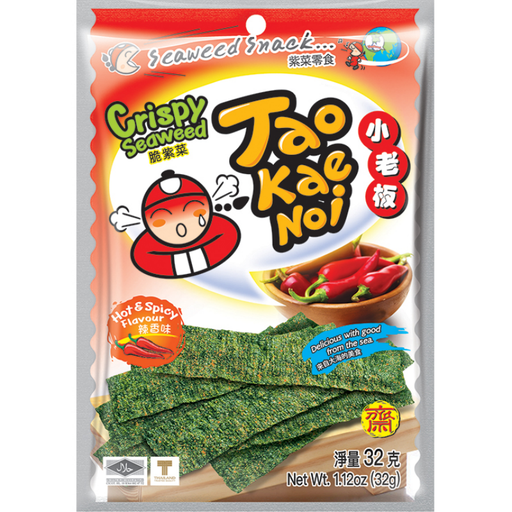
- Why it stands out: This snack from Thailand is known for its intense heat. The combination of chilli powder and white pepper creates a powerful flavour experience.
- Objective Features:
- Ingredients: Seaweed (85%), chilli powder (2%), palm oil, white pepper powder, salt, flavour enhancers (E631, E627).
- Origin: Thailand.
- Texture: Crispy and light, typical of roasted seaweed sheets.
- Packaging: A 32 g pack, perfect for sharing or for a movie night.
- Who is it for? For lovers of spicy snacks who are looking for a fiery alternative to traditional chilli crisps and enjoy the taste of seaweed crisps with a powerful kick.
3. Strong Happy Time Seaweed
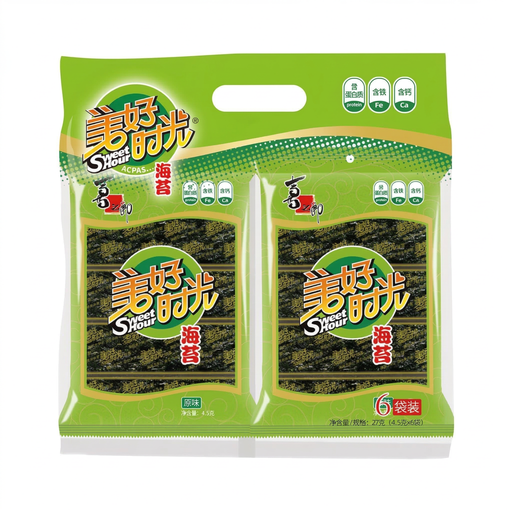
- Why it stands out: This variety is distinguished by its seasoning with brewed soy sauce, giving it a classic Japanese-inspired, savoury-sweet flavour profile.
- Objective Features:
- Ingredients: Seaweed, brewed soy sauce (contains SOYBEANS, WHEAT FLOUR), sugar, yeast extract.
- Origin: China.
- Allergens: Contains soy and wheat (gluten).
- Nutritional Information (per 4.5 g): Contains 1.8 g of protein and 1.2 g of fibre.
- Who is it for? For snack fans who appreciate the umami flavour of soy sauce and prefer a slightly sweet note in their seasoned nori sheets.
4. Delief Wasabi Seasoned Laver
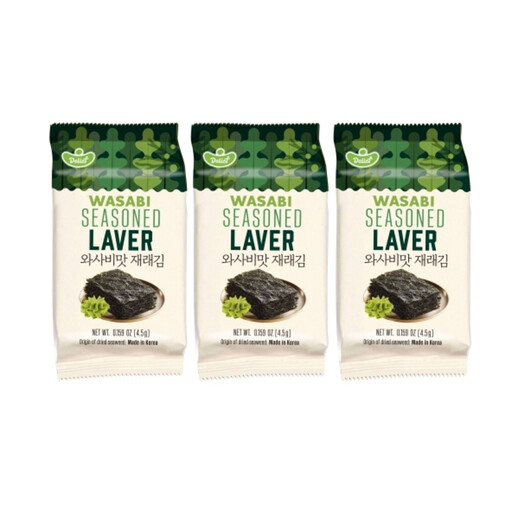
- Why it stands out: This Korean snack combines the crispiness of roasted seaweed with the distinct, sharp heat of wasabi.
- Objective Features:
- Ingredients: Seaweed, corn oil, wasabi seasoning powder, sesame oil, salt.
- Origin: South Korea.
- Allergens: Contains sesame.
- Flavour Profile: A combination of salty seaweed taste and the sharp, pungent aroma of wasabi.
- Who is it for? For adventurous foodies and fans of Japanese cuisine who want to experience the unmistakable kick of wasabi in a light, crispy snack format.
Looking for More Options?
Seaweed snacks are an excellent choice for a mindful and flavourful nibble. If you're curious about other products from our wide selection, we invite you to browse our range.
Discover more products in our range here
Frequently Asked Questions (FAQ)
Are seaweed snacks a healthy alternative?
Seaweed snacks can be an interesting addition to a balanced diet. They are often lower in calories than deep-fried potato crisps. Seaweed naturally contains nutrients like fibre and protein. However, it is advisable to check the nutritional information on each product, as the salt and fat content can vary depending on the seasoning and preparation method. They can be a good option for healthy snacks when enjoyed in moderation.
How do you eat roasted seaweed?
Roasted seaweed is very versatile. The most common way is to eat it straight from the pack as a crispy snack. Beyond that, it can also be used in the kitchen:
- As a wrap for rice balls (onigiri or gimbap).
- Cut into small strips and sprinkled over rice, noodle soups, or salads.
- As a savoury side dish with a main meal.
What do seaweed snacks taste like?
The basic taste of seaweed is "umami"—a savoury, broth-like note—combined with a subtle ocean aroma. The texture is typically very light and crispy. The final flavour depends heavily on the seasoning. It can range from simply salted to fiery-hot with chilli, piquant with wasabi, or salty-sweet with soy sauce.


