Sellers photographing lots of books
If you regularly photograph covers, spines and details, a setup you can repeat is more useful than having to adjust to the daylight from scratch for every shot.


If the side of a book facing away from the window looks too dark in your photos, try a white reflector first. An LED panel is most useful when you want adjustable light or more consistent results as daylight changes. For a permanent setup, consider a positionable bi-colour panel; if space is limited, a compact light may be a better fit. Check the specifications for the exact model variant, including diffusion, power supply and what’s in the box. Manufacturer claims about CRI or lux are no substitute for testing the light with your own book covers.
If you regularly photograph covers, spines and details, a setup you can repeat is more useful than having to adjust to the daylight from scratch for every shot.
If buyers need to assess cover colours and signs of wear, adjustable white light and a controlled white balance matter more than colour effects.
If you have a small area to work in or often need to set up and pack away, size, mounting and power supply are important factors to consider.
Check shadows, colours and reflections on an actual book before buying more light or extra accessories.
A good fit if: You have daylight available and mainly want to brighten the side of the book facing away from the window.
Consider: You won’t need an extra panel, but you’ll still depend on the time of day and the weather.
A good fit if: You regularly photograph covers, spines and condition details in a permanent setup, and want to adjust the white light.
Consider: You’ll need space for it or a suitable mount, and should compare the exact model variant and accessories carefully.
A good fit if: You’re short on space or move the light around often.
Consider: A small light source won’t necessarily illuminate the whole cover evenly. According to the manufacturer, battery life depends on use and surroundings.
A good fit if: You want to create colour effects as well as straightforward sales photos.
Consider: An extra colour effect has no proven benefit when you’re aiming to show a second-hand book accurately.
| What you need | What to look for | Who might find this important? |
|---|---|---|
| Control shadows | Check whether the light can be positioned and dimmed; try a white reflector first, too. | If the side of the book facing away from the window is too dark, I want to brighten the shadows precisely without adding more light than necessary. Around 29% of consumers prioritise shadow control. |
| Assess cover colours | Look for adjustable white light and check the white balance using a white reference in the actual mixed lighting. | If I’m combining window light and a panel, I want the cover colours to look consistent and true to life. Around 29% of consumers give colour reproduction top priority. |
| Show details without reflections | Compare light angles and reflections on the text, scuffs and other features of the actual cover. | If I want small signs of wear to show up, I need to check whether glare or shadows are hiding important details. Around 24% of consumers prioritise visible condition details. |
| Space and power supply | Compare the mounting options, mains adapter and battery, as well as what’s included with the exact model variant. | If my photography space is small or I often rearrange it, I want to choose a setup and accessories that suit it. Around 18% of consumers put space and power supply first. |
Manufacturer claims about CRI alone won’t tell you how a cover will look in window light with a panel switched on. The white balance method can also make a difference when using mixed light.
Check the model specifications, mix of light and white balance together on a test cover, rather than relying on a single figure.
A setup that changes from one session to the next may mean extra test shots, retakes and white balance adjustments.
Adding more light doesn’t guarantee a glare-free image of a glossy cover. An unsuitable angle can still obscure text or signs of wear.
Compare window light, a white reflector and a different light angle using the same view of the book.
NEEWER offers the NL660 in versions with and without a tripod; according to the manufacturer, NP-F batteries aren’t included.
Before buying, check the exact model variant and the listed contents of the box.
Depending on your setup, you may need to buy a tripod or compatible battery separately.
The NL660 Bi-Color is a positionable panel for a permanent photography setup. The manufacturer’s specifications apply to the listed NL660 variants.
The LP-Bi range includes bi-colour lights in various sizes and power outputs, including the LP400Bi and LP600Bi.
The P60x and P60c are different variants: bi-colour and RGBWW respectively.
The P96 Mini LED Video Light is a compact option for a small or frequently rearranged setup.
The Joybuy products below range from foldable light boxes to a portable camera and video light. They’re options for product photography, but they aren’t all freely positionable LED panels.
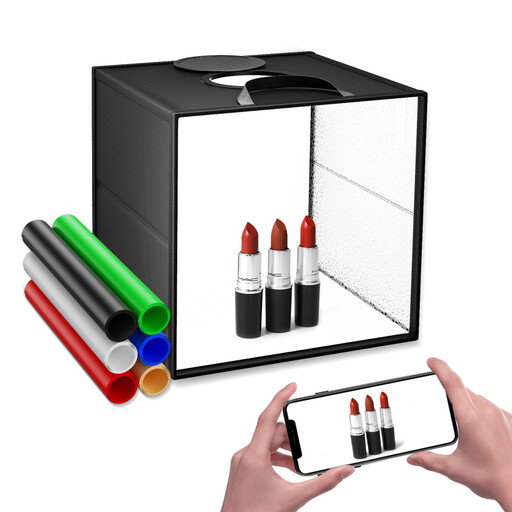 No image available
For a foldable product photography setup when you want to use the light and background together in one box.
The product name lists three colour temperatures, nine brightness levels and six coloured background papers.
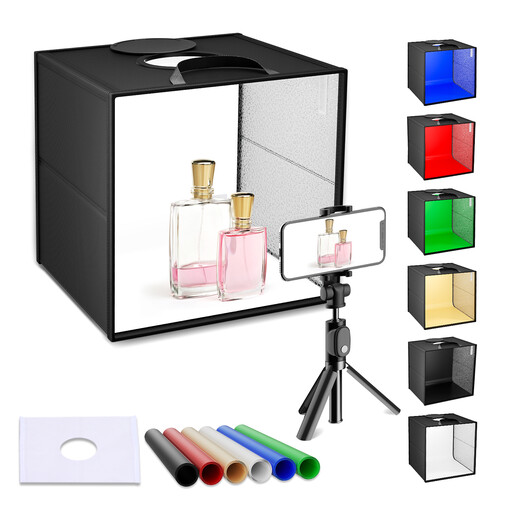 No image available
A light box option if you’re looking for a foldable setup and adjustable lighting for product photography.
The product details list three light colours, adjustable brightness and a carry bag.
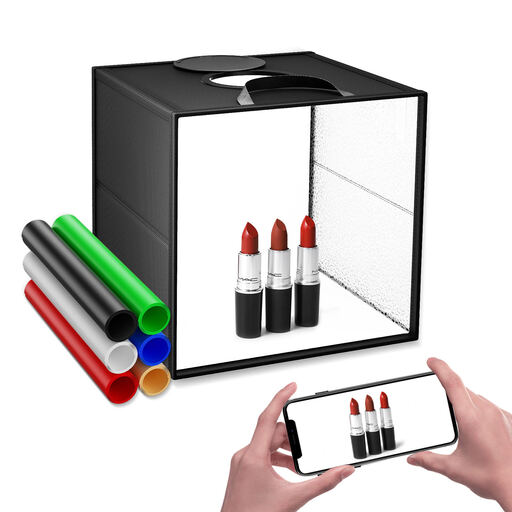 No image available
For a foldable product photography setup when you want to put the box away after taking photos.
The product name lists 120 dimmable LEDs, 5600K, six coloured backgrounds and soft light cloths. The product details also list three colour temperature modes and a storage bag.
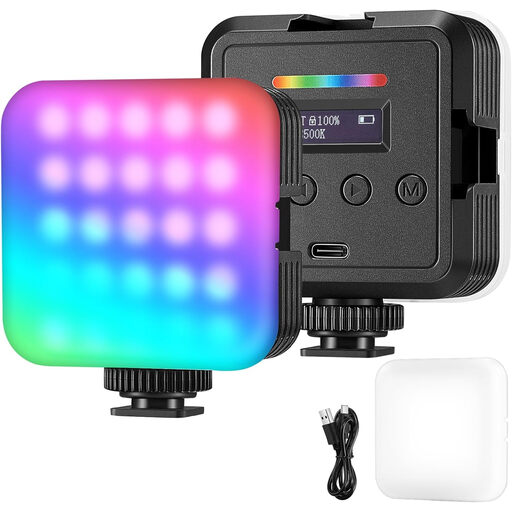 No image available
A light for photography and video on the go, with RGB modes as well as white and warm light.
The product details list adjustable brightness and battery or USB power.
Not necessarily. If one side is particularly dark, try a white reflector first and take another photo. An adjustable panel may be worth considering if you want more consistent results as daylight changes, but it won’t guarantee a certain quality in your book photos.
Start by taking a photo using only window light, then add the panel on the darker side. Compare the shadows and visible condition details. In mixed light, check the white balance using a white reference. Nikon points out that automatic and reference-based white balance can produce different results.
For the exact model variant, check the mains adapter, battery, tripod and diffuser against the listed contents of the box. The NEEWER NL660 is listed with a mains adapter; according to the manufacturer, NP-F batteries aren’t included.
No. If you buy from a retailer in the EU as a consumer, you have a statutory guarantee against the seller. The EU’s consumer information states that this lasts for at least two years from the date you receive the goods. A manufacturer’s warranty is an additional, voluntary service with its own terms and conditions.
The CE marking is required for products covered by relevant harmonised EU rules; it isn’t a quality rating for photography lighting. The EU explains the limits of its application. For electrical lighting products, the German Federal Network Agency lists checks such as the marking, manufacturer information, and instructions and safety warnings in German.