For spontaneous close-ups without changing lenses, a compact camera with a dedicated close-up mode could be a good option. For very small seed structures, check the magnification ratio of the specific macro lens. OM Digital Solutions and Ricoh Imaging list a close-up mode from 1 cm on certain compact cameras, but this distance does not mean the camera offers 1:1 magnification. On a woodland path, you’ll also need to consider movement, changing light, the weight of all your equipment and the weather protection offered by the camera and lens separately.
Which approach is right for you?
Photographers focusing on seed details
You want to capture individual seeds, fibres or fine structures in close-up, so you’re comparing the close-up mode or the magnification ratio of a particular lens. Information on close-up modes and macro lenses is available from OM Digital Solutions, Ricoh Imaging Europe and Canon Deutschland, among others.
Spontaneous woodland-path photographers
You want to stop during a walk and take a shot without a complicated set-up, shooting handheld in changing light or with stems that may move. Nikon points out that both your own movement and the wind can move your subject.
Versatile nature walkers
You want to switch between seed heads, whole plants and views along the path, so you’re thinking about framing, the equipment you’ll need to carry and the effort involved in taking an extra lens. Sony Deutschland and the relevant camera manufacturers provide examples of fixed zoom lenses and interchangeable camera lenses.
What should you look for when buying?
First decide how large you want the seed structures to appear in your pictures. Then consider how easy the camera is to use when there’s movement, the light is changing and you’re out on the path.
Compact camera with a close-up mode
A good fit if: you want to get close to accessible seed heads without changing lenses.
The trade-off: A short minimum focusing distance alone won’t tell you how large the subject will appear in the frame. Also check whether you might cast a shadow on it.
Interchangeable-lens camera with a macro lens
A good fit if: you want to choose the magnification ratio carefully and capture very small details in close-up.
The trade-off: Consider the lens, the weight of the complete set-up and the protection ratings of both components separately. At high magnification, the area in focus becomes very small.
Compact camera with a wider zoom range
A good fit if: you want to photograph views along the path and more distant subjects as well as seed heads.
The trade-off: A wide zoom range doesn’t guarantee a particular macro magnification. Check how well the camera handles close-ups at the framing you want.
Close-up mode and magnification details apply to specific models and lenses: OM Digital Solutions lists a microscope mode from 1 cm for the TG-7; Ricoh Imaging Europe lists a digital microscope function from 1 cm for the WG-90; and OM Digital Solutions gives the M.Zuiko 60mm F2.8 Macro a 1:1 magnification ratio. Canon Academy explains that depth of field falls sharply as magnification approaches 1:1.
| Priority |
What to check before buying |
Who it matters most to |
| Capturing fine seed structures in close-up |
Check the magnification ratio of the specific macro lens or the documented close-up mode of the compact camera. If you’re buying an interchangeable lens, also check that the mount is compatible. |
If I want to show fibres or individual seeds as large as possible, magnification matters more to me than the minimum focusing distance alone. Around 36% of consumers are likely to put this priority first. |
| Keeping images sharp in changing woodland light |
Check how easy it is to adjust focus and exposure, and look at the stabilisation. Also consider subject movement and choose a suitable shutter speed. Nikon notes that wind can cause movement. |
If you’re photographing slightly moving seed heads in changing light, you’ll want to keep the most important detail sharp despite the movement. Around 29% of consumers are likely to prioritise this. |
| Carrying your equipment and protecting it from the weather |
Check the weight of the combination you’ll actually carry, and the protection ratings for the camera body and attached lens separately. |
If I want to travel light on woodland paths and choose equipment to suit the weather, the complete set-up is what matters. Around 21% of consumers are likely to prioritise portability and weather protection. |
| Photographing other subjects and considering the complete set-up |
Check what’s included and whether you’ll need any additional lenses. With a fixed zoom, assess the framing you want and its close-up capabilities separately. |
If you want to photograph plants and views along the path as well as seed heads, and weigh up the complete set-up, you’ll need suitable framing without having to carry an extra lens unexpectedly. Around 14% of consumers are likely to prioritise versatility and the effort involved in carrying the full set-up. |
Common misconceptions
-
Assuming “1 cm close-up distance” means “1:1 macro”
Focusing distance and magnification ratio describe different things. A distance of 1 cm therefore isn’t directly comparable with the magnification ratio of a macro lens.
Check the documented magnification ratio, or whether your typical seed head appears large enough in the frame from the position you want to shoot from.
-
Assuming the camera body alone determines how well the complete set-up handles macro photography
Figures such as 1:1 or 1.4x apply to specific lenses, not automatically to every zoom lens you attach.
Check everything included in the box, the exact lens name and the compatible mount. With an interchangeable-lens camera, you may need to choose a suitable macro lens separately.
-
Assuming the camera body’s weather protection applies to the whole system
OM SYSTEM lists an IP53 rating for the OM-5 Mark II and an IPX1 rating for the M.Zuiko 60mm F2.8 Macro. The camera body’s rating doesn’t automatically apply to the lens.
Read the protection and care instructions for the camera body and the lens you’re actually using separately.
-
Expecting image stabilisation to prevent movement caused by wind
A steady camera won’t stop a seed head moving in the wind. With a shallow depth of field, the subject can move out of focus.
As well as keeping the camera steady, consider subject movement and shutter speed. Nikon highlights both sources of movement when shooting close-ups.
Brands to consider
OM SYSTEM
The TG-7 is a compact option with a microscope mode; the OM-5 Mark II can be paired with a macro lens chosen separately.
- OM Digital Solutions lists focusing from 1 cm in microscope mode for the TG-7; this is not a stated 1:1 magnification ratio.
- OM Digital Solutions lists a 1:1 magnification ratio for the M.Zuiko 60mm F2.8 Macro.
- OM SYSTEM lists IP53 for the OM-5 Mark II and IPX1 for the 60mm lens. The protection ratings should be considered separately.
PENTAX
The WG-90 is a compact camera with a digital microscope function and built-in macro lighting.
- Ricoh Imaging Europe lists a minimum focusing distance of 1 cm, along with specified water, shock and frost protection for this model.
- The stated focusing distance doesn’t prove that the camera offers 1:1 magnification.
Canon
The EOS R50 is a camera body for pairing with a suitable RF macro lens.
- Canon lists a maximum magnification of 1.4x for the RF 100mm F2.8L Macro IS USM.
- Canon doesn’t list sensor-shift IS for the EOS R50; according to Canon, the lens alone weighs around 685 g.
Nikon
The Z50II can be paired with the NIKKOR Z MC 50mm f/2.8, a documented 1:1 macro option.
- Nikon lists a 1:1 magnification ratio for the lens.
- At its closest setting, Nikon lists a distance of around 5 cm between the lens and subject. The working distance can affect lighting and positioning.
Sony
The RX100 VII is a compact option with a built-in zoom for a range of framing options.
- Sony lists a 24–200 mm full-frame equivalent range for the zoom lens.
- The zoom range doesn’t indicate a particular macro magnification. Check how well it handles close-ups at the framing you want.
Joybuy camera options for days out
This selection includes cameras for travel, walking and outdoor photography. For seed close-ups, also check whether the minimum focusing distance and magnification ratio suit the framing you want.
 No image available
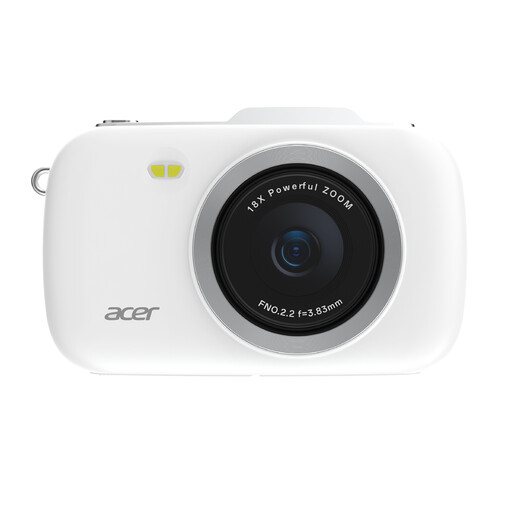
Komery G7-A 4K Digital Camera, 18X Zoom, White
For varied subjects on the go, if you’re looking for a compact point-and-shoot camera with zoom.
The product title lists 4K, 80 MP and 18x zoom.
Joybuy
 No image available
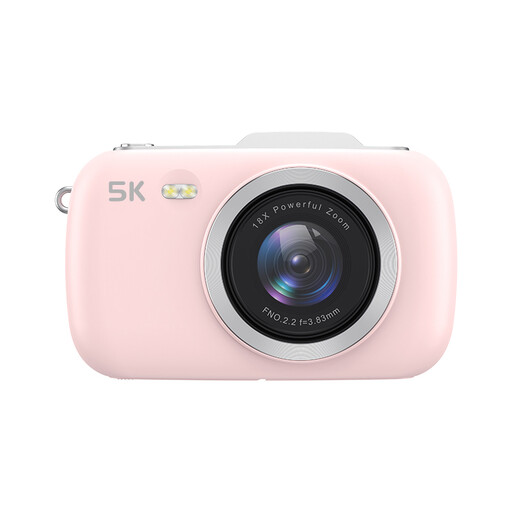
KOMERY G7 5K Digital Camera, 18X Zoom, Pink
For days out, if you’re looking for a portable point-and-shoot travel camera with zoom.
The product title lists 5K, 80 MP and 18x zoom.
Joybuy
 No image available
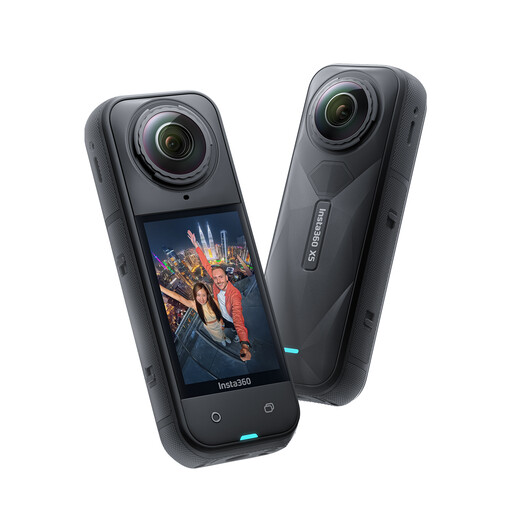
Insta360 X5 8K 360° Action Camera
An action camera for walks and outdoor photography, if you’re looking for a 360° camera.
The product title lists 8K, a waterproof housing, a replaceable lens and a 3-hour battery life.
Joybuy
 No image available
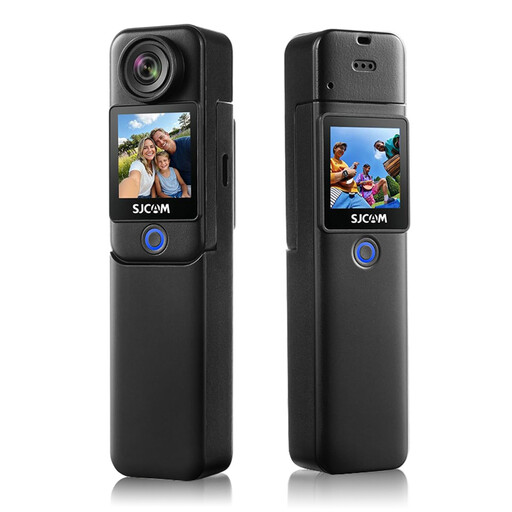
SJCAM C300 4K Action Camera
For outdoor photography, if you’re looking for an action camera with photo capabilities.
The product title lists 20 MP photos, 6-axis EIS and a waterproof housing rated to 30 m.
Joybuy
Frequently asked questions
Is a 1 cm focusing distance enough for detailed seed close-ups?
Not necessarily. This figure describes the possible focusing distance in the relevant mode, not how large the subject will appear in the frame. Also check the magnification ratio of the specific lens or look at sample images from the model. At high macro magnification, the depth of field becomes very small.
How can I photograph a seed head that’s moving slightly?
Focus on the most important detail and, if possible, wait for a still moment. Nikon notes that when shooting close-ups, both your own movement and movement caused by the wind can affect the shot. A tripod won’t stop the plant moving.
What should I bear in mind after a photography trip or if something goes wrong?
After a trip, follow the care instructions for your camera model, especially if it has been exposed to moisture. If a fault develops, distinguish your statutory rights against the seller from a voluntary manufacturer’s warranty, as explained by the Verbraucherzentrale.
Can I pick a seed head or enter a protected site?
Picking wild plants isn’t permitted everywhere or for every species. Section 39 of the BNatSchG sets out conditions for carefully taking small quantities for personal use in places where access isn’t prohibited; Section 44 of the BNatSchG prohibits taking certain specially protected plants. Whether you can leave a path or enter a particular site depends on local rules. If in doubt, take photographs without picking plants or damaging their habitat.


